







































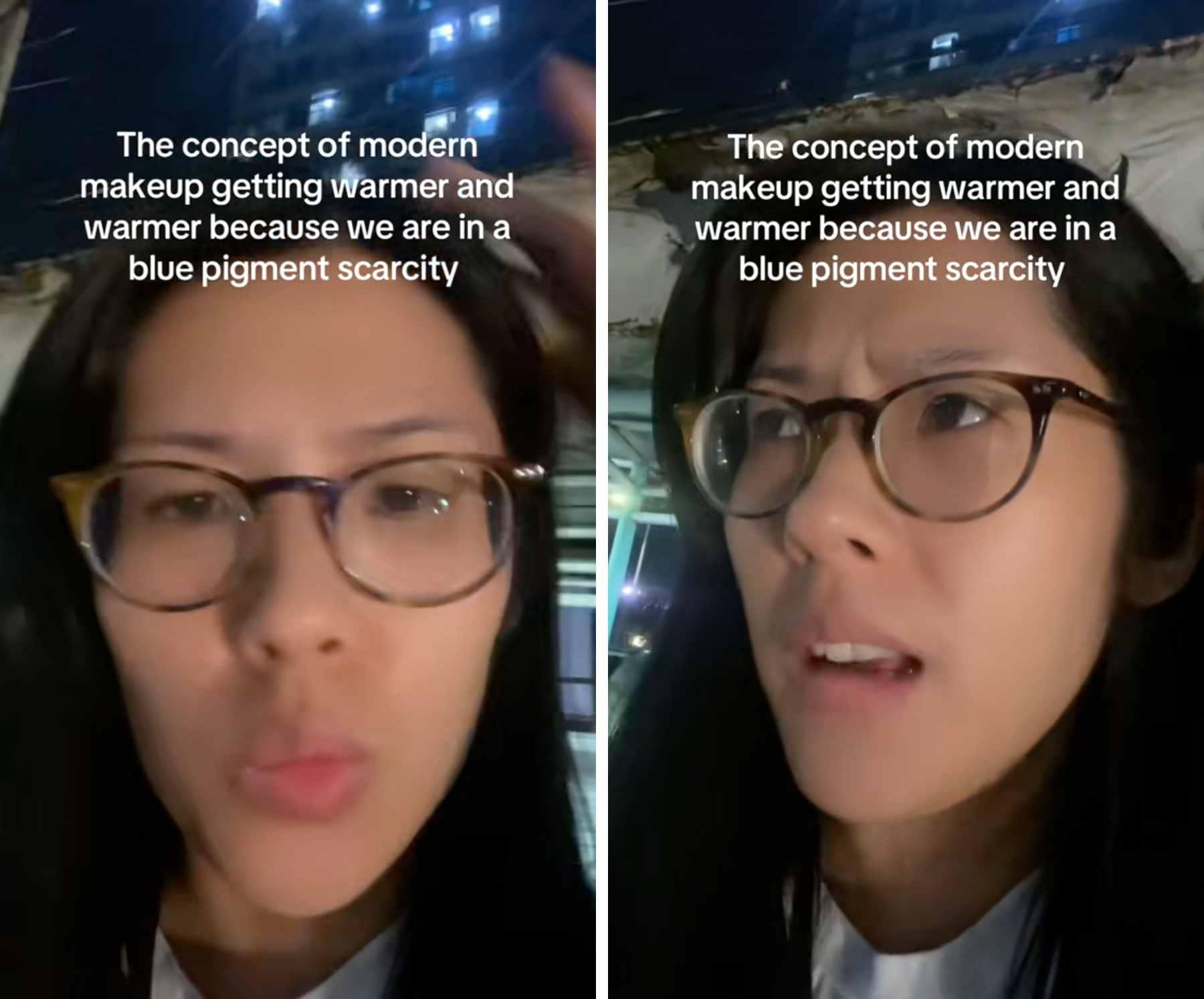
UPDATE: A viral claim about a supposed “blue pigment shortage” impacting the beauty industry has been debunked by cosmetic chemist Javon Ford, sparking widespread discussion online. In a TikTok video that has garnered over 162,900 views, Ford addressed the misconception that modern makeup is turning warmer due to a lack of blue pigment, a statement that has quickly captured the attention of beauty enthusiasts and skeptics alike.
Ford, a Los Angeles-based cosmetic chemist, dismissed the scarcity theory outright, stating, “No, there’s not a blue pigment shortage.” His insights come in response to a TikTok creator’s assertion that leading cosmetic brands are struggling to source blue pigments, causing a shift toward warmer makeup tones. Ford emphasized that the real issue is not a shortage but rather that most brands do not use blue pigments in their formulations, with L’Oreal being one of the few exceptions.
To validate his claims, Ford reached out to two global pigment suppliers, both of whom confirmed there is no shortage of blue pigment. He explained that the standard blue pigment used in complexion makeup, known as ultramarine, is widely available and produced from readily sourced materials like sulfur and kaolin clay.
Ford highlighted the importance of brands adopting formulas with the right undertones, recommending products from L’Oreal and Urban Decay for their inclusivity in shade ranges. He also credited Balanda Atis, a pivotal figure in the industry, for transforming how brands approach color formulation. Atis’s groundbreaking work at L’Oreal led to the creation of a wider array of foundation shades that cater to diverse skin tones.
In the comments section of Ford’s video, viewers shared their thoughts, with many pointing out that other brands, including Dior and Armani, also incorporate blue into their products. One user mentioned their disappointment that another popular brand, Pat McGrath, has not followed suit in using blue pigments for cooler tones. Others highlighted their success with Korean beauty products, which they found to be more accommodating for olive and cool skin tones.
Ford’s findings have prompted a broader conversation about inclusivity in the beauty industry. Viewers expressed gratitude for his clarity on the issue, with many calling him a trusted source in beauty science. The discussion reflects a growing awareness among consumers about the need for transparency and quality in cosmetics.
As the conversation continues, makeup enthusiasts are encouraged to explore brands that prioritize comprehensive shade ranges and to advocate for the inclusion of blue pigments in formulations. The beauty industry is at a pivotal moment, where consumer education and demand for inclusivity could reshape future product offerings.
With the makeup community buzzing around this topic, it’s clear that understanding the role of pigments in cosmetic formulations is crucial for consumers seeking products that genuinely meet their needs. The dialogue initiated by Ford has not only debunked a viral myth but also reignited discussions on the importance of diversity in beauty products.
Stay tuned for further developments as brands and consumers navigate these critical conversations on inclusivity and transparency in the beauty industry.