









































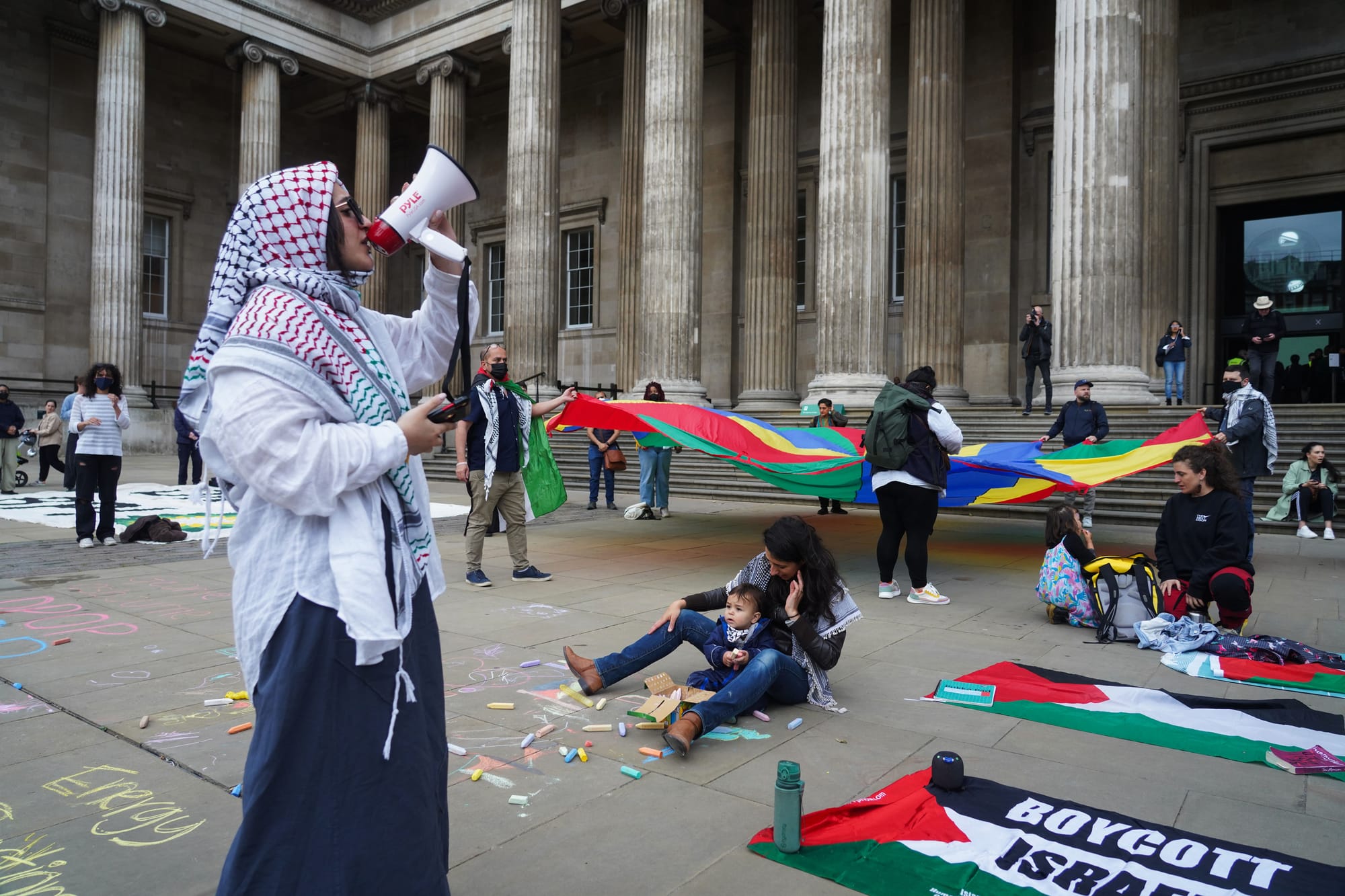
URGENT UPDATE: The British Museum is at the center of a growing controversy after reports emerged that it has altered displays in its Middle East Galleries, raising accusations of erasing Palestinian history. The museum has confirmed that it updated certain labels to use terms like “Canaan,” the ancient name for the Southern Levant. This change has sparked heated debate over the historical implications and the museum’s responsibilities.
In a statement, a British Museum spokesperson asserted that the term “Palestine” has not been removed from its displays, countering claims made by the Telegraph on July 15, 2023. “It is simply not true. We continue to use Palestine across a series of galleries, both contemporary and historic,” the spokesperson said. This declaration comes amid accusations that the museum is attempting to obscure Palestinian identity.
The term “Canaan” has roots dating back to approximately 1500 BCE, referring to an area that includes modern-day Palestine, Israel, Syria, and Jordan. Critics argue that the museum’s shift to using ancient terminology undermines the historical presence of Palestinians. “This decision is not supported by historical evidence and contributes to a wider pattern of erasing Palestinian presence from public memory,” stated a petition on Change.org, which has garnered over 13,000 signatures demanding transparency and the restoration of original labels.
The British Museum has also been accused of responding to pressure from UK Lawyers for Israel, a group that claimed credit for the changes. They demanded that the museum clarify the history of Canaan and its inhabitants. In a letter, they suggested that terms like “Palestine” retroactively apply to periods when such entities did not exist. The museum, however, maintained that its revisions were made independently.
The Palestine Forum in Britain condemned the changes, stating that they “view this as a troubling act of historical erasure that contradicts the museum’s professional and ethical responsibilities.” They called for the museum to engage with Palestinian scholars and experts to ensure accurate representation of history.
Critics like Scottish art historian William Dalrymple have publicly denounced the museum’s actions. He highlighted that the earliest reference to “Palestine” can be traced back to the Medinet Habu, an ancient Egyptian site from 1186 BCE. “Ridiculous of the British Museum to remove the word ‘Palestine’ from its displays, when it has a greater antiquity than the word ‘British,’” Dalrymple remarked.
The ongoing debate over these display changes illustrates the complex intersection of history, culture, and politics. As the situation develops, observers are closely watching how the British Museum will respond to the backlash and what implications this may have for the representation of Palestinian history in the future.
With the museum facing mounting pressure from advocacy groups, scholars, and the public, the conversation surrounding the Middle East Galleries is far from over. The British Museum’s next steps will be crucial in determining how it navigates this sensitive issue moving forward.
















