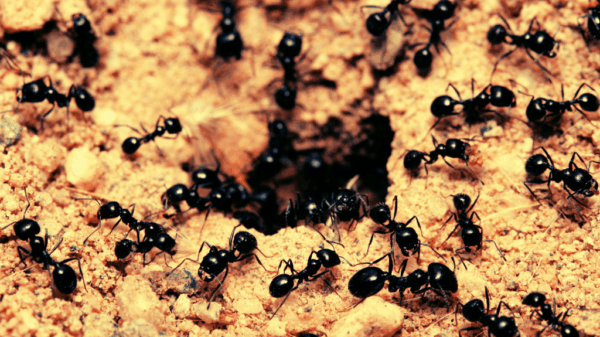



































UPDATE: In a groundbreaking study just published in Nature Communications, researchers reveal that baby ants, specifically the species Lasius neglectus, exhibit a chilling behavior: they actively signal for death when they become fatally ill. This unsettling discovery highlights the lengths these tiny creatures will go to protect their colonies from disease.
Conducted by a team led by Erika Dawson from the Institute of Science and Technology Austria, the study uncovers that young ants release a specific chemical signal indicating their condition to older worker ants. This communication prompts the workers to remove the sick pupae, preventing the spread of infection within their densely packed nests.
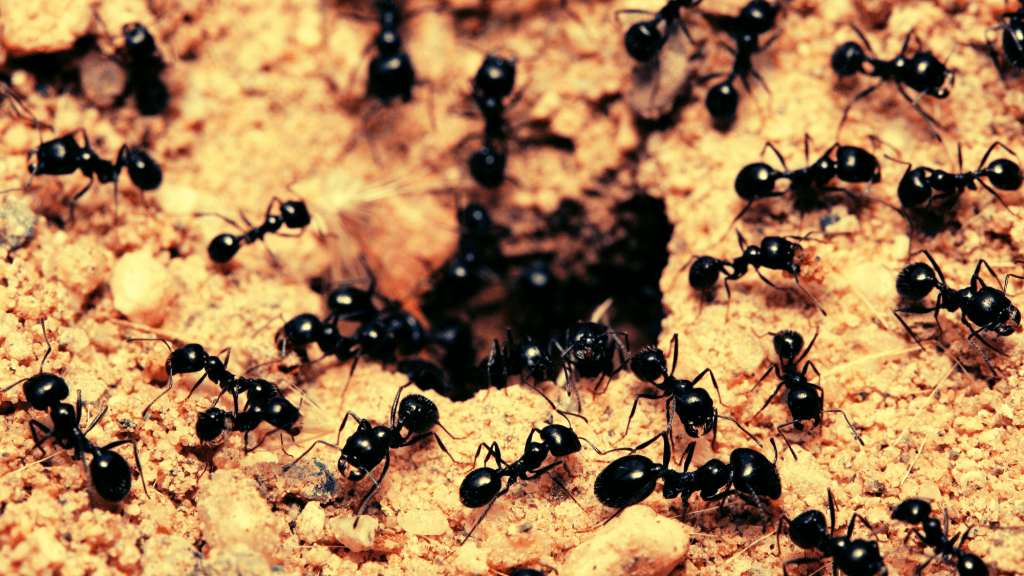
The findings are particularly relevant as ant colonies, housing thousands of individuals, are prone to rapid disease outbreaks. Dawson notes, “An ant colony is a perfect place for a disease outbreak to occur because there are thousands of ants crawling over each other.”
Adult worker ants have a grim but effective method for handling infections: they simply walk out of the nest to die. However, sick pupae, still encased in cocoons, lack this ability and must instead rely on their chemical signals to seek intervention. Previous research indicated that sick pupae emit a distinct odor, prompting workers to tear open the cocoons and deliver a lethal dose of poison, effectively killing both the pathogen and the ant.
The latest experiments conducted by Dawson’s team reveal that this smell is not just a byproduct of infection but a deliberate call for removal. When healthy pupae were exposed to the scent of sick ones, workers destroyed the healthy ants, confirming the chemical signal’s lethal impact. Furthermore, the signal is only released when worker ants are nearby, suggesting it is a strategic plea for help.
This behavior illustrates a rare form of self-sacrifice within the ant kingdom. The sick pupae sacrifice themselves, ensuring the survival of their healthier siblings and, ultimately, the colony. Interestingly, infected queen pupae do not emit the same signal, indicating that their stronger immune systems allow them to recover and negate the need for such a plea.
Dawson frames this extraordinary behavior as both a selfless act and a survival strategy. As these ants have been perfecting their survival techniques for over 100 million years, this study offers a stark insight into the collective nature of ant colonies. The findings pose profound questions about the social structures and survival tactics of these fascinating insects.
This revelation is essential not only for understanding ant behavior but also for comprehending the broader implications of disease management within social organisms. As researchers continue to study these complex interactions, the implications for ecological health and ant colony dynamics become increasingly vital.
The study’s findings are expected to spark further research into the behaviors of other social insects and their survival strategies. As scientists delve deeper into the world of ants, the question remains: what other secrets do these creatures hold?
Stay tuned for more updates on this developing story, as the research community eagerly anticipates the implications of these findings on our understanding of social insects and their survival mechanisms.