









































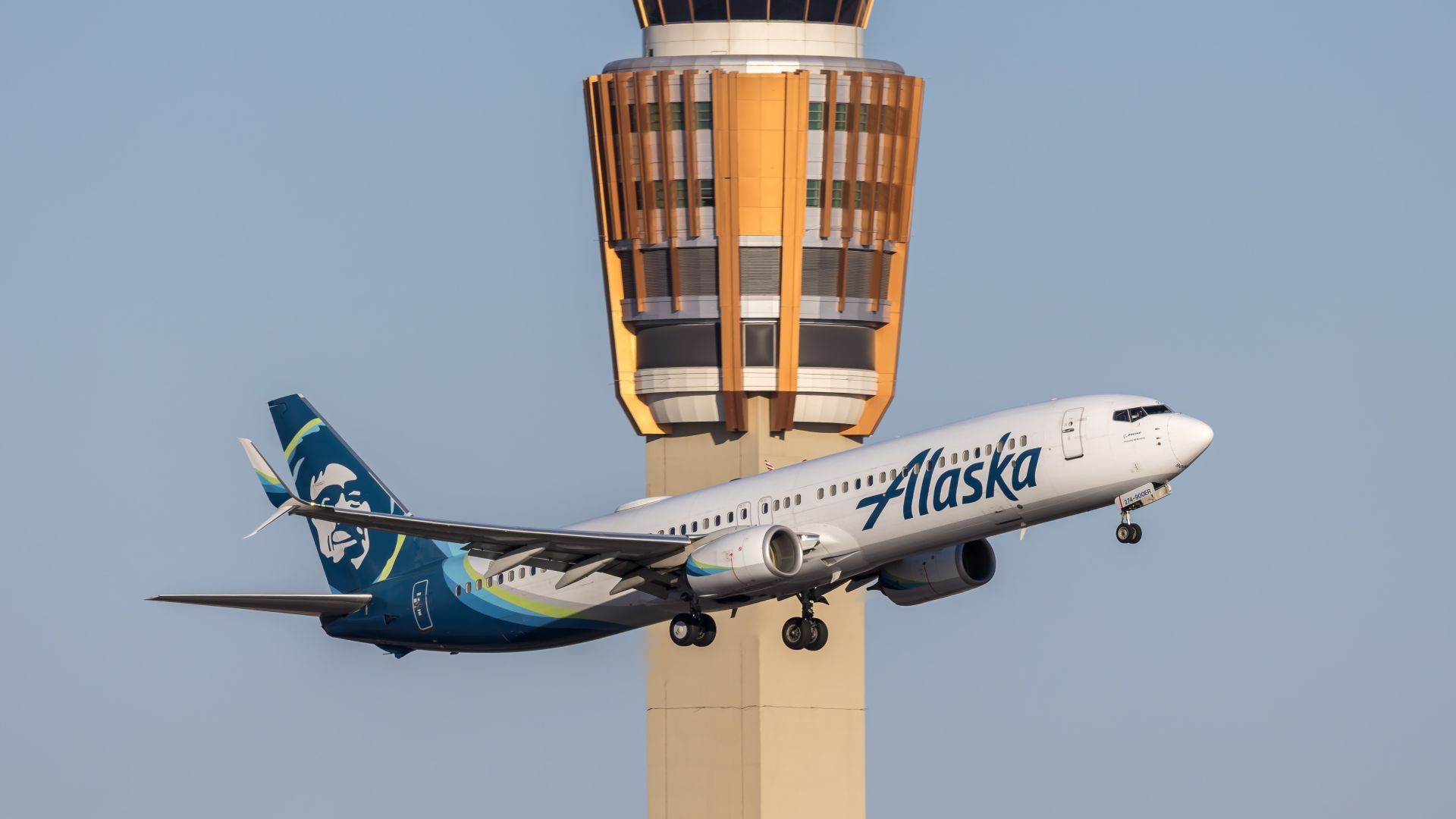
Alaska Airlines has officially retired its long-standing slogan “Proudly All Boeing” as part of its merger with Hawaiian Airlines. This change reflects the integration of Airbus aircraft into Alaska’s fleet, marking a significant shift for the airline as it moves away from an exclusive reliance on Boeing-made airliners. The decision comes just as Alaska Airlines prepares to expand its operations and diversify its fleet in response to evolving market demands.
Transitioning to a Diverse Fleet
The merger between Alaska Airlines and Hawaiian Airlines is reshaping both companies. The introduction of Airbus aircraft, specifically the A321 and A330 models, signifies a new chapter for Alaska Airlines. While the Boeing 737 family remains the dominant airframe in Alaska’s fleet, it will no longer serve as the sole brand in its hangars. According to data from Planespotters.net, Hawaiian Airlines operates 18 Airbus A321 jets and 32 A330 aircraft, which will continue to operate under Hawaiian livery, primarily servicing routes to and from Hawaii.
In contrast, Alaska Airlines boasts a fleet of 248 Boeing 737 aircraft, including the 737-900ER and 737 Max 9 models. To further its long-haul capabilities, Alaska is also adding Boeing 787 Dreamliner jets. The 787 represents a significant advancement for the airline, being the first long-haul twin-aisle aircraft directly acquired by Alaska. Notably, the 787 features a modern design with composite materials making up approximately 80% of its airframe volume.
Strategic Growth and Future Aspirations
The integration of the Airbus A330 fleet is crucial for Alaska Airlines’ aspirations to expand its international reach. The A330 aircraft can cover longer distances than the 737s, facilitating new routes to global destinations. Alaska Airlines is also preparing to utilize its new 787 Dreamliners as its international network develops over the coming years.
Initially, some A330 jets will support Alaska’s inaugural flights to Europe, with planned destinations including London, Reykjavik, and Rome. Additionally, these aircraft will service long-haul routes from Seattle-Tacoma International Airport (SEA) to Tokyo Narita (NRT) and Seoul Incheon (ICN). According to Alaska Airlines President and CEO Ben Minicucci, the merger represents a pivotal step in the airline’s journey as a combined organization, emphasizing the extensive efforts involved in this transition.
Under the Kahuʻewai Hawaiʻi Investment Plan, Alaska’s A330s will undergo a full interior retrofit starting in 2028. This update will introduce new lie-flat suites, premium economy cabins, and high-definition entertainment options, positioning Alaska to compete more effectively in the international market.
The Airbus A321neo jets will also play a vital role in the airline’s operations. Offering enhanced range and fuel efficiency, the A321neo is well-suited for overwater routes between Hawaii and the US West Coast. Some of these aircraft are expected to operate new international routes in conjunction with the A330s.
As Alaska Airlines evolves, it plans to retain the existing Airbus aircraft for the foreseeable future, given their relatively low airframe age and modern upgrades, including high-speed Starlink Wi-Fi. The airline’s strategy reflects its commitment to expanding its network while maintaining operational efficiency. The infrastructure at Honolulu International Airport (HNL) will support this diverse fleet, making it a practical choice for Alaska Airlines as it charts its future in the competitive airline industry.
















