






































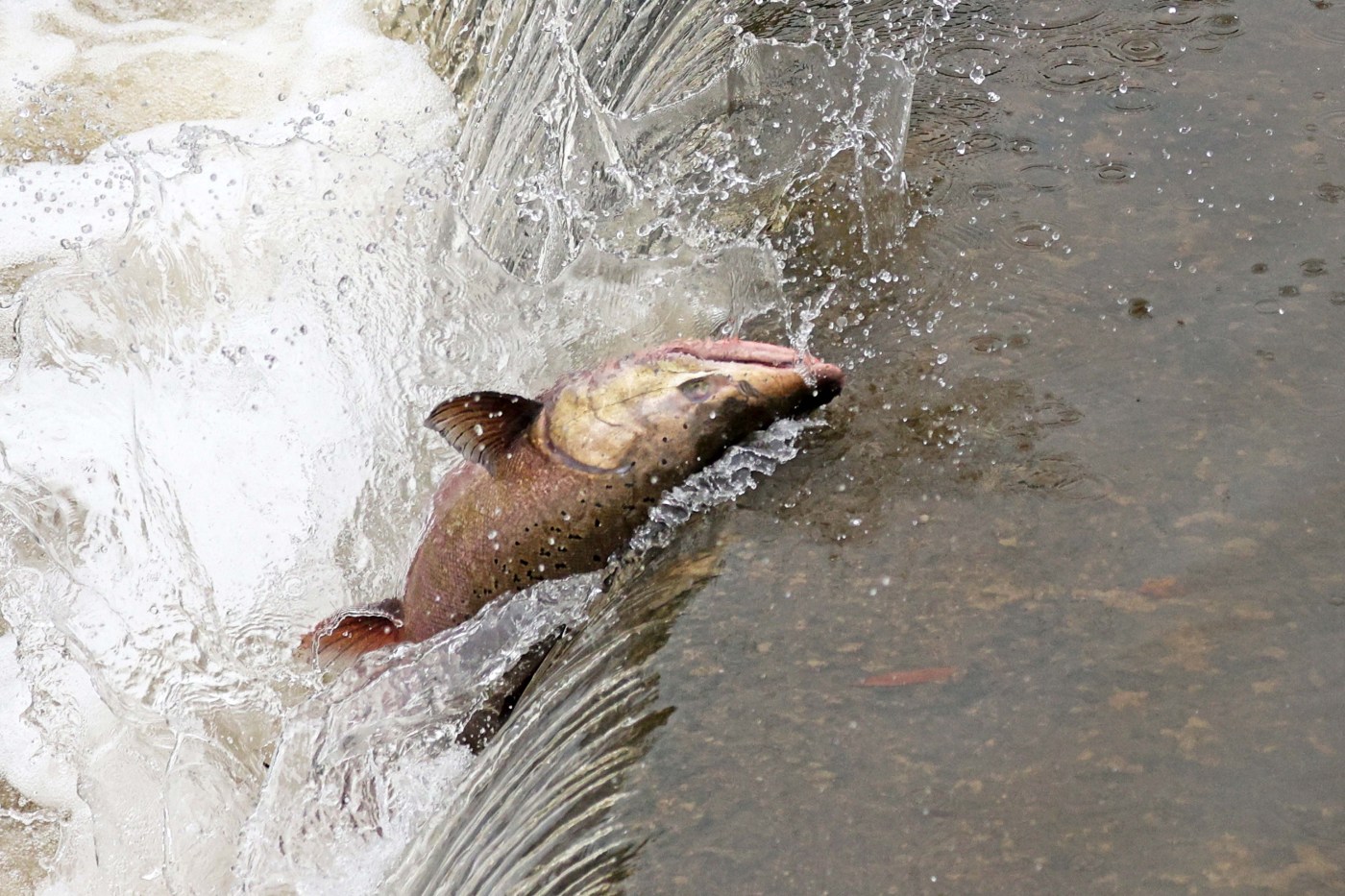
UPDATE: For the first time in 70 years, adult Chinook salmon have been spotted swimming up 86 vertical feet to return to Alameda Creek in lower Niles Canyon, marking a significant milestone in environmental restoration efforts. This breakthrough signals a potential resurgence of wildlife in the East Bay, raising hopes for the recovery of the region’s ecosystems.
Since early November, volunteers from the Alameda Creek Alliance have documented nearly a dozen Chinook salmon in a watershed that has seen no such activity since the 1950s. The sightings come just weeks after a groundbreaking $15 million project by PG&E and CalTrout removed a gas pipeline, the last barrier hindering fish migration upstream. The recent salmon run follows an atmospheric river, exciting environmentalists who are eager to see how this wet season unfolds.
Claire Buchanan, the Bay Area regional director of CalTrout, expressed enthusiasm, stating, “It’s just the beginning of this whole migration season, so I can’t wait to see what else comes up through our project site.” The restoration of Chinook salmon is crucial as these fish, along with the endangered steelhead trout, serve as indicator species, suggesting that other wildlife—including otters, eagles, and bears—may soon return to the Sunol Valley region.
The historical decline of Chinook salmon in the area began in 1925 with the construction of the Calaveras Reservoir, which, along with subsequent dams, severed the fish from their spawning grounds. Jeff Miller, executive director of the Alameda Creek Alliance, emphasized the significance of these recent developments: “Salmon are the soul of our rivers. Urban streams lost their soul after so many human impacts.”
While the returning salmon are likely hatchery-raised and not native to the watershed, their presence is a promising indicator of ecological recovery. “These salmon are effectively orphans seeking a watershed to adopt as their own,” Miller explained, noting that this run could inspire a broader resurgence of wildlife.
The arrival of these salmon is vital for the ecosystem. As they spawn and die, their bodies enrich the water and support the food web, enhancing biodiversity. Already, endangered species such as California tiger salamanders and northwestern pond turtles have been spotted in the vicinity.
Miller shared the excitement surrounding this return: “(Chinook salmon) are bringing their carcasses or providing food for everything from bald eagles to river otters… We’re due to get black bears back in the Bay.” The implications of this salmon arrival extend beyond wildlife; they serve to connect local communities with the natural world and highlight the importance of ecological stewardship.
This development is a culmination of over 20 years of advocacy for salmon restoration in Alameda Creek, with Miller reflecting on the collective efforts involved. “Our losses are permanent, and our wins are usually temporary,” he said, yet this collaborative endeavor symbolizes that significant victories for restoration are possible.
As the migration season progresses, the community watches closely for more signs of life in the creek. The excitement surrounding the Chinook salmon’s return is palpable, and it serves as a reminder of the interconnectedness of ecosystems. “People get really excited when they see these fish. It connects them to the creek,” Miller stated, underscoring the emotional impact of this environmental narrative.
Stay tuned for more updates on this developing story as local wildlife and environmental advocates continue to monitor the situation. The return of Chinook salmon to Alameda Creek is not just a win for fish; it signals hope for a healthier ecosystem and a revitalized natural legacy.