





































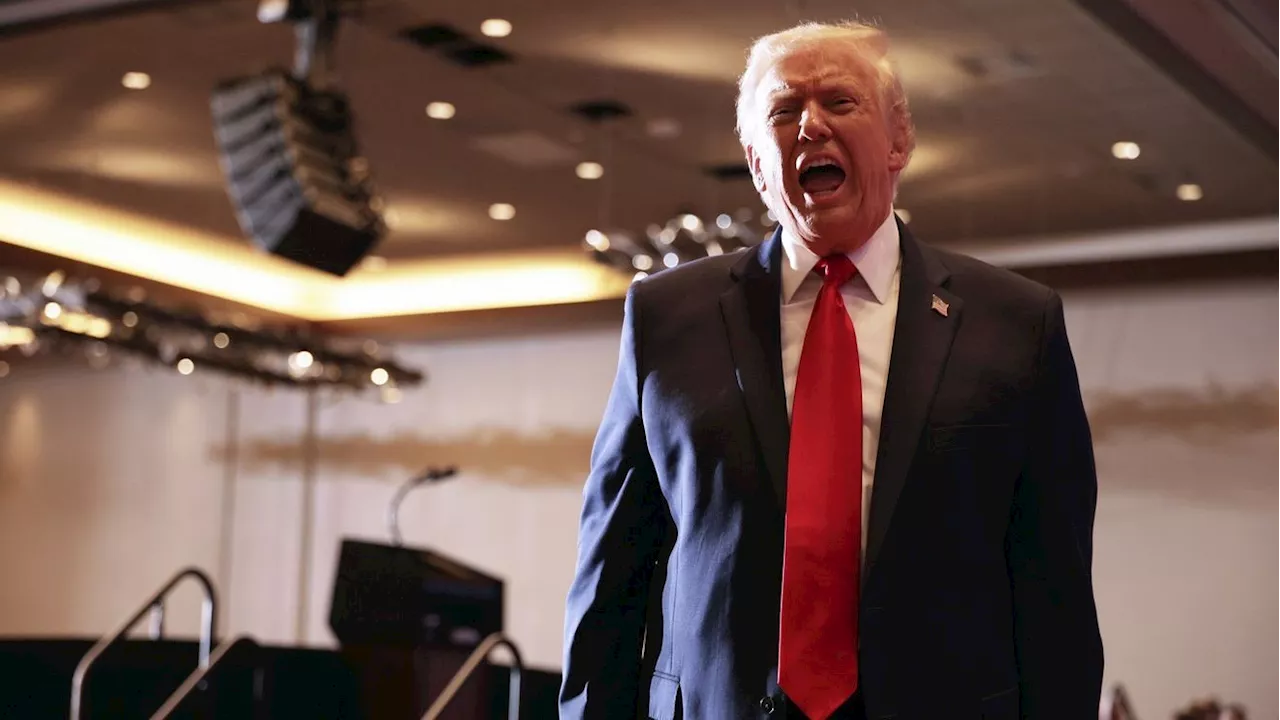
President Donald Trump declared on December 9, 2025, that the United States is at the forefront of artificial intelligence (AI) development and emphasized the need for federal oversight in a roundtable discussion with business leaders at the Mount Airy Casino Resort in Mount Pocono, Pennsylvania. His remarks highlighted the importance of creating a unified regulatory framework to maintain the country’s leadership in this rapidly evolving sector.
During the event, Trump stated, “We’re leading artificial intelligence by a lot. We’re writing rules and regulations. We want to keep it at the federal level so it’s simple for the companies.” He expressed concern that without a centralized approach, the competitive edge of U.S. firms could be jeopardized, especially as they contend with significant international competitors.
Trump pointed out that the U.S. is making substantial strides in building data centers and manufacturing chips, which are critical components for AI technology. He advocated for a singular regulatory framework, saying, “There must be only one rulebook if we are going to continue to lead in AI. We are beating all countries at this point in the race, but that won’t last long if we are going to have 50 states involved in rules and the approval process.”
In a post on his social media platform, TRUTH Social, Trump warned, “AI will be destroyed in its infancy!” He proposed issuing an executive order to streamline regulations, arguing that the current system, which requires multiple approvals from individual states, is inefficient and counterproductive for innovation. “You can’t expect a company to get 50 approvals every time they want to do something. That will never work!” he asserted.
The discussion around federal control of AI comes at a time when various state governments are also advocating for their rights to regulate emerging technologies. A prominent voice in this debate is Governor Josh Shapiro of Pennsylvania, who has previously stated that states should retain the authority to legislate on AI matters. Shapiro emphasized the need for federalism to be preserved, suggesting that state involvement is crucial for local benefits.
As the conversation around AI governance continues, the implications of Trump’s push for federal oversight could have significant ramifications for both businesses and regulatory bodies. The landscape of AI is not just about technology but also about how it is managed and controlled at various levels of government.
The outcome of this debate will likely shape the future of AI development in the U.S., determining not only how innovations are implemented but also how they are regulated. With the stakes high in the global AI race, the administration’s decisions could influence the balance of technological power on an international scale.