























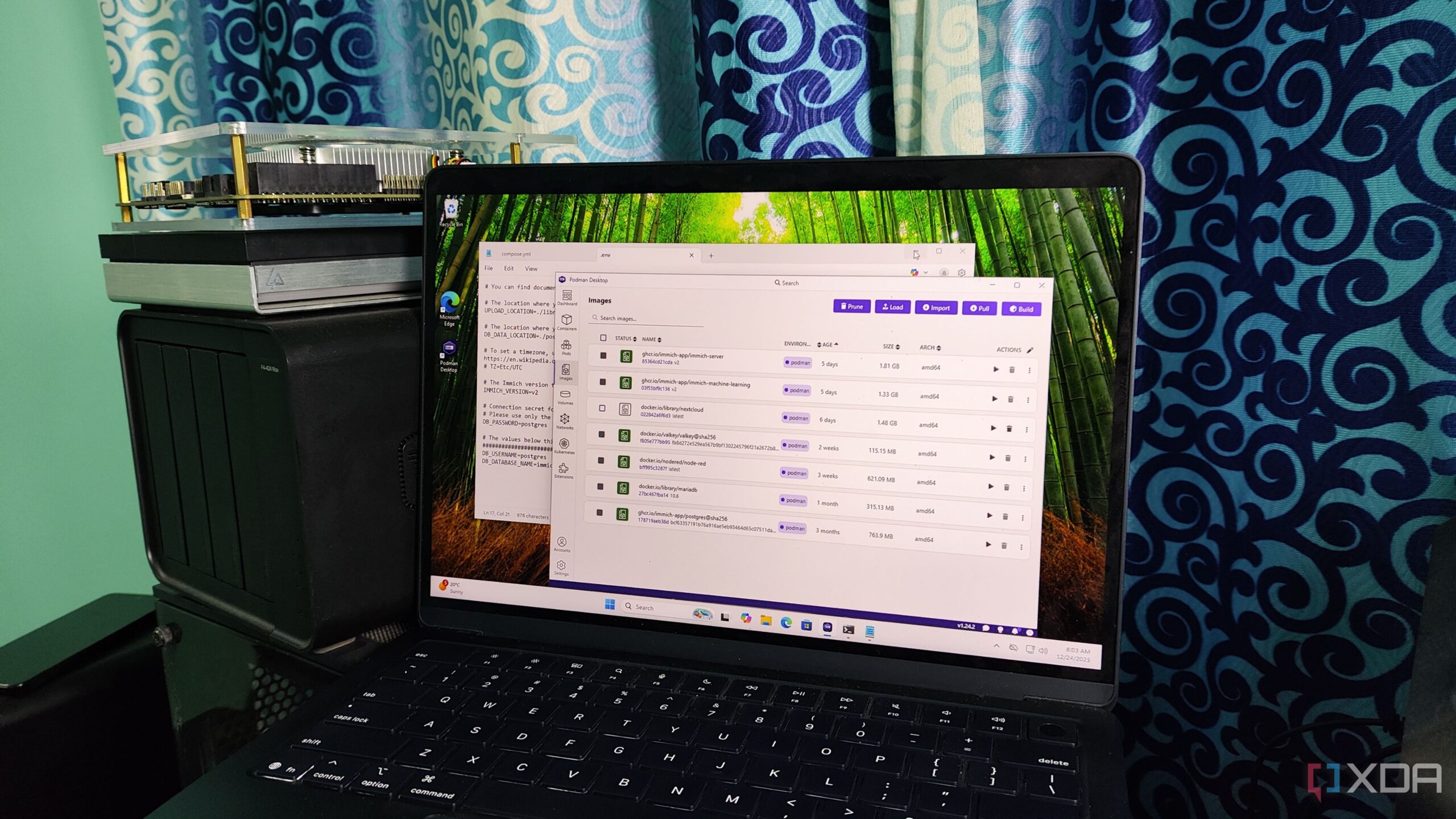














After years of using Docker for containerization, a user has successfully transitioned to Podman, discovering a range of advantages in terms of usability and security. This change took place in a single afternoon, highlighting the ease of migration between the two systems.
Docker’s Advantages and Challenges
Docker has established itself as a leading tool for managing containerized applications, particularly popular in the self-hosting community. Its user-friendly interface and ability to ensure consistent deployments across various devices, such as Network Attached Storage (NAS) systems, make it an appealing choice. However, users often encounter quirks related to its underlying architecture.
The core of Docker’s functionality relies on a background daemon that orchestrates container operations. While this approach simplifies some aspects of container management, it can lead to unpredictable behavior when the daemon restarts. Furthermore, running Docker typically requires elevated permissions, which raises security concerns, especially in environments exposed to the internet. Although Docker does offer a rootless mode, it is not the default for most installations, making it less accessible for the average user.
Embracing Podman’s Unique Approach
Upon exploring alternatives, the user decided to trial Podman. Unlike Docker, Podman operates without a central daemon, allowing containers to run as direct child processes. This fundamental shift means that any background crashes do not affect the entire system, resulting in improved stability and performance.
Podman’s command structure closely mirrors that of Docker, making the transition straightforward. The migration involved minimal adjustments, primarily to networking and volume permissions, as Podman defaults to running containers without root privileges. This configuration enhances security by limiting the access of containers to the host system.
For users concerned with resource efficiency, Podman also offers advantages. The absence of a persistent daemon reduces overhead, which is particularly beneficial for low-power devices such as Raspberry Pi systems. The seamless nature of the migration allowed for almost immediate functionality of existing containers, keeping all services operational.
Ultimately, the user found that while Docker remains a solid choice, particularly for those requiring extensive ecosystem support, Podman aligns better with their specific needs. The transition not only mitigated the small frustrations associated with Docker but also enhanced security and resource management, making it a compelling alternative for self-hosted applications.
















