

































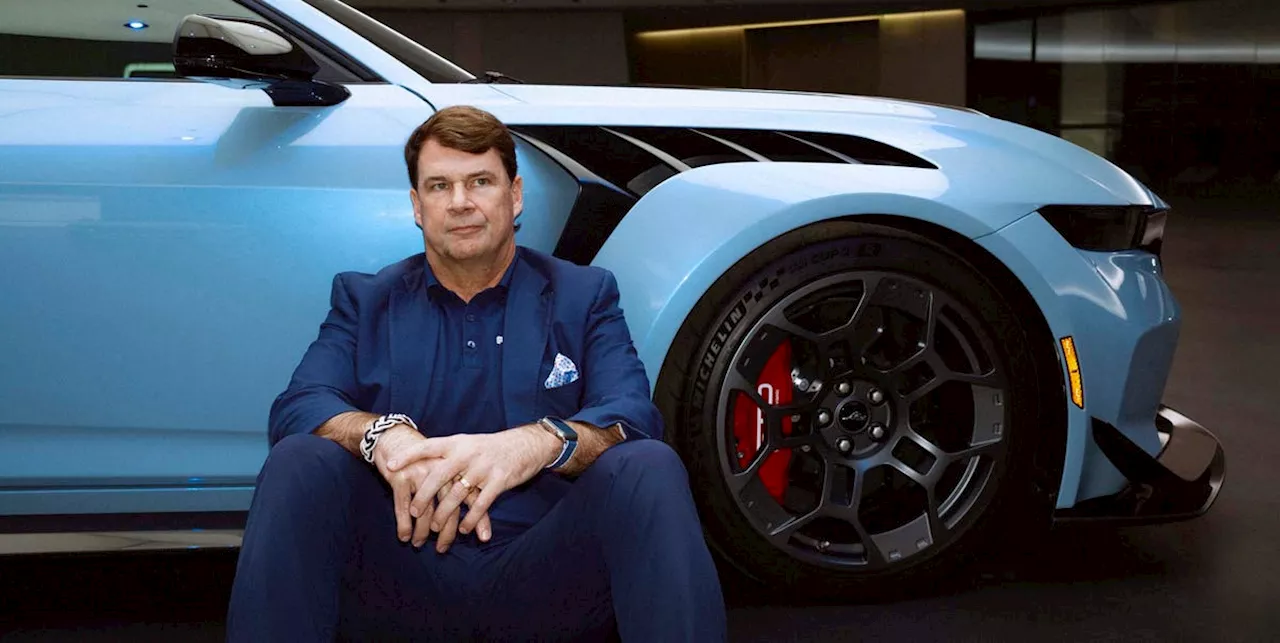
Ford Motor Company CEO Jim Farley is steering the company in a new direction as he marks five years in his role. Farley has pivoted away from electric vehicles (EVs) to emphasize off-road vehicles, particularly as competition intensifies from Chinese manufacturers. This shift comes in the wake of significant challenges, including the cancellation of the F-150 Lightning, a $19.5 billion write-down, and the discontinuation of partnerships with Korean battery makers.
A new EV platform, touted by Farley as a “Model T moment” for Ford, is set to launch in mid-size pickup form by 2027, utilizing a retooled plant in Kentucky. This initiative aims to address Ford’s lag behind leading players in the EV market, especially from China, where manufacturers have rapidly advanced.
Challenges and Reflections on EV Strategy
Farley has faced scrutiny regarding the company’s electrification strategy, which has not proven profitable. The F-150 Lightning initially showed promise but failed to sustain its momentum after production was ramped up. Reflecting on this experience, Farley acknowledged, “I totally would’ve done it differently,” citing the unexpected impact of the COVID-19 pandemic on consumer behavior and vehicle pricing.
During this period, a significant increase in vehicle prices led to inflated demand, which misled product planners regarding future sales. Farley admits that internal biases against EVs impacted design and production decisions. “When we ripped apart a Tesla… I was just absolutely flabbergasted,” he noted, highlighting the differences in engineering approaches between Ford and its competitors.
While Ford’s EV efforts faltered, the company’s off-road segment has flourished. According to Farley, the Raptor and Bronco models have become unexpectedly lucrative, reinforcing Ford’s brand image. “We can’t make enough of the stuff around the world,” he said, indicating the strong demand for these vehicles.
Navigating Global Competition and Market Dynamics
The competition landscape is shifting rapidly, particularly with the rise of Chinese automakers like BYD and Nio. Farley emphasized that the speed of innovation among these companies caught many in the industry off guard. “We couldn’t travel during COVID… but when we got back, we were shocked at what we saw,” he explained, referring to the advanced designs and technologies integrated into Chinese vehicles.
Farley also addressed the challenges posed by stringent emissions regulations in Europe, which have pushed automakers towards electric options. He pointed to the recent launch of the Puma Gen-E, an electric vehicle that has gained traction in the UK market, where it is reportedly the top-selling EV. Yet, Farley remains cautious about launching similar models in the United States, citing concerns over size and pricing.
Despite the focus on larger vehicles, Farley advocates for a diverse lineup in the American market, suggesting that the company should innovate to compete with compact car offerings from rivals. “I believe that would give us the best chance to improve our fitness to compete,” he stated.
As Ford moves forward, the company’s approach to manufacturing and technology development will be critical. Farley stressed the need for domestic production of semiconductors to mitigate supply chain risks, echoing sentiments across the industry about the importance of reshoring capabilities.
Looking ahead, Farley believes that the integration of software and electric powertrains will redefine the automotive landscape. He envisions a future where vehicles serve not just as modes of transport but also as spaces for entertainment and productivity. “We have to think more and more about how our vehicle is a third space, an entertainment space,” he remarked, signifying a shift in consumer expectations.
In summary, Jim Farley’s tenure at Ford has been marked by significant challenges and strategic pivots. As he navigates the complexities of the automotive industry, his focus on off-road vehicles and innovative EV solutions reflects a broader commitment to adapt and thrive in an evolving market.
















