









































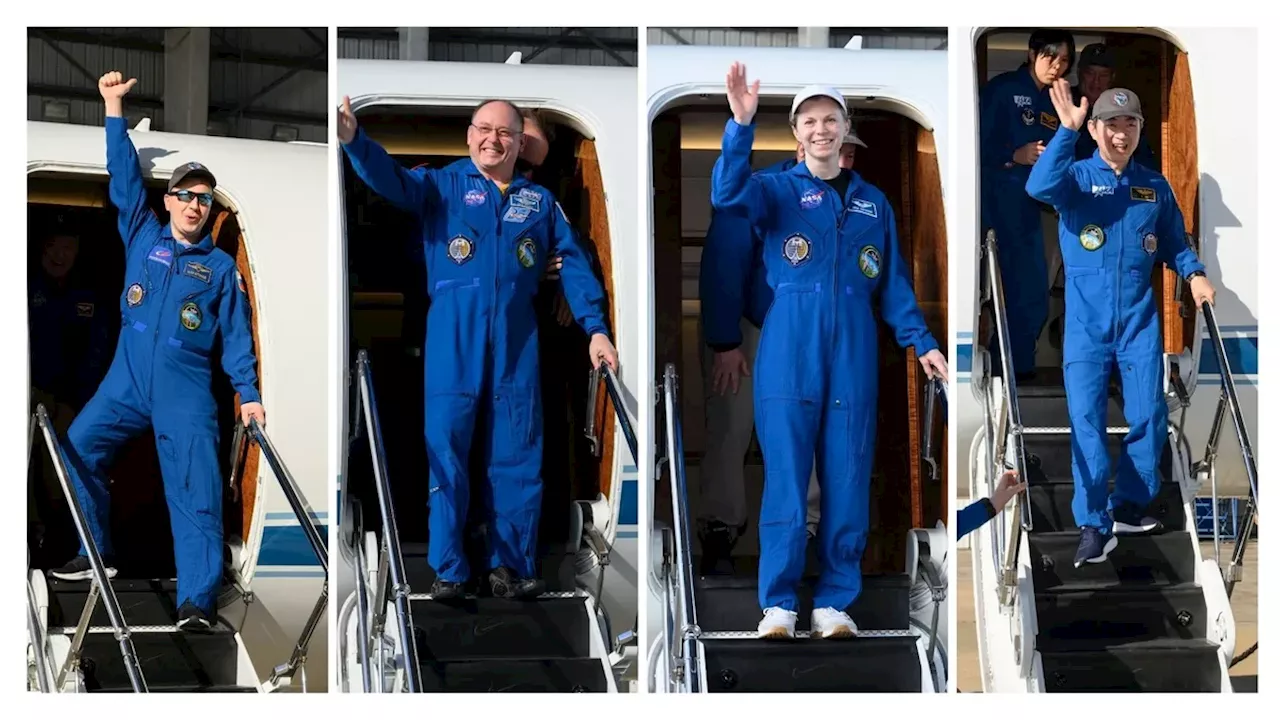
At a recent press conference, Crew-11 astronauts reflected on their unexpected medical evacuation from the International Space Station (ISS), expressing optimism for the future of human spaceflight. Former ISS commander Mike Fincke, along with astronauts Zena Cardman, Kimiya Yui, and Russian cosmonaut Oleg Platonov, returned to Earth weeks ahead of schedule due to a medical issue that arose onboard.
Fincke highlighted the effective collaboration between the crew and ground teams during the evacuation. He noted that their response under pressure demonstrated a strong capability for handling unforeseen situations, which bodes well for upcoming missions, particularly the Artemis program. “How we handled everything all the way through nominal operations to this unforeseen operation really shows our readiness for future exploration,” he stated.
The incident occurred while Fincke and Cardman were preparing for a spacewalk, which would have marked Cardman’s first experience outside the ISS. Fincke explained that the ISS’s portable ultrasound machine played a critical role in assessing the medical issue. He acknowledged the limitations of the ISS’s medical facilities, stating, “We do try to make sure that everybody, before we fly, is really not prone to surprises. But sometimes, things happen, and surprises occur.”
Yui praised the team’s ability to manage the situation, emphasizing the importance of international cooperation in space missions. “We can handle any kind of difficult situation. This experience is invaluable for the future of human spaceflight,” he remarked.
Looking towards future missions beyond low-Earth orbit, Cardman indicated that additional training may not be necessary for ISS crews based on their experience. However, she raised concerns about the need for better diagnostic tools for longer missions. “As we journey beyond low-Earth orbit, having the right tools on board to diagnose and treat a variety of situations will be crucial,” Cardman noted.
She also stressed the ISS’s role in advancing human spaceflight, stating, “We’re going to need astronauts to be the eyes and ears for researchers on the ground. We won’t always be the scientific experts, but the ISS has been an excellent proving ground for how we conduct science in space.”
The Crew-11 mission marks a significant moment in NASA’s ongoing efforts to explore deeper into space. The lessons learned from this medical evacuation will likely influence protocols and training for future missions, as the agency prepares to send astronauts to the Moon and beyond.
As the space community reflects on this event, the emphasis remains on enhancing safety and readiness for the challenges of human space exploration. The successful return of Crew-11 serves as a testament to the resilience and adaptability of astronauts and mission teams alike.
















