









































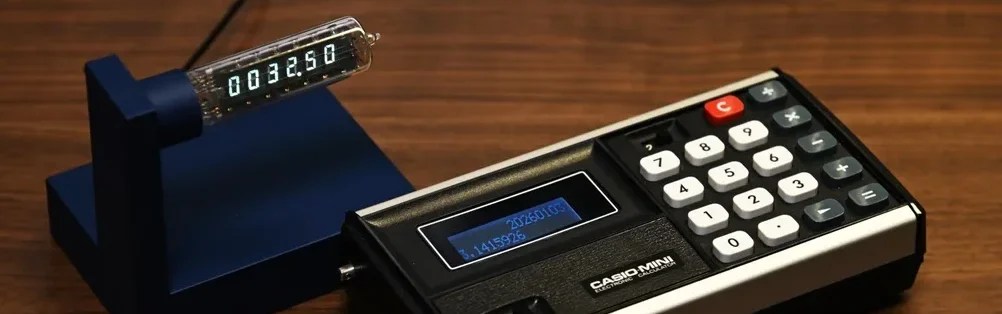
A creative project has emerged from Japan, where a broken Casio Mini CM-602 calculator has been transformed into a modern device featuring Reverse Polish Notation (RPN). The project, led by an enthusiast known as [shiura], not only revives the calculator but also repurposes its Variable Frequency Drive (VFD) into a stylish WiFi clock.
The project began when [shiura] faced the challenge of a malfunctioning calculator that had “let out the magic smoke.” Instead of discarding the device, the decision was made to breathe new life into it. The result is a dual-purpose solution: a functional RPN calculator and a visually appealing clock that utilizes the salvaged VFD.
Innovative Reverse Engineering Techniques
In their detailed write-up, [shiura] provides a comprehensive guide for enthusiasts interested in reverse engineering the pins of VFDs. This guide is particularly useful for those without access to the same model of calculator or VFD tube. The process involves powering up the device and sequentially cutting power to the pins to identify which segments or characters illuminate, effectively mapping out the anodes and grid electrodes. The cathodes were identified by examining the printed circuit board (PCB).
The next steps involved connecting the VFD to an ESP32 microcontroller through a transistor array to ensure appropriate voltage levels. According to the project description, this meticulous wiring resulted in a functioning clock. The code and design files for the clock, including an editable .blend file, are available on GitHub, allowing others to replicate or modify the design.
Upgrading the Calculator Experience
The calculator component of the project showcases an elegant hack, leveraging the fact that the Casio’s CPU shares the same pin pitch as modern microcontrollers, specifically 2.54 mm or 0.1 inches. This compatibility allowed an RP2040 Zero to be fitted into the original CPU footprint, effectively scanning the keypads using its GPIO functionality. Additionally, a new I2C display was wired to replace the VFD.
While it remains unclear whether some driver circuitry malfunctioned or if [shiura] chose to salvage the display for the calculator project, the dual-line display enhances usability compared to the original single-line setup. The code for the calculator, also hosted on GitHub, is primarily in Japanese; however, it has been found to be accessible through machine translation, and the code itself is user-friendly.
Longtime followers of [shiura] will recognize their reputation for crafting intricate clocks and repairing vintage pocket computers. This latest project combines both passions, highlighting the ingenuity behind the twin hack and reinforcing [shiura]‘s standing within the maker community.
This innovative revival not only showcases technical skills but also emphasizes the growing trend of sustainability within technology—transforming what might be considered electronic waste into valuable, functional items. As enthusiasts continue to explore creative solutions, projects like this inspire others to see the potential in their own broken devices.
















