












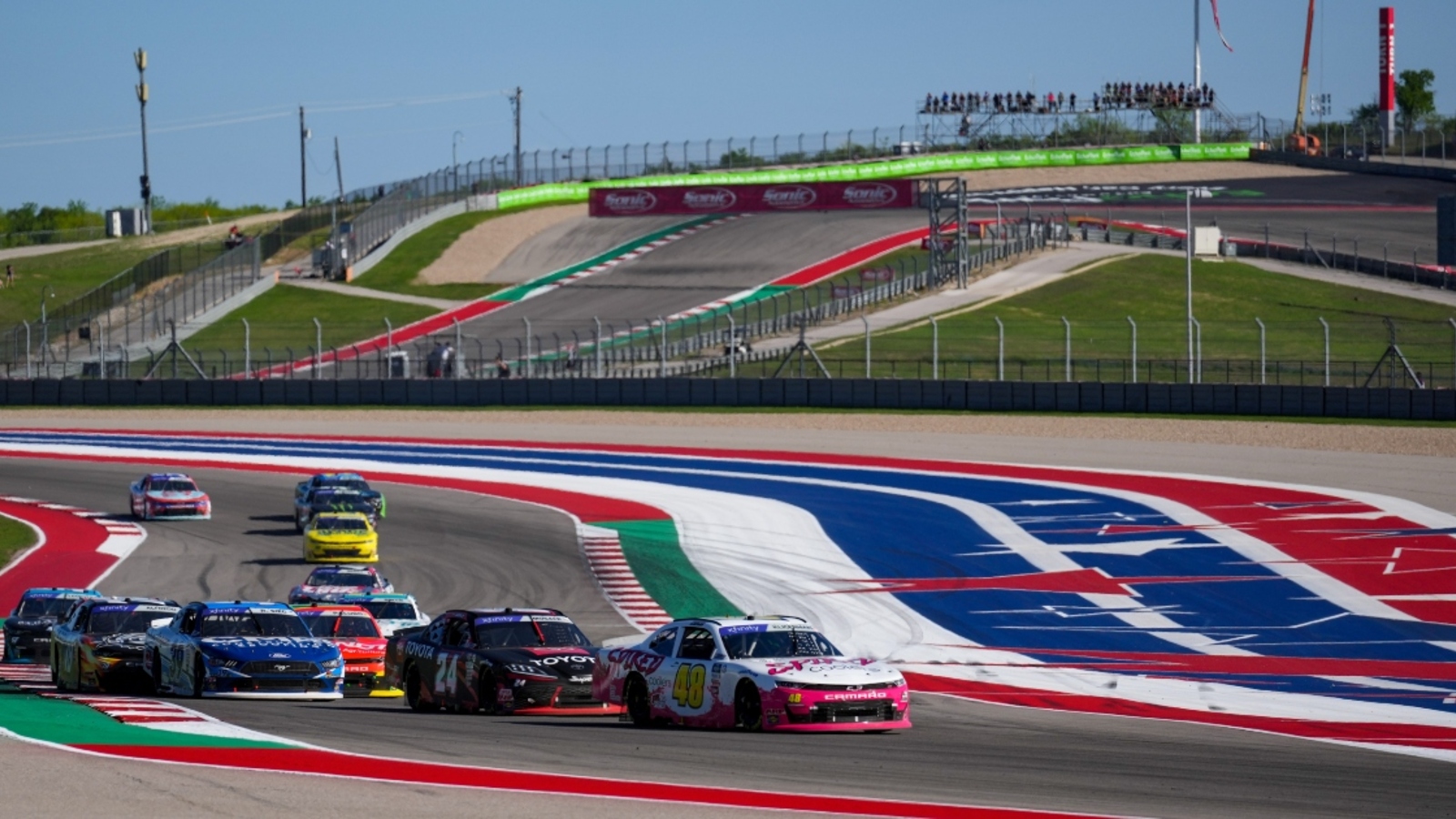

















The NASCAR Cup Series faced significant challenges during the recent race at the Circuit of the Americas (COTA), where many drivers encountered severe heat issues due to the failure of their cool suits. This malfunction forced competitors to endure uncomfortable temperatures as they fought for optimal positioning on the track.
The situation escalated for several drivers, with notable concerns raised about the condition of AJ Allmendinger. According to his team, Allmendinger reported feeling unwell during the race, stating on the radio, “I don’t know if I’m going to make it.” Following the race, he was seen in distress on pit road, raising alarm among his team and spectators alike.
Kevin Harvick, a veteran driver, elaborated on the cool suit failures during an episode of his podcast, Kevin Harvick’s Happy Hour. He explained that once the engines overheated and stopped running, drivers were left with warm water in their cool suits. “They never had a chance to drain the system to get all the hot water out of it,” Harvick noted. “You just can’t afford to take the time unless you just can’t tolerate it. They managed it the best they could.”
Allmendinger’s experience highlights the serious implications of such malfunctions. He shared that he felt the heat build-up starting at the end of Stage 1. The temperature within his vehicle reached 130 degrees Fahrenheit, while the water circulating through his cool suit was at a staggering 100 degrees Fahrenheit. This scenario exemplifies the risks that drivers face, as the very system designed to provide relief can quickly become a source of discomfort.
Driver Workload and Track Conditions Compound Challenges
The COTA track is known for its demanding layout, which significantly increases driver workload. Harvick emphasized that the race conditions were particularly grueling. “Let’s not forget, this was a full day’s work,” he stated. The lack of caution laps and the constant shifting required by the track amplify the physical demands on the drivers.
He described how the cars generate heat, especially given the combination of high-speed sections and heavy braking zones. “The cars are hotter anyway. You go down the front straightaway pretty fast, but the rest of the lap is pretty slow, so you don’t get a lot of time to cool everything off,” he explained. Harvick underlined that these factors make for a fatiguing experience for drivers, particularly when their cooling systems fail.
Mamba Smith, another commentator, praised the efforts of Allmendinger’s team for their strong qualifying performance, but expressed concern over the aftermath of the race. He noted the frightening scene when Allmendinger was found laid out on the ground with all his gear still on. “I’m glad that Mike (Joy) was able to get the information to everybody,” Smith remarked.
Fortunately, Allmendinger was evaluated and released from the medical center shortly after, although his team and fans experienced a considerable amount of anxiety during the incident.
As the NASCAR Cup Series continues, the implications of these cool suit failures at COTA may prompt teams to reassess their equipment and overall strategies for managing extreme heat conditions. With drivers facing both physical exhaustion and equipment reliability issues, the focus on driver safety and performance will remain paramount in the coming races.
















