









































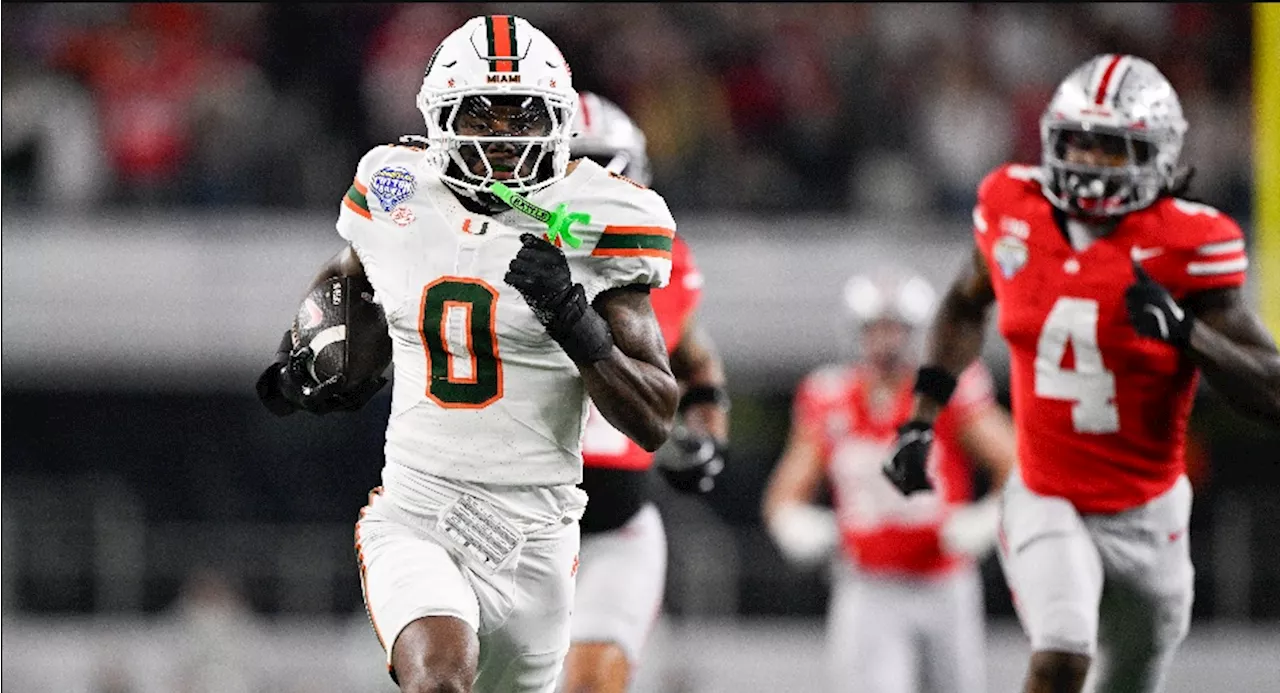
Ohio State’s pursuit of back-to-back championships ended abruptly as the Miami Hurricanes defeated the Buckeyes 24-14 in the College Football Playoff (CFP) Quarterfinal at the Cotton Bowl on December 31, 2025. The Buckeyes, entering the playoffs as the No. 2 seed, struggled against a resilient Miami team that showcased superior physicality and execution throughout the match.
The game marked a disappointing conclusion for Ohio State, whose offense failed to find its rhythm early, culminating in a performance that fell short of expectations. Miami, seeded tenth, dominated the lines of scrimmage and capitalized on key plays to secure the victory. Ohio State quickly found itself in a 14-0 deficit by the second quarter, unable to recover as Miami maintained control.
Miami’s offense, led by experienced quarterback Carson Beck, opened the scoring with an impressive 83-yard drive, converting crucial third downs that highlighted their effectiveness under pressure. The Hurricanes’ ability to execute in critical moments was a stark contrast to Ohio State’s struggles. The Buckeyes managed only three conversions out of ten attempts on third down, exacerbating their difficulties.
The turning point came when Ohio State attempted to respond to Miami’s early lead. After a lackluster start, the Buckeyes finally made a significant play with a 59-yard completion to the Miami 16-yard line. However, disaster struck shortly thereafter when quarterback Julian Sayin threw an interception that was returned 72 yards for a touchdown by Keionte Scott. This play not only deepened Ohio State’s deficit but also underscored the challenges faced by Sayin, who struggled under pressure.
Ohio State’s offensive line, which had faced scrutiny throughout the season, was again exposed. The Buckeyes allowed five sacks and seven tackles for loss, contributing to a disjointed offensive performance. Poor execution from the offensive line hindered their ability to establish a consistent ground game or protect Sayin effectively.
In contrast, Miami’s defensive front, featuring standout players Akeem Mesidor and Rueben Bain Jr., consistently pressured Sayin, forcing him into hurried decisions and limiting Ohio State’s offensive opportunities. Miami’s defense not only stifled Ohio State’s attempts to move the ball but also took advantage of their mistakes, turning the game in their favor.
As the game progressed, Ohio State showed brief signs of life, with Sayin connecting with Jeremiah Smith for a touchdown that briefly narrowed the score to 17-14. Smith’s performance was commendable, finishing with seven catches for 157 yards, but it was not enough to shift the momentum decisively back to Ohio State.
Miami sealed their victory with a late touchdown drive, enhancing their lead to 24-14. The Hurricanes converted multiple crucial third downs during this drive, showcasing their ability to perform under pressure. Ohio State’s defense, which had been strong throughout the season, could not make the necessary stops when it mattered most, failing to adapt to Miami’s offensive strategies.
Ohio State’s coach, Ryan Day, acknowledged that the team was not prepared for the intensity of the matchup and emphasized the need for reflection and improvement moving forward. The loss raises questions about the team’s offensive strategy and overall execution, particularly in high-stakes games.
As the Buckeyes conclude their season, they face significant decisions regarding their coaching staff and player personnel, particularly on the offensive line, which has been a recurring issue. The upcoming offseason will be crucial for Ohio State as they seek to regroup and address the shortcomings that led to their early elimination from the CFP.
Miami’s victory not only propels them into the next round of the playoffs but also serves as a testament to their growth throughout the season. With key players performing at a high level, the Hurricanes appear poised to make a deeper run in the postseason. Ohio State, on the other hand, must reflect on a season that promised much but ended in disappointment, marking a pivotal moment for the program as they look ahead to the future.
















