









































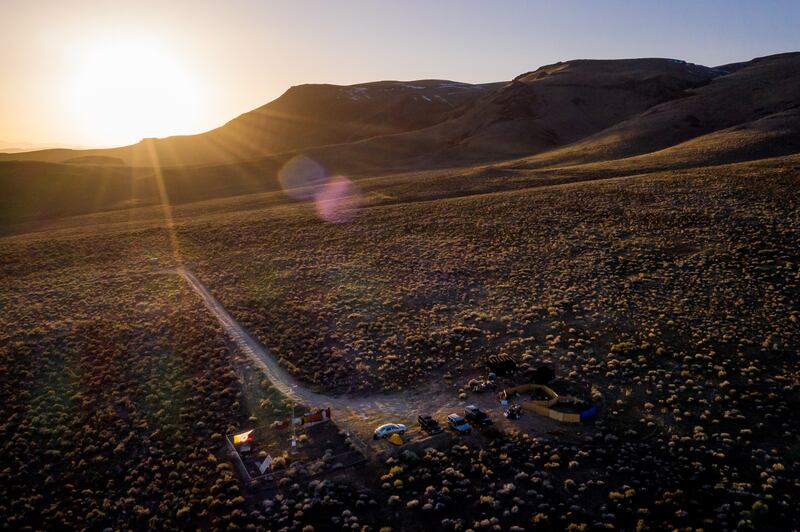
The third-highest ranking official at the Department of the Interior, Karen Budd-Falen, failed to disclose significant financial ties linking her family to what is set to become the world’s largest lithium mine, located on Bureau of Land Management property in Nevada. During her tenure as deputy solicitor in 2018, Budd-Falen’s husband, Frank Falen, sold $3.5 million worth of water rights from their ranch to Lithium Nevada Corp., a subsidiary of Lithium Americas. This transaction was intertwined with the permitting process for the Thacker Pass mine, which required approvals from the Department of the Interior to proceed.
The mine’s permits were granted in January 2021, coinciding with the conclusion of Budd-Falen’s role in the Trump administration. Subsequently, in March 2025, she assumed the position of associate deputy secretary of the Interior, a role that does not require Senate confirmation. In September of the same year, the Trump administration acquired a 5% equity stake in both the Thacker Pass mine and Lithium Americas, a decision made while the Department of Energy released over $430 million from a government loan intended to accelerate the mine’s development.
Details surrounding these connections were initially reported by The New York Times and further investigated by Public Domain and High Country News. These outlets acquired Budd-Falen’s disclosures through a Freedom of Information Act request, which revealed that the documents lacked necessary signatures from the Department of the Interior’s ethics officials, raising questions about compliance with relevant laws.
In response to these allegations, Charlotte Taylor, deputy communications director at the Interior, defended Budd-Falen, stating that she is a “proven leader” with decades of experience. The statement emphasized her commitment to managing public lands responsibly while upholding departmental standards. Another spokesperson remarked on her longstanding professionalism, dismissing accusations as “baseless.”
The legal implications of Budd-Falen’s situation are significant. Under the Ethics in Government Act, high-ranking officials must disclose financial interests to prevent potential conflicts of interest. Additionally, laws prohibit officials from engaging in matters that could financially benefit themselves or their immediate family. The Department of the Interior’s guidelines clearly state that officials should not work on assignments affecting their financial interests or those of their family.
Frank Falen indicated that his wife met with executives from Lithium Americas in Washington, D.C., in 2019, following the water rights deal. While both parties assert that the conversation did not touch on their business dealings, the optics of such a meeting have raised eyebrows. Robert Weissman, co-president of the government ethics watchdog group Public Citizen, expressed concerns, stating, “It’s not clear that Karen Budd-Falen knew she had a conflict, but it’s clear she should have known, and that the public should have known.”
Karen Budd-Falen has a long-standing career as a land rights attorney and describes herself as a “cowboy lawyer.” She has represented property owners in Wyoming for decades and previously worked for both the Reagan administration and the Trump administration. In 2018, she declined the nomination for director of the Bureau of Land Management, citing personal concessions that were unacceptable to her, particularly the requirement to relinquish her family ranch.
While Budd-Falen has not publicly addressed the concerns surrounding her financial disclosures, she has received steadfast support from the Department of the Interior. The implications of her undisclosed ties to the lithium mine highlight ongoing challenges regarding transparency and ethical governance in high-ranking positions within the federal government.
















