









































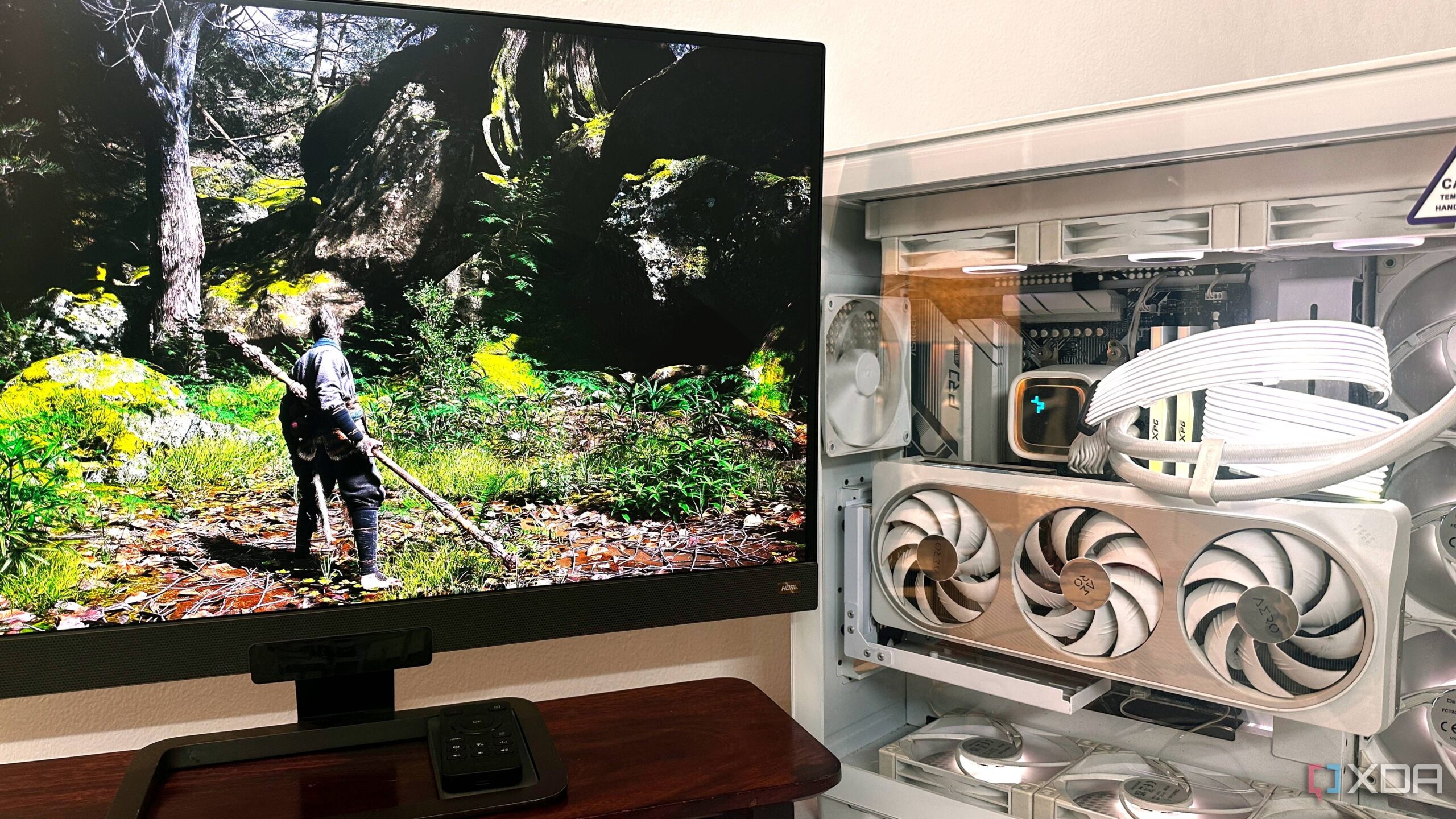
The gaming industry is witnessing a shift in performance technology, with asynchronous reprojection emerging as a leading contender to enhance gaming experiences. This technology promises significantly lower latency and a smoother gameplay experience, regardless of the frame rate, challenging the prominence of established technologies like DLSS (Deep Learning Super Sampling).
Gamers continuously seek ways to maximize the performance of their hardware, particularly in competitive titles where every frame counts. In this realm, even the slightest reduction in latency can influence outcomes. While DLSS has gained popularity for providing additional frames at a minimal compromise on visual fidelity, it may not represent the future of PC gaming. Its advantages are currently well-established, but asynchronous reprojection could redefine performance standards.
Understanding Asynchronous Reprojection
Asynchronous reprojection works by predicting and generating frames based on the current state of a game, allowing for smoother motion and improved responsiveness. This method stands out because it can reduce the perceived latency, offering players a more immediate and immersive experience. Unlike traditional frame rendering methods that depend heavily on consistent frame rates, asynchronous reprojection adapts dynamically, ensuring that even when frame rates fluctuate, the gameplay remains fluid.
The potential of this technology could be particularly significant for competitive gamers, where rapid reactions are paramount. The enhanced responsiveness could provide an edge, allowing players to react more swiftly to in-game events. As competitive gaming continues to evolve, innovations like asynchronous reprojection may become essential tools for players aiming to improve their skills and performance.
In contrast, DLSS focuses on enhancing graphical fidelity by using AI to upscale lower-resolution images. While this technology has proven effective in delivering better frame rates in many titles, it does not address latency in the same way as asynchronous reprojection. The latter’s capacity to maintain performance at varying frame rates might make it more appealing for gamers who prioritize speed and responsiveness over visual quality.
The Implications for Gamers and Developers
As gaming technology advances, developers must consider how these innovations affect gameplay and user experience. Asynchronous reprojection could encourage game developers to design titles that leverage this technology, creating environments that prioritize responsiveness alongside visual quality. This shift may also influence hardware manufacturers, prompting them to optimize their offerings for this new standard.
The transition to asynchronous reprojection is not without its challenges. Implementing this technology requires a strong understanding of both hardware capabilities and software optimization. Developers will need to ensure their games can fully utilize asynchronous reprojection to provide the promised benefits. The success of this technology will depend on its integration into mainstream gaming platforms and its acceptance within the gaming community.
In conclusion, while DLSS remains a valuable asset for enhancing frame rates and visual quality, asynchronous reprojection stands poised to reshape the future of gaming performance. By focusing on reducing latency and providing a seamless gameplay experience, this technology may become a cornerstone for competitive gaming and beyond. As the landscape evolves, gamers and developers alike will be watching closely to see how these advancements unfold in the coming years.
















