





























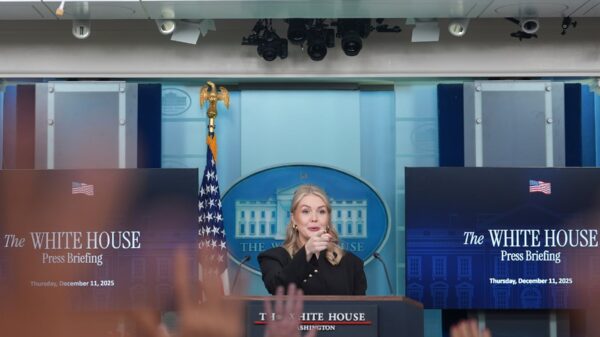





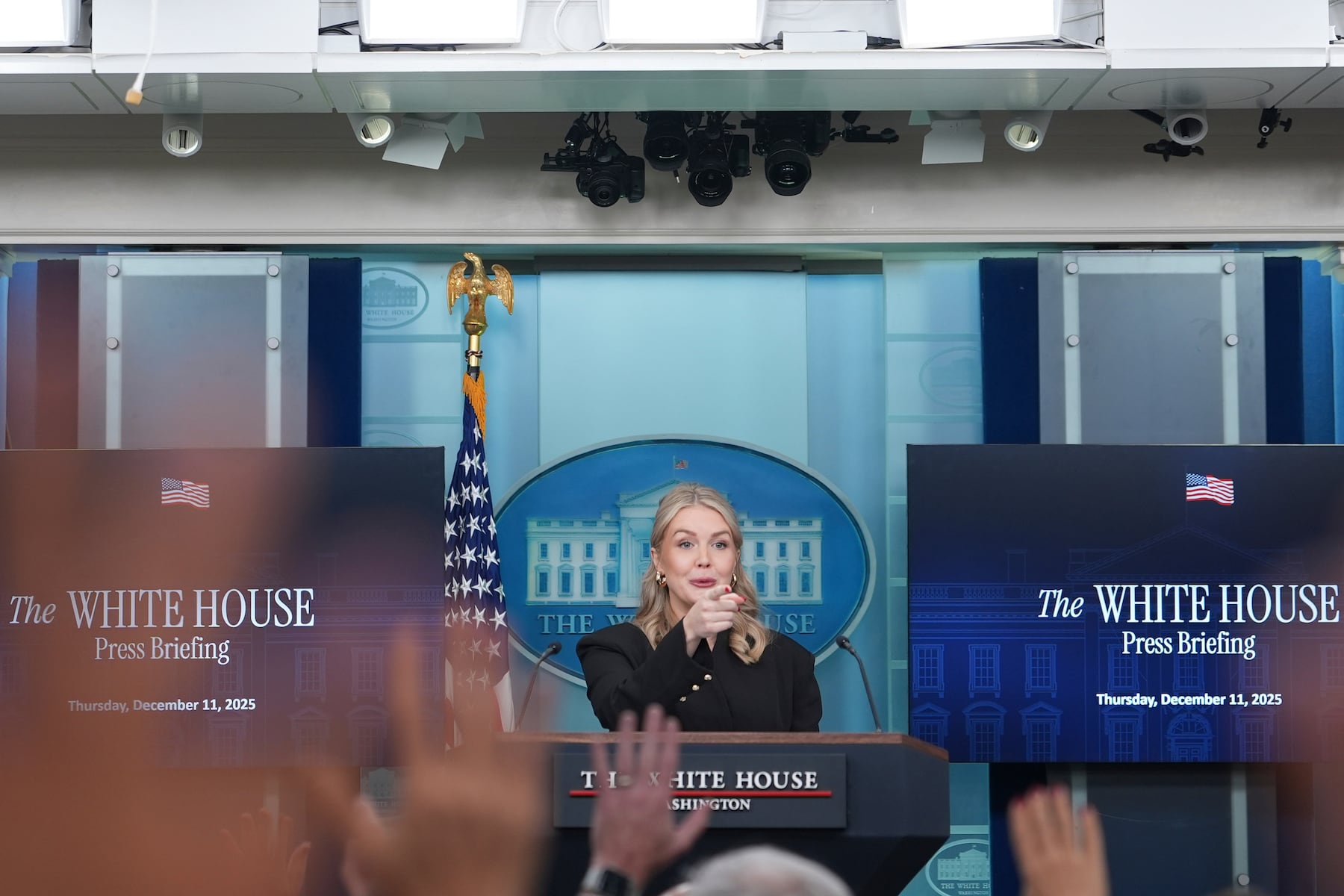
During a press briefing on December 11, 2025, White House Press Secretary Karoline Leavitt made headlines by proclaiming positive economic news. She stated, “Inflation as measured by the overall CPI has slowed to an average 2.5% pace,” and claimed that “real wages are increasing roughly $1,200 for the average worker.” These assertions, however, quickly drew scrutiny from the media and analysts.
When CNN political correspondent Kaitlan Collins attempted to follow up on Leavitt’s statements, she faced an unexpected shift in tone. Instead of addressing the inquiry, Leavitt launched a criticism of her predecessor, Jen Psaki, accusing Psaki of sharing “utter lies” during her tenure. Leavitt insisted, “Everything I’m telling you is the truth backed by real, factual data, and you just don’t want to report on it ’cause you want to push untrue narratives about the president.”
The economic data referenced by Leavitt raised eyebrows. The actual inflation rate for September was reported at 3%, contradicting her claim of a 2.5% average. Furthermore, CNN business editor David Goldman highlighted that American workers have experienced “the lowest annual paycheck growth since May 2021.”
Leavitt’s remarks prompted comparisons to themes in George Orwell‘s novel, “1984”, particularly regarding the manipulation of truth and statistics. The character Winston Smith, who produces fabricated statistics, echoes concerns about the disconnection between official claims and reality. Orwell wrote about a world where “the fabulous statistics continued to pour out,” a description that some commentators now find relevant to contemporary political discourse.
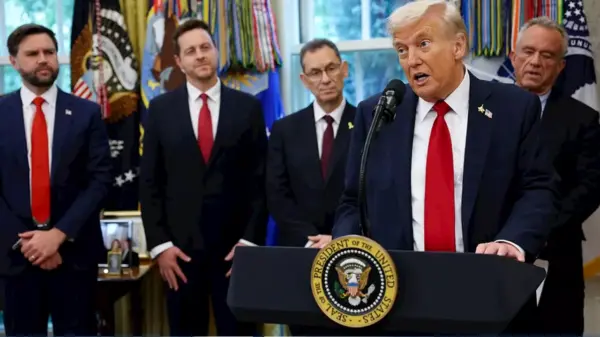
In defending the current administration, Leavitt has frequently claimed that Donald Trump is the “most transparent president in history.” This assertion has been met with skepticism, particularly after Trump dismissed Bloomberg News journalist Catherine Lucey. Critics argue that such claims reflect a form of doublespeak, a term Orwell coined to describe language that obscures truth.
The concept of doublethink, defined by Orwell as the ability to hold contradictory beliefs simultaneously, appears to resonate in Leavitt’s statements. This manipulation of language allows officials to present misleading narratives while maintaining an appearance of credibility. For example, Leavitt recently stated, “This administration has done more with respect to transparency when it comes to Jeffrey Epstein than any administration ever,” a claim described as “fabulously audacious” by The Guardian’s Washington bureau chief, David Smith.
Over the course of her tenure, Leavitt has made various claims that have been challenged as inaccurate. She alleged that USAID provided a grant of $32,000 for a “transgender comic book” in Peru; this was unsubstantiated. Additionally, she misrepresented the “One Big Beautiful Bill” as eliminating taxes on tips, overtime, and Social Security, despite the reality that deductions for these categories are capped.
Political communication often involves a degree of embellishment, yet Leavitt’s approach has raised significant concerns about the integrity of information presented to the public. In her defense of Trump’s policies and actions, she has consistently sought to undermine opponents while promoting a narrative that aligns with administration goals.
As the political landscape continues to evolve, the impact of language and the integrity of information remain crucial topics for discourse. Observers are left to ponder the implications of these developments for democratic accountability and public trust in government communications.
This article is republished from The Conversation under a Creative Commons license. For further reading, visit the original article here: https://theconversation.com/karoline-leavitts-white-house-briefing-doublethink-is-straight-out-of-orwells-1984-270675.