









































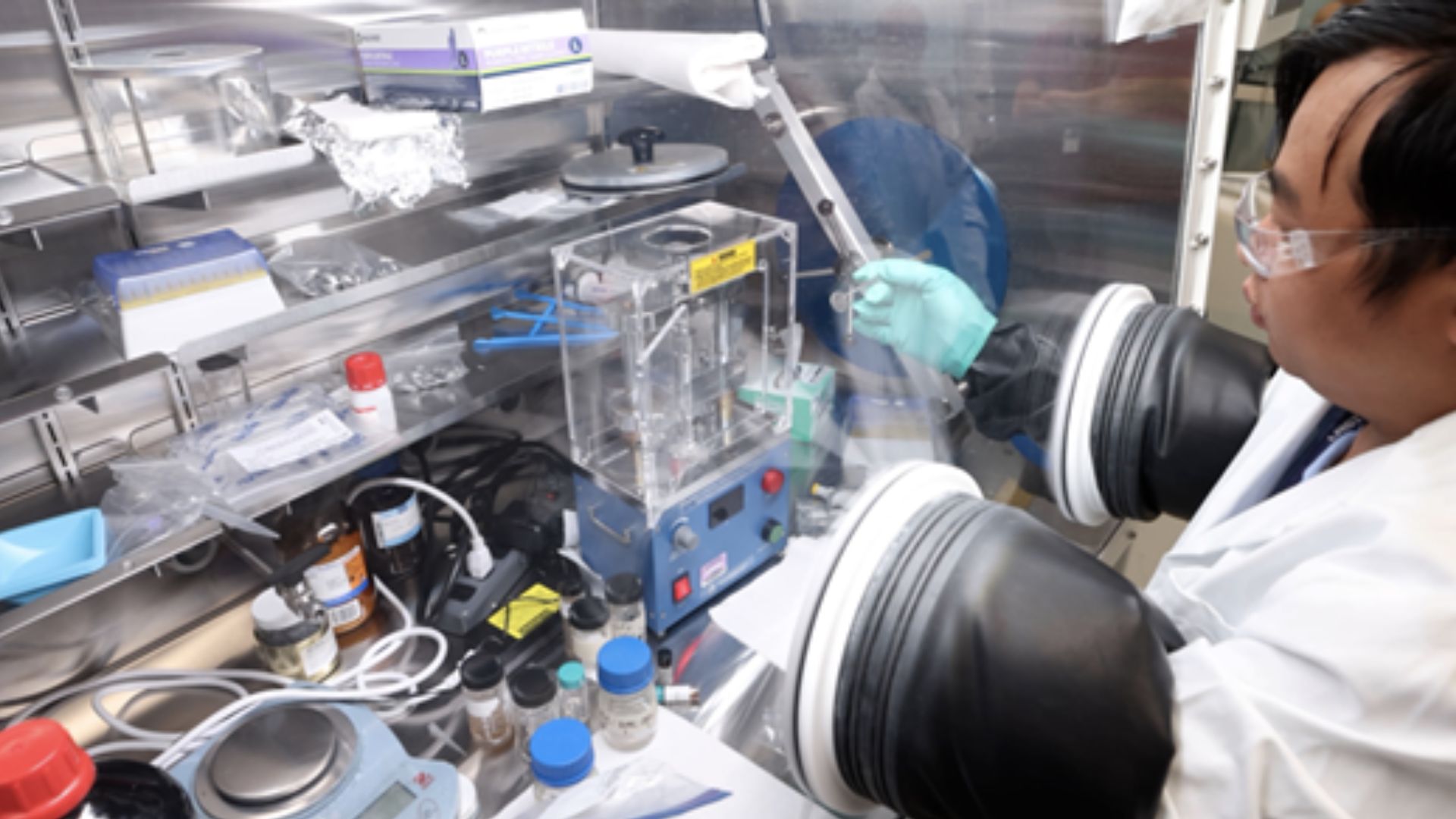
A research team at the United States Department of Energy’s National Energy Technology Laboratory (NETL) has developed a groundbreaking process to produce high-quality graphite from coal waste. This innovative approach utilizes a low-temperature synthesis method, enabling the transformation of various coal sources into critical mineral graphite, pivotal for multiple industrial applications, including batteries and electronics.
The researchers, led by Ki-Joong Kim, a principal investigator in the Materials Engineering and Manufacturing Division at NETL, have focused on employing earth-abundant materials, such as iron, as catalysts. This method significantly lowers processing intensity and costs. Kim noted, “The low-temperature synthesis of graphite from coal and coal waste could lead to a new cost-effective domestic industrial manufacturing base for this critical material.”
Efficiency and Economic Impact
The NETL synthesis process stands out for its efficiency. By utilizing an innovative catalyst, the researchers have reduced the required processing temperatures from a staggering 3,000 degrees Celsius to under 1,500 degrees Celsius. Additionally, the time needed to produce graphite has been dramatically shortened from several weeks to just a few hours. The catalyst developed by the team can be recovered, recycled, and reused indefinitely, enhancing the overall economics of graphite production.
According to NETL’s findings, graphite produced through this novel method performs comparably to commercially available graphite in battery anodes. This breakthrough not only promises to reduce dependency on imported materials but also positions the United States to become a significant player in the graphite market.
The Critical Role of Graphite
Graphite is classified as a critical mineral in the United States due to its integral role in essential manufacturing processes. It is widely used in the production of battery electrodes, steel, and even for applications in nuclear power. Presently, approximately one-third of the global graphite market relies on natural graphite, while the remaining two-thirds is supplied by synthetic graphite.
The majority of global graphite production is concentrated in China, which accounts for around 70% of natural graphite and over 60% of synthetic graphite production. Notably, natural graphite has not been mined in the United States since 1990, although synthetic graphite production continues to expand. The new low-temperature synthesis method capitalizes on American coal resources, potentially establishing a cost-effective domestic manufacturing base for this essential material.
As the demand for sustainable and locally sourced materials grows, NETL’s research could play a crucial role in reshaping the future of graphite production in the United States. The development not only aligns with economic interests but also supports broader environmental goals by repurposing coal waste, contributing to a more sustainable industrial landscape.










