









































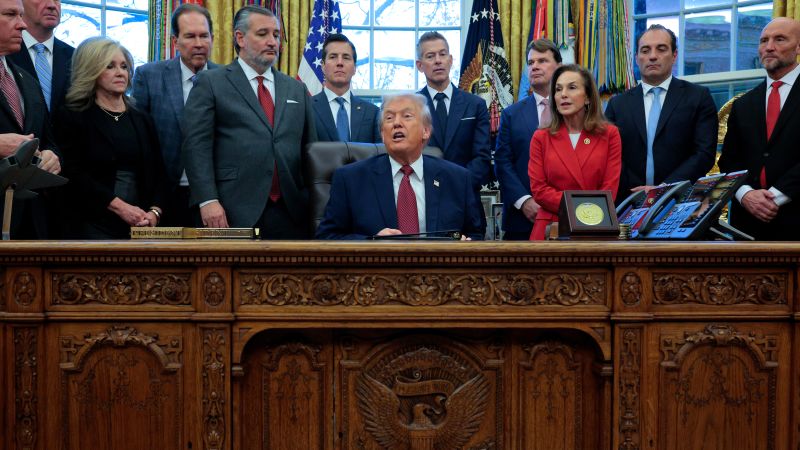
President Donald Trump has directed his team to enhance his public schedule, aiming to address growing concerns regarding his health and stamina. This strategic move comes after a series of analyses indicated that Trump’s public appearances have decreased significantly since his first term in office.
The adjustments to his daily schedule became apparent at the end of 2022, with vague descriptions of presidential activities, including signing ceremonies and policy meetings, being incorporated into the updates sent to the media. These changes were not coincidental; sources indicate that Trump himself requested a more comprehensive portrayal of his daily activities.
Despite frequent camera appearances, Trump has expressed frustration over perceptions that his schedule reflects lighter workloads than during his initial years in office. According to a New York Times analysis, his total number of official appearances had fallen by 39% compared to his first year in office in 2017. This decline, coupled with later-starting events and fewer domestic trips, has fueled speculation about his stamina as he approaches his 80th birthday.
In response, Trump’s team has begun to include more detailed accounts of his private meetings in the public schedule. This includes closed-door sessions with Cabinet officials and business executives, which previously would not have been disclosed. For instance, meetings labeled as “Policy Time” or “Signing Time” now appear on his public calendar, reflecting his desire to demonstrate a busy agenda.
During a recent week, the White House provided reporters with a detailed account of Trump’s private schedule from January 5 to January 9. This included 61 phone calls and 67 meetings, often commencing as early as 07:15 and extending past 19:00. While names were redacted, the calls involved foreign leaders, business executives, and members of his administration.
Trump’s sensitivity to his public image is not new. As his first term concluded in 2021, he had previously dictated specific language for his daily guidance, insisting that he would work from early morning until late evening. Despite some allies suggesting that he need not prove his work ethic to the public, Trump remains adamant about countering any narratives that imply he has slowed down.
Comments from his press secretary, Karoline Leavitt, emphasized this point, asserting, “No President in American history has worked harder or accomplished more for our country than President Trump.” She criticized what she described as biased media coverage, claiming public trust in traditional outlets is at an all-time low.
Trump’s frustrations extend beyond his public schedule. Recently, he has voiced concerns about media portrayals of his accomplishments, feeling that critical issues, such as the immigration policies his administration has implemented, are not receiving adequate positive attention. For instance, during a trip to Alaska, he became angry when a reporter suggested he had been overshadowed during a meeting with Russian President Vladimir Putin.
The president has also faced challenges regarding his administration’s immigration enforcement tactics, which have drawn criticism from both the public and lawmakers. Polls indicate that many Americans disapprove of the current approach, with Trump attributing this dissatisfaction to media bias rather than flaws in strategy. He believes that if the public understood the objectives of his agenda—specifically, the removal of dangerous criminals—they would be more supportive.
In a notable instance, Trump held an impromptu news briefing to showcase mugshots of individuals arrested under his immigration crackdown, illustrating his commitment to the agenda. Following a recent incident in Minneapolis involving federal officers and a shooting, he made changes to the team overseeing deportations in the area, reflecting his hands-on approach to these issues.
Economically, Trump has dismissed concerns about affordability as political tactics aimed at undermining his administration. He has questioned why public sentiment appears negative despite positive economic indicators, suggesting that ineffective public relations may be to blame. “Maybe I have bad public relations people,” he remarked, expressing a desire for better promotion of his administration’s achievements.
As Trump continues to navigate these challenges, his administration remains focused on reshaping public perceptions, ensuring that his image as a diligent and active leader is conveyed to both supporters and critics alike.
















