









































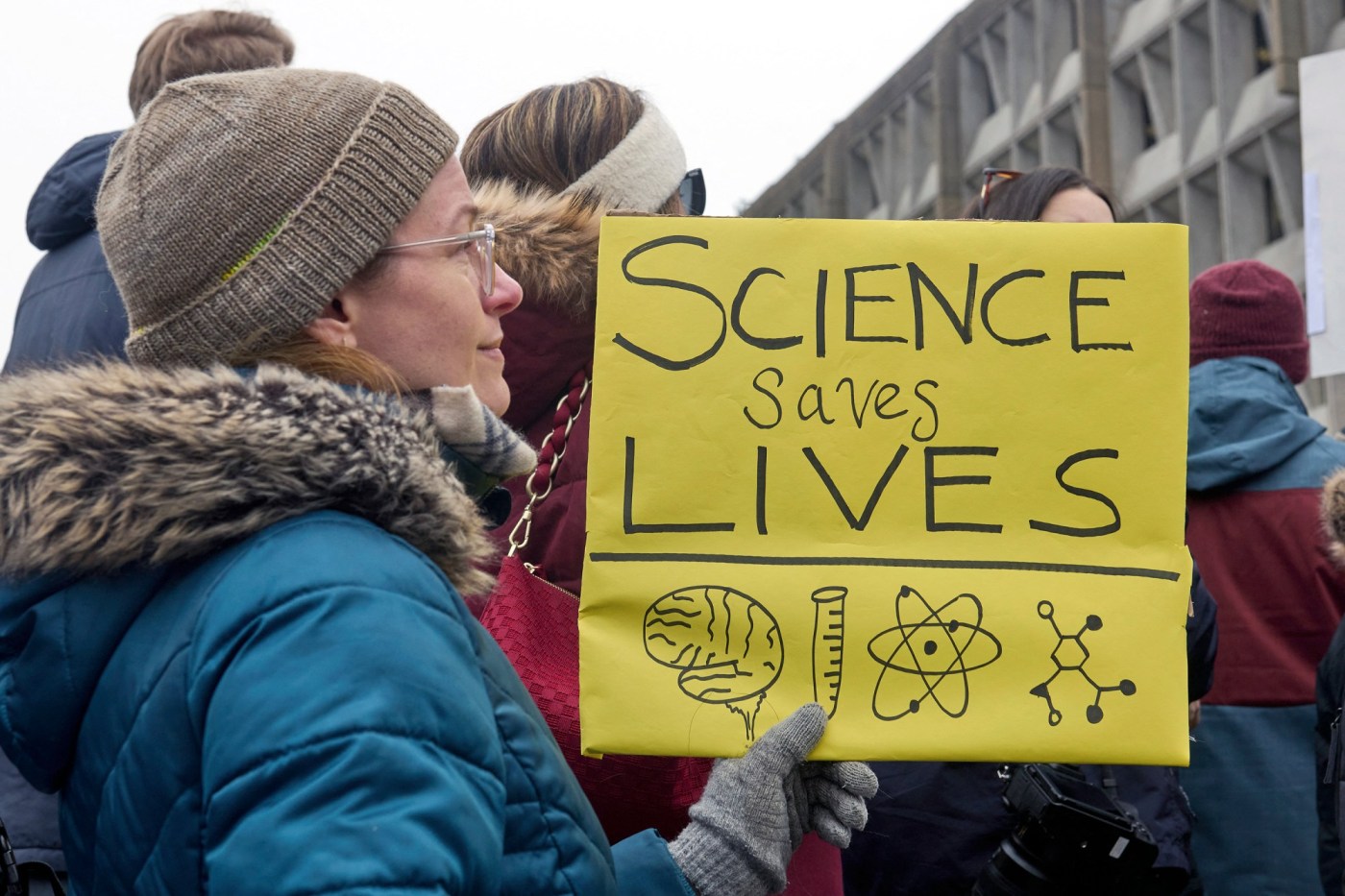
The Trump administration has announced a reevaluation of thousands of science and medical research grant applications that were previously stalled due to concerns over diversity, equity, and inclusion. This decision, reported by the Seattle Times, has sparked a mix of cautious optimism and skepticism among stakeholders in the academic and scientific communities.
Many researchers believe that these grants, particularly from the National Institutes of Health (NIH) and the National Science Foundation (NSF), could lead to significant advancements in areas such as HIV prevention and Alzheimer’s disease treatment. The University of Washington (UW), which received $572 million from the NIH in 2024, is among the many institutions affected by the previous administration’s decision to freeze or terminate these applications. In response, Washington’s Attorney General, Nick Brown, has joined forces with 16 other state attorneys general in a lawsuit against the federal government.
Following an agreement reached last month, the NIH has begun reviewing hundreds of applications, ultimately approving 499 within a short period. Despite this progress, there remains a considerable backlog of applications awaiting evaluation. The cautious optimism surrounding this development is overshadowed by a history of contentious actions taken by the Trump administration during its first term.
In 2025, President Trump attempted to slash $6.1 billion in NIH funding, including $1 billion earmarked for cancer research. Bipartisan efforts in both the House and Senate successfully blocked these cuts. The administration’s influence extended to higher education, where Trump sought to reshape institutions by pausing federal grant applications in January and cutting funding for critical research in February.
These measures prompted widespread lawsuits from affected universities, including several high-profile institutions. Cornell University faced a potential loss of $30 million, Columbia University was at risk of losing $200 million, while Brown University could have lost $50 million. Even the University of Pennsylvania, Trump’s alma mater, had $175 million withheld under the pretext of civil rights protection.
The administration also encouraged universities to sign a compact that would offer funding benefits in exchange for aligning their policies with its views on gender and race in hiring and athletics. This controversial approach raised concerns about academic freedom and the integrity of research.
While the recent agreement with state attorneys general signals a positive shift, it does not obligate the NIH to fund any of the stalled applications; it merely requires consideration of them. The movement toward resolving these issues is encouraging, yet it took nearly a year and numerous legal challenges to reach this point.
In a country known for its medical and technological innovations, the prolonged process of reevaluating research grants raises questions about the governance of science and the prioritization of academic integrity. As the NIH continues its review, stakeholders will be watching closely to ensure that scientific advancements are not hindered by political agendas.
















