






























Connect with us

Hi, what are you looking for?

Science

Stanford Researchers Pioneering Robot Navigation on ISS

Researchers from Stanford University have successfully demonstrated that machine-learning technology can effectively guide a robot aboard the International Space Station (ISS). This groundbreaking achievement marks a significant step forward in developing more autonomous operations in space, potentially transforming future missions.

The demonstration involved the use of advanced algorithms that enable robots to navigate complex environments autonomously. By employing machine learning, the researchers have created a system capable of adapting to various scenarios without human intervention. This capability is crucial for long-duration missions where human presence may be limited or unavailable.

The successful tests were conducted in November 2023 and showcased the robot’s ability to maneuver safely around the ISS. The implications of this research extend beyond mere navigation; it opens the door for robots to perform tasks that would otherwise require human oversight, thereby increasing efficiency and safety in space operations.

Impacts on Future Space Missions

As space agencies around the world aim for deeper exploration, the need for autonomous systems becomes increasingly apparent. The ability for robots to handle tasks independently could significantly reduce the risks associated with human spaceflight. For instance, robots equipped with this technology could conduct maintenance, analyze experiments, and assist astronauts during critical operations without direct supervision.

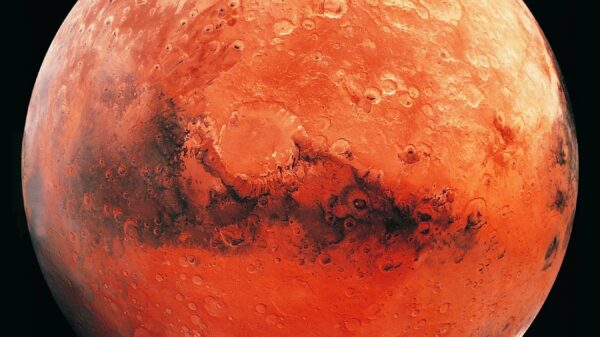
According to NASA, incorporating machine-learning technologies in robotic systems could streamline workflows on the ISS and other spacecraft. The agency emphasizes that this advancement could lead to more ambitious missions, such as crewed trips to Mars, where communication delays with Earth would necessitate higher levels of autonomy.

The research is part of a broader initiative to enhance the capabilities of robotic systems in space. By integrating artificial intelligence, the Stanford team aims to create a new generation of robots that can adapt to unpredictable conditions in space, thereby enhancing mission success rates.

Collaboration and Future Research

This project exemplifies the collaborative efforts between academic institutions and space agencies. The Stanford research team worked closely with representatives from NASA to ensure that the developed algorithms meet the rigorous demands of space environments. Their findings will contribute to ongoing research aimed at refining robotic autonomy.

Looking ahead, the team plans to conduct further experiments to expand the robot’s capabilities. Future studies will explore not only navigation but also task execution in real-time scenarios. The goal is to develop systems that can learn from their environment, making decisions that enhance their operational effectiveness.

In summary, the successful navigation of a robot aboard the ISS using machine-learning technology represents a major milestone in space exploration. By enabling robots to operate autonomously, researchers at Stanford are laying the groundwork for a future where human presence in space is complemented by intelligent robotic systems, paving the way for a new era in space missions.


You May Also Like

Technology

Tesla (TSLA) recently reported a year-over-year drop in second-quarter deliveries, yet the market responded with optimism, pushing the stock up by 5%. This unexpected...

Health

The All England Lawn Tennis Club in London experienced its hottest-ever opening day on Monday, as the prestigious Wimbledon tournament kicked off under unprecedented...

Sports

The Chicago Cubs will enter the National League Wild Card Series following a disappointing sweep by the Cincinnati Reds this week. This outcome not...

Entertainment

tvN’s new series, Bon Appétit, Your Majesty, has quickly captured the spotlight, dominating the buzzworthy rankings for dramas and actors this week. In its...

Technology

In a bold reimagining of the DC Universe, director James Gunn has introduced a significant narrative element in his latest film, which reveals that...

Entertainment

A new documentary series titled “Animals on Drugs” is set to premiere on the Discovery Channel on July 28, 2023. The three-part series follows...

Science

Look out, daters: a new toxic relationship trend is sweeping through the romantic world, leaving many baffled and heartbroken. Known as “Banksying,” this phenomenon...

Politics

On August 29, 2023, U.S. Attorney General Pamela Bondi announced the immediate termination of a Department of Justice (DOJ) employee due to inappropriate conduct...

Technology

Former Speaker of the House Nancy Pelosi has recently made headlines with her latest investment in the tech sector. According to official filings, she...

World

NATO has introduced a new language manual advising its personnel to adopt gender-inclusive terms, sparking considerable debate. The manual suggests replacing traditional terms like...

Entertainment

Netflix’s eagerly anticipated talent competition Building the Band is set to premiere on July 9, promising an emotional journey for viewers. This series, centered...

Entertainment

The upcoming premiere of the documentary Color Beyond the Lines will shed light on the critical fight for school desegregation in Western North Carolina....

Business

The city of New Orleans is exploring options for enhanced public safety through potential federal assistance, particularly in collaboration with the Louisiana National Guard....

Business

YHB Investment Advisors Inc. has decreased its holdings in the Goldman Sachs ActiveBeta U.S. Large Cap Equity ETF (NYSEARCA:GSLC) by 7.4% during the second...

Entertainment

The vibrant city of New Orleans is set to host the highly anticipated **NOCHI 2025** event, celebrating the culinary arts and the rich cultural...

Top Stories

UPDATE: In a shocking display of dominance, No. 19 Indiana obliterated No. 9 Illinois 63-10 Saturday night in Bloomington, marking its first victory over...

Copyright © All rights reserved. This website provides general news and educational content for informational purposes only. While we strive for accuracy, we do not guarantee the completeness or reliability of the information presented. The content should not be considered professional advice of any kind. Readers are encouraged to verify facts and consult appropriate experts when needed. We are not responsible for any loss or inconvenience resulting from the use of information on this site.