









































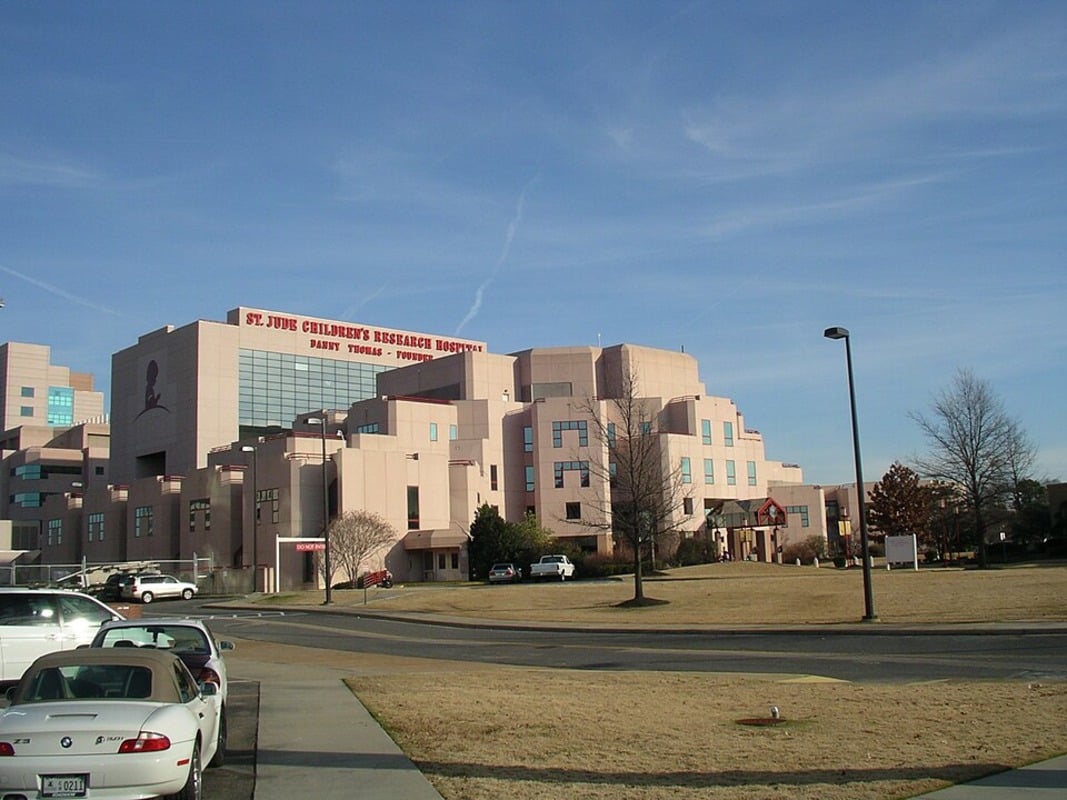
St. Jude Children’s Research Hospital has announced plans for the construction of the Advanced Research Center II (ARC II), a project estimated at approximately $810 million. The 16-story tower will be situated next to the existing research campus near downtown Memphis, Tennessee, and is projected to create around 2,000 new jobs in the local economy.
Details of the Advanced Research Center II
The ARC II will stand as the largest single research building on St. Jude’s campus, significantly altering the skyline along Danny Thomas Boulevard. According to the Memphis Business Journal, the facility will comprise laboratories, offices, and support spaces designed to accommodate additional researchers and staff. The building’s height will be comparable to that of the i-Bank Tower in East Memphis.
Planning documents filed with local county officials indicate that the new center will be located at 595 Danny Thomas Place. The fundraising arm of St. Jude, known as ALSAC, has submitted an administrative site plan to facilitate the demolition of three existing buildings on a 5.8-acre site at A.W. Willis Avenue and Danny Thomas Boulevard. An ALSAC representative emphasized in a letter of intent that this expansion is crucial for St. Jude’s ongoing mission to enhance care and treatment for children facing catastrophic illnesses.
Design and Construction Timeline
Local sources and permit records suggest that the ARC II will encompass approximately 865,000 square feet and reach a height of around 280 feet. The project architect is Elkus Manfredi, with Yates Construction selected as one of the contractors involved. Foundation and early-site permits have already been secured, indicating that the project is now entering its initial construction phases.
St. Jude positions the ARC II as a pivotal component of its Fiscal Year 2022–2027 Strategic Plan, which includes an ambitious $12.9 billion agenda aimed at recruiting approximately 2,300 new employees for various campus operations. The institution underscores that the new center will enhance both research capabilities and recruitment efforts in Memphis.
The scale of this construction project will likely necessitate upgrades to local utilities and public infrastructure. City officials and local news sources note the potential for significant economic benefits, generating both construction jobs and long-term employment in scientific and administrative roles. As the campus expands, the surrounding neighborhoods may also feel the impact in terms of public works planning.
As the project progresses, permits for demolition, foundation work, and core systems are already visible in planning records. The initiative will undergo standard city and county reviews before vertical construction can commence fully. Early site work and separate foundation permits indicate that St. Jude is strategically sequencing the project to ensure that essential infrastructure is in place before the tower itself is constructed.
Community leaders, local stakeholders, and prospective employees are closely monitoring permit filings and public notices, seeking information regarding hiring timelines, leasing opportunities, and construction schedules. At this stage, city officials and St. Jude have yet to release a detailed construction timeline beyond what is currently available in public records.
















