

































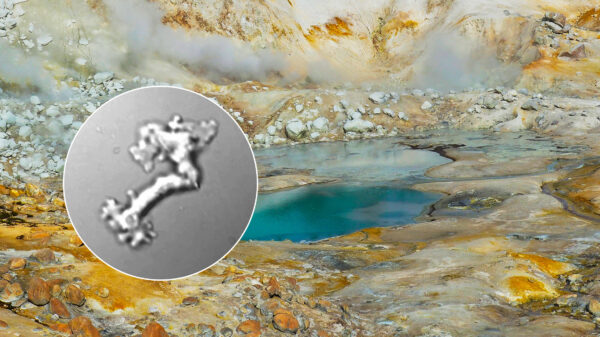



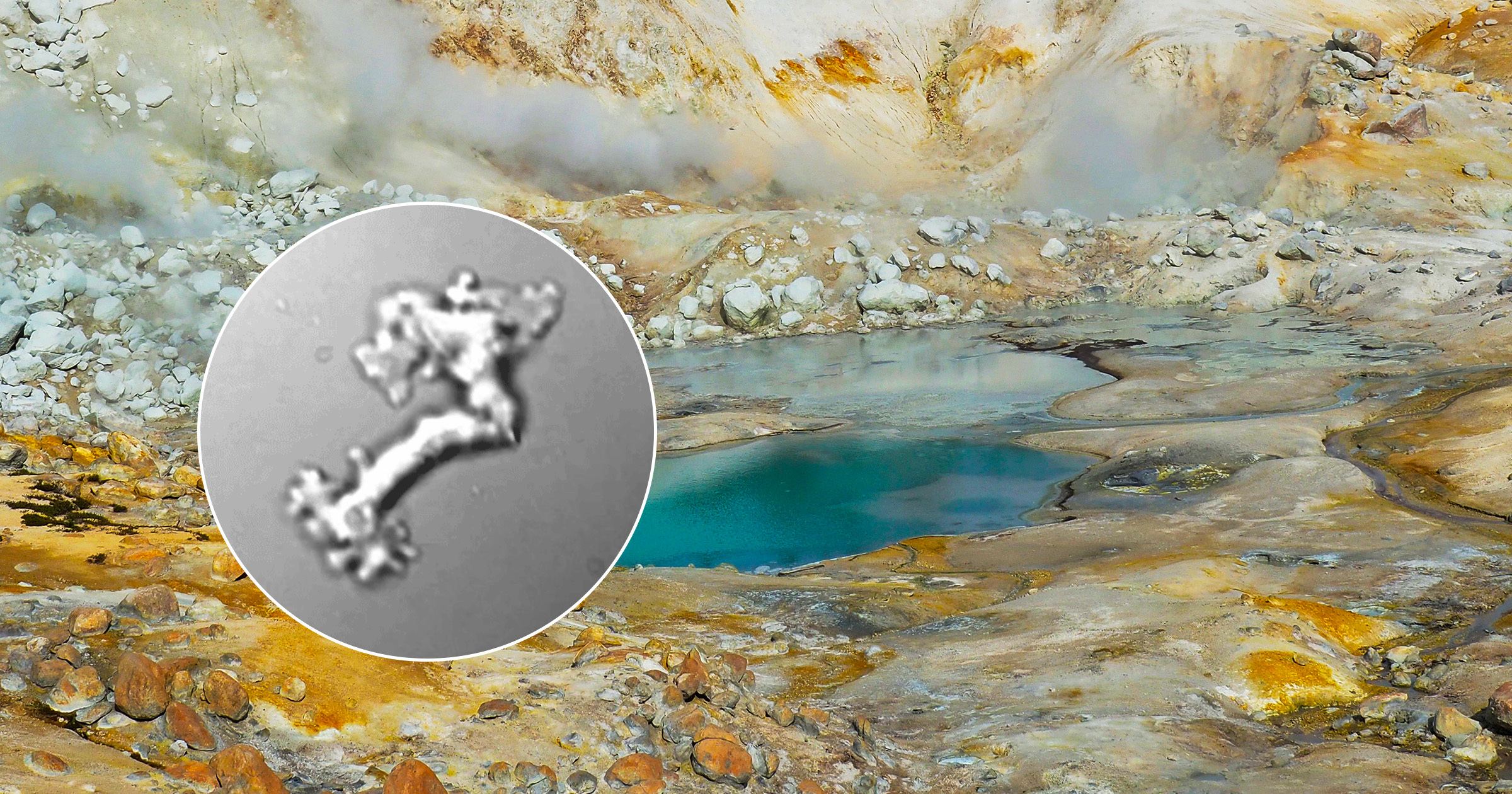
Research teams from America and Europe have identified a remarkable organism capable of surviving in extreme temperatures within the Lassen Volcanic National Park in California. This unique single-celled organism, named Incendiamoeba cascadensis or “fire amoeba,” can thrive in boiling waters that reach up to 464 degrees Fahrenheit.
The study, which has not yet been peer-reviewed, was published recently and reveals that this eukaryotic organism can divide at temperatures as high as 145.4 degrees Fahrenheit. This discovery challenges the long-held belief that only prokaryotic organisms, such as bacteria, can withstand such extreme conditions. Prokaryotes have dominated the records for heat tolerance, able to survive between 149 and 221 degrees Fahrenheit and potentially up to 392 degrees Fahrenheit.
In a recent article by Nature, the researchers highlighted how the fire amoeba’s discovery pushes the boundaries of our understanding of life’s resilience. Prokaryotes, including a species known as Methanopyrus kandleri, hold the current record for surviving extreme heat at 251.6 degrees Fahrenheit. In contrast, eukaryotes, which include all animals, plants, fungi, and certain protists, have traditionally been thought to have a maximum temperature limit of 131 to 140 degrees Fahrenheit.
Uncovering the Fire Amoeba
The research team, led by microbiologists Angela Oliverio and Beryl Rappaport from Syracuse University, found the fire amoeba in a relatively unremarkable hot spring stream, differing from the acidic pools that characterize much of Lassen. Initial examinations of the water yielded no signs of life under the microscope. However, upon adding nutrients and heating the samples to 134.6 degrees Fahrenheit, the amoeba became active, moving and replicating.
As temperatures increased, the organism continued to defy expectations, remaining active at temperatures of 145.4 degrees Fahrenheit and even at higher levels. At 158 degrees Fahrenheit, the amoeba entered a dormant state known as encystment, forming a protective shell that allows it to survive harsh environmental conditions. Once the temperature drops, the amoeba can return to its active state, shedding its cyst and reproducing.
Significance and Future Research
The findings from this study have significant implications for our understanding of extremophiles, particularly eukaryotic organisms capable of surviving in such high-temperature environments. The researchers emphasize the need for further exploration, suggesting that Incendiamoeba cascadensis may not be an isolated case. As Oliverio noted, “We really don’t think that’s the case.”
Additionally, the discovery could pave the way for advancements in biotechnology. The proteins found within the fire amoeba may offer valuable resources for creating thermostable proteins, which have various applications in scientific and industrial fields. The research also raises intriguing questions about the potential for life in extreme environments beyond Earth, such as in the ancient riverbeds and ice caps on Mars.
The study of this resilient organism not only expands our knowledge of life’s adaptability on Earth but also inspires curiosity about the possibilities of finding similar life forms in extraterrestrial settings.