









































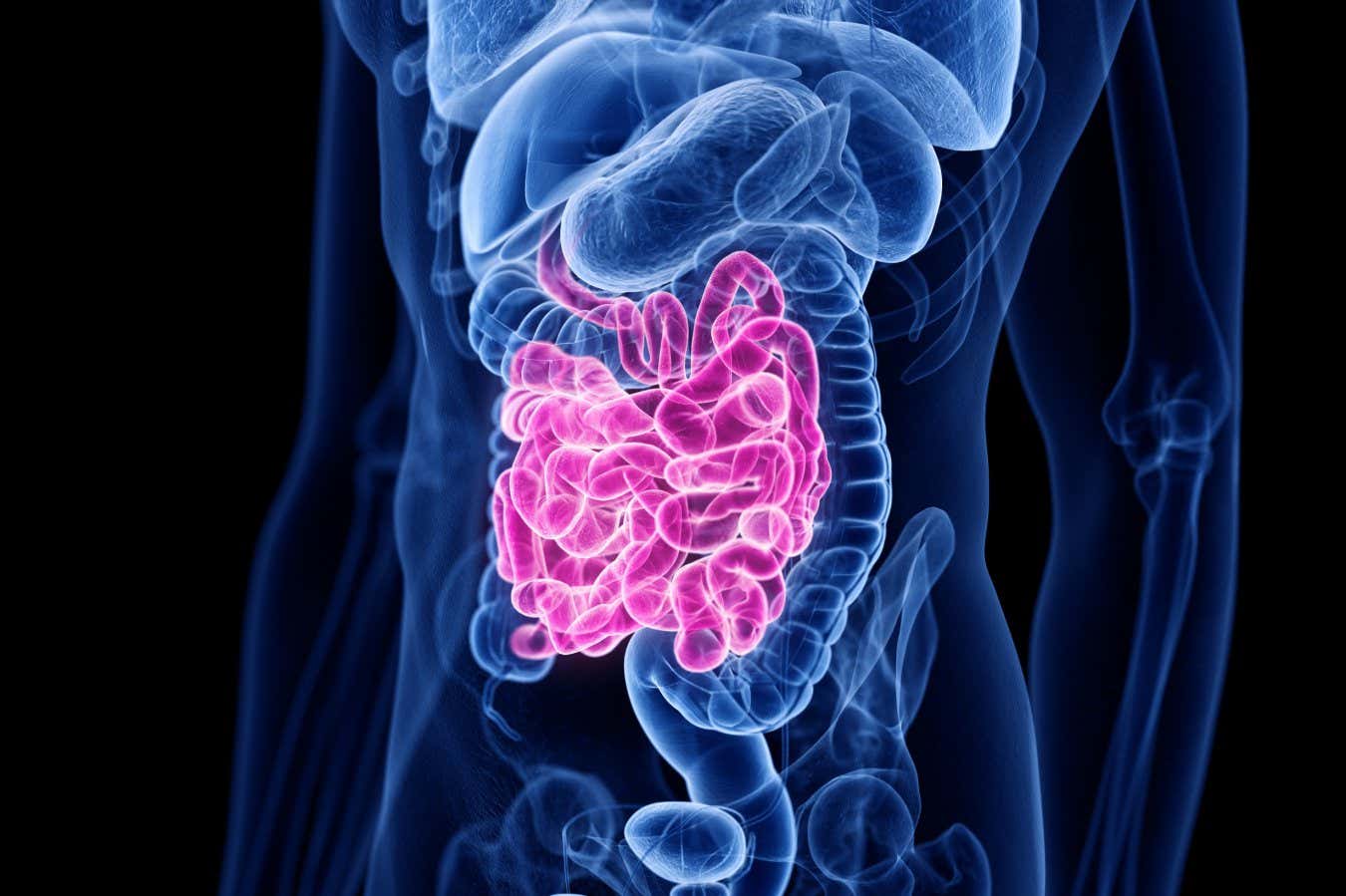
A recent study has shown promising results in reversing the effects of aging on gut health using CAR T-cell therapy, a treatment traditionally employed for certain blood cancers. Researchers at Cold Spring Harbor Laboratory in New York successfully restored the function of aging intestines in older mice by targeting senescent cells, which accumulate as organisms age and hinder proper cellular regeneration.
As individuals age, the gut lining becomes less effective at renewing itself, which is crucial for maintaining a healthy immune system. The study, led by Semir Beyaz and his team, aimed to address this problem by utilizing genetically engineered immune cells. CAR T-cell therapy involves reprogramming a patient’s T-cells to identify and eliminate specific targets, in this case, senescent cells that release inflammatory chemicals and accelerate aging.
The research team focused on a protein called uPAR, which is abundant on the surface of senescent cells. “The decline we see in the aging gut is a deficit in the fitness of the stem cells that renew the inner lining of the gut every three to five days,” Beyaz explained. Their hypothesis was that eliminating these unfit cells would enhance the regenerative capability of stem cells in older mice.
To test this hypothesis, the researchers engineered CAR T-cells to recognize uPAR and remove senescent cells in older mice. Following the infusion of these engineered cells, the team observed a remarkable restoration in the activity and quantity of stem cells, bringing them to levels comparable to those in younger mice. The study also noted improvements in gut barrier integrity and inflammation.
“Removing these senescent cells didn’t just halt the aging process; we witnessed a reversal where the tissue began functioning similarly to that of younger mice,” stated Corina Amor, another researcher involved in the study. This breakthrough could have significant implications for reducing the risks associated with intestinal infections and even certain forms of cancer, according to Tuomas Tammela of Memorial Sloan Kettering Cancer Center, who was not involved in the research.
Despite the promising findings, experts caution that further research is necessary to ensure the safety and effectiveness of this approach in humans. Onur Eskiocak, also from Cold Spring Harbor Laboratory, emphasized the need to determine the optimal dosage of the therapy before it can be tested in clinical settings. He noted that while uPAR is prevalent on senescent cells, it is also expressed at low levels in other normal tissues, which raises potential concerns.
The presence of senescent cells is not entirely negative; they can play roles in tumor suppression and wound healing. Jesse Poganik from Harvard Medical School pointed out that the study did not address the implications of depleting uPAR-positive cells in other tissues. Additionally, Joana Neves from King’s College London highlighted the logistical challenges and costs associated with CAR T-cell therapy, suggesting that it may not be practical for widespread use in addressing aging-related issues.
Despite these challenges, Beyaz believes this research represents a significant step forward in the quest to maintain gut health during aging. “There are currently no effective treatments to support gut barrier health when its regenerative capacity is compromised,” he stated. The study serves as a hopeful indication that it may be possible to restore vital gut functions by targeting the cells contributing to aging.
















