









































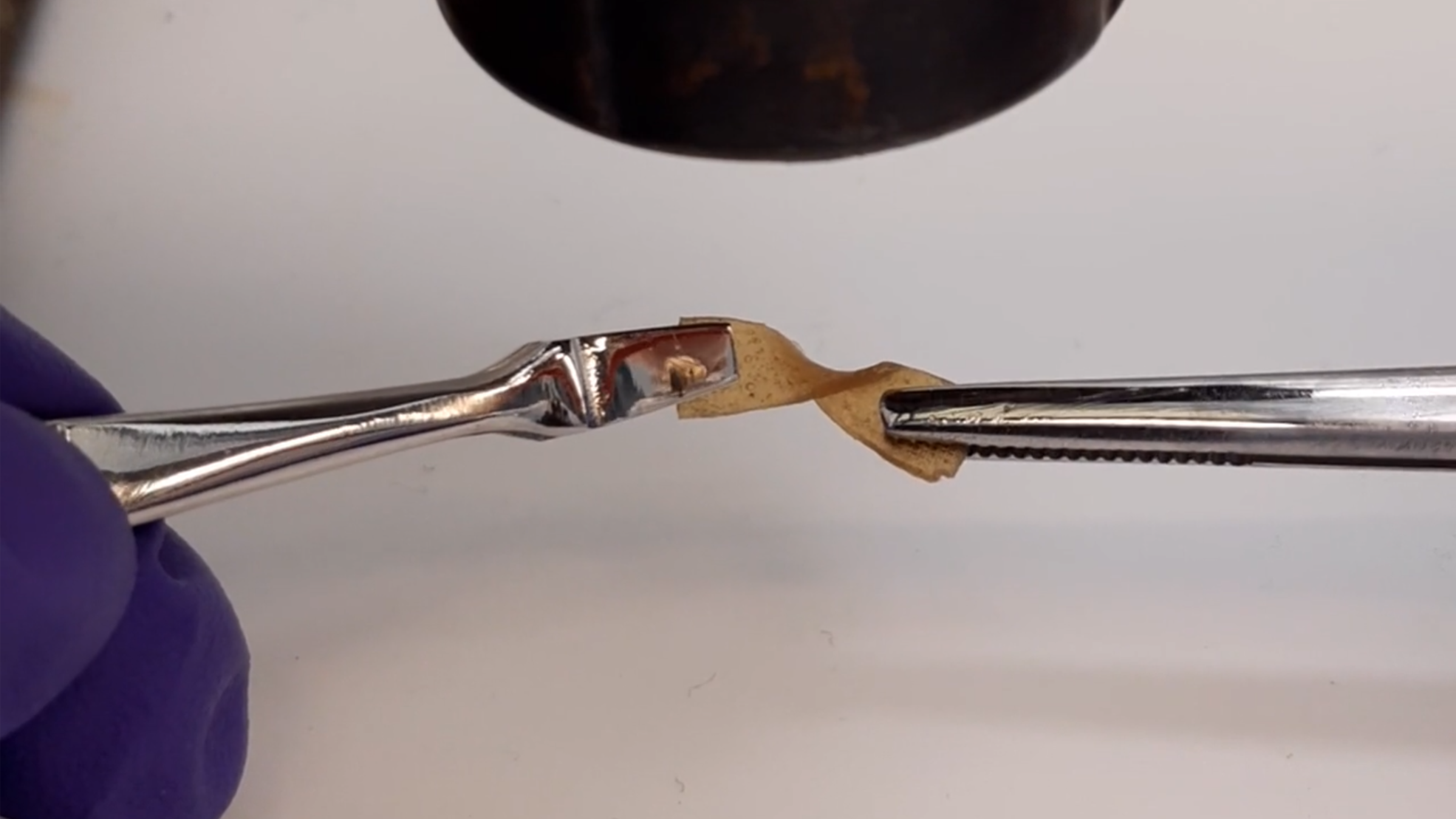
A team of researchers from Wageningen University has discovered a new class of polymers known as compleximers, which are the first organic polymers identified to form strong ionic glasses. This groundbreaking finding could lead to innovative materials with enhanced properties and potential applications in various industries.
Understanding the behavior of polymers during phase transitions is essential for material science. Traditionally, the glass transition temperature is a key factor in defining how materials behave as they move from a glassy state to a liquid. However, researchers note that this temperature can be somewhat misleading. Instead, polymers transition gradually between a glass and a liquid over a range of temperatures, making the concept of a singular glass transition temperature somewhat arbitrary.
Compleximers challenge conventional wisdom about glass transition behaviors. These polymers, which are composed of acrylate and methacrylate backbones modified with ionic groups, exhibit notable properties despite having a highly non-exponential relaxation process. This means that while their molecular rearrangement during melting differs from more uniform materials, compleximers still maintain long transition ranges and form strong glasses.
Key Properties of Compleximers
One of the most significant findings is that compleximers possess a glass transition range exceeding 60 °C. Despite this wide range, they remain robust at room temperature. The researchers have demonstrated that these materials can be softened using a hot air gun, allowing them to be reshaped before cooling into a hard, non-malleable solid.
To enhance the performance of compleximers, the researchers introduced hydrophobic groups into their structure. This modification prevents water infiltration, which could alter the material’s properties. The resulting glass is both solvent-resistant and easy to process, making it a promising candidate for various applications.
The innovative nature of these ionic glasses raises questions about their potential uses. While the researchers have not yet identified specific applications, they suggest that compleximers could pave the way for creating more easily repairable objects. This is particularly intriguing, considering the ongoing demand for sustainable and long-lasting materials across multiple sectors.
Future Implications and Research Directions
The implications of this discovery extend beyond the immediate properties of compleximers. Researchers are particularly interested in the glass-transition process of these materials and whether their aging can be reversed. This line of inquiry could lead to further advancements in polymer science and material engineering.
As the scientific community continues to explore the properties and applications of compleximers, the potential for these strong ionic glasses remains vast. The work conducted at Wageningen University underscores the importance of ongoing research in polymer science, which could ultimately lead to revolutionary changes in how we design and produce materials for various uses.
With their unique properties and capabilities, compleximers stand at the forefront of a new era in polymer technology, inviting further exploration and innovation.
















