New research led by scientists at the Chinese Academy of Sciences has advanced the understanding of the origins of flowering plants, also known as angiosperms. Published on January 2, 2026, in the journal Science Advances, the study challenges previous theories regarding whole-genome duplications (WGDs) in the ancestry of these diverse plants, suggesting a simpler evolutionary path than previously believed.
Angiosperms represent the most diverse group of seed plants, making their evolution a pivotal topic in plant biology. Traditionally, WGDs have been recognized as significant events in the development of both seed plants and angiosperms. However, the identification of these ancient events has proven complex due to the effects of gene loss and chromosomal rearrangements that obscure genomic signatures over time.
Debate Over Ancient WGDs
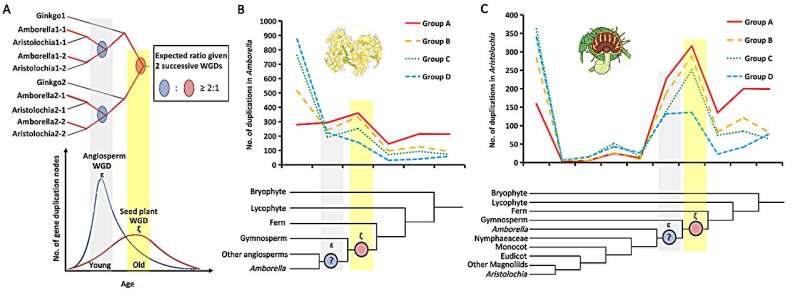
In 2011, researchers proposed two key WGDs in angiosperm evolution—one in seed plants, termed the ζ event, and another specific to angiosperms, known as the ε event. This theory was supported by a bimodal distribution of gene duplications observed before the divergence of monocots and eudicots. Nevertheless, a 2017 study raised doubts, suggesting that the bimodal signal could be an artifact of methodology, specifically regarding the calibration of phylogenetic nodes for molecular dating.
The ongoing debate has left the issue unresolved until now, prompting the researchers from the Wuhan Botanical Garden and Ghent University to take a new approach. They focused on dosage-sensitive genes—genes that are crucial for maintaining cellular balance and are likely to be retained following WGDs. These genes served as markers to investigate the history of ancient WGDs more accurately.
Methodology and Findings
The research team examined orthologous gene groups (OGs) from various angiosperms, analyzing their dosage sensitivity by correlating observed gene copy numbers with expected values post-WGD. They categorized OGs into four groups based on their sensitivity, with Group A being the most sensitive.
Key findings indicated that the highly dosage-sensitive OGs demonstrated stronger purifying selection, increased protein interactions, and broader tissue expression profiles. These traits validated their effectiveness as markers for identifying WGDs.
Utilizing these markers, the research integrated various analysis methods, including gene tree-species tree reconciliation and probabilistic retention modeling. Two early-diverging angiosperms, Amborella trichopoda and Aristolochia fimbriata, were central to the analysis due to their lack of post-angiosperm WGDs.
The results revealed only one significant peak corresponding to the ancestral seed plant WGD, confirming the existence of the ζ event. In stark contrast, the evidence for the ε event was minimal, with retention rates among dosage-sensitive OGs indicating its status as an independent WGD was unsupported.
This comprehensive analysis suggests that the evolutionary history of angiosperms does not involve additional WGDs beyond the initial event in seed plants. The study offers a fresh perspective on the evolution of flowering plants, emphasizing the role of dosage-sensitive genes in understanding plant ancestry.
The findings contribute to the ongoing discourse in evolutionary biology, providing clarity on the genetic underpinnings of one of the planet’s most vital groups of plants. More information on this research can be found in the article by Tao Shi et al, titled “Revisiting ancient whole-genome duplications in the seed and flowering plants through the lens of dosage-sensitive genes,” published in Science Advances.