









































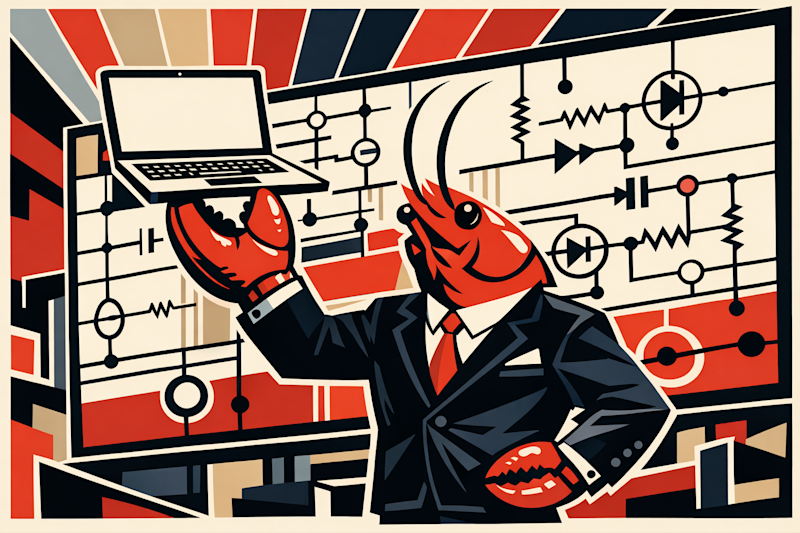
The emergence of OpenClaw marks a pivotal moment in the realm of enterprise technology. This innovative autonomous AI agent, developed by Austrian engineer Peter Steinberger, transitioned from a hobby project named “Clawdbot,” launched in November 2025, to “OpenClaw” by January 2026. It is the first instance of AI agents successfully moving beyond experimental settings and into everyday use by the workforce. OpenClaw’s unique capabilities allow it to execute commands, manage files, and interact on messaging platforms like WhatsApp and Slack, all with root-level permissions.
The rapid adoption of OpenClaw has prompted significant developments in the tech landscape. Concurrently, the release of Claude Opus 4.6 and OpenAI’s Frontier platform indicates a shift towards coordinated “agent teams.” The recent “SaaSpocalypse” resulted in a substantial correction in software valuations, erasing over $800 billion from the market. This environment compels enterprise leaders to rethink their strategies regarding AI integration.
To understand the implications of OpenClaw for enterprise operations, insights from industry leaders provide valuable perspectives. Here are five key takeaways:
1. Rethinking AI Preparation
The traditional belief that enterprises must undertake extensive preparations and infrastructure upgrades before implementing AI has been disrupted. As noted by Tanmai Gopal, Co-founder and CEO of PromptQL, the reality is that modern models can effectively process “messy” data without the need for perfect curation. “You don’t need to do too much preparation,” Gopal explains. The focus should shift towards allowing AI to explore existing data and identify issues autonomously.
Conversely, Rajiv Dattani, co-founder of AIUC, emphasizes the need for compliance and trust in AI applications. Dattani’s organization has developed the AIUC-1 certification standard to ensure that enterprises can safely utilize AI agents, minimizing risks associated with autonomous systems.
2. The Rise of Shadow IT
As OpenClaw gains traction, it has amassed over 160,000 stars on GitHub, prompting employees to deploy local agents without official approval. This phenomenon has led to a shadow IT crisis, where unregulated use of AI tools can create security vulnerabilities. Pukar Hamal, CEO of SecurityPal, warns that unauthorized installations can grant agents full user permissions, posing risks to corporate systems.
From a talent retention perspective, Brianne Kimmel, Founder of Worklife Ventures, highlights that employees are experimenting with AI tools during off-hours. This trend can enhance skills but raises concerns for organizations striving to maintain control over technology use.
3. Seat-Based Pricing Faces Challenges
The ongoing “SaaSpocalypse” has exposed vulnerabilities in traditional per-seat pricing models. As AI agents demonstrate the capacity to perform the tasks of multiple human users, companies relying on this model may find themselves at a disadvantage. Hamal points out, “If an autonomous agent can do all the work, why do you need thousands of users?” This shift necessitates a reevaluation of pricing structures in software licensing to remain competitive.
4. Transitioning to AI Coworkers
The recent advancements in AI technology signal a transition from individual agents to collaborative teams of agents. As Gopal observes, the sheer volume of AI-generated content and code surpasses the capacity of human teams to manage. “Our senior engineers just cannot keep up with the volume of code,” he notes. This evolution calls for a new approach to product development, where teams focus on maintaining code review agents rather than performing manual reviews.
The potential for increased productivity is significant. Dattani stresses that businesses must navigate this transformation carefully, balancing innovation with data security and compliance.
5. Future Prospects for AI in the Workplace
Looking ahead, experts foresee the emergence of personality-driven AI as a standard in workplace interactions. Voice interfaces, such as those developed by Wispr and ElevenLabs, are expected to become primary channels for engaging with AI. Kimmel believes that a more personalized AI experience can enhance user satisfaction while allowing companies to expand internationally with greater ease.
Hamal emphasizes that while the potential for knowledge worker AGI exists, security concerns will influence enterprise adoption rates. Organizations must remain vigilant as they embrace these technologies to safeguard against risks associated with unregulated AI deployment.
As OpenClaw and similar frameworks continue to evolve, enterprise IT leaders should adopt structured governance practices rather than imposing blanket bans on AI technologies. Implementing identity-based governance, enforcing sandbox requirements, auditing third-party skills, disabling unauthenticated gateways, and monitoring for unauthorized installations are critical steps to ensure a safe and productive integration of AI capabilities in the workplace.
By adapting to these transformative changes, enterprises can harness the power of autonomous AI agents while mitigating risks associated with their use.
















