








































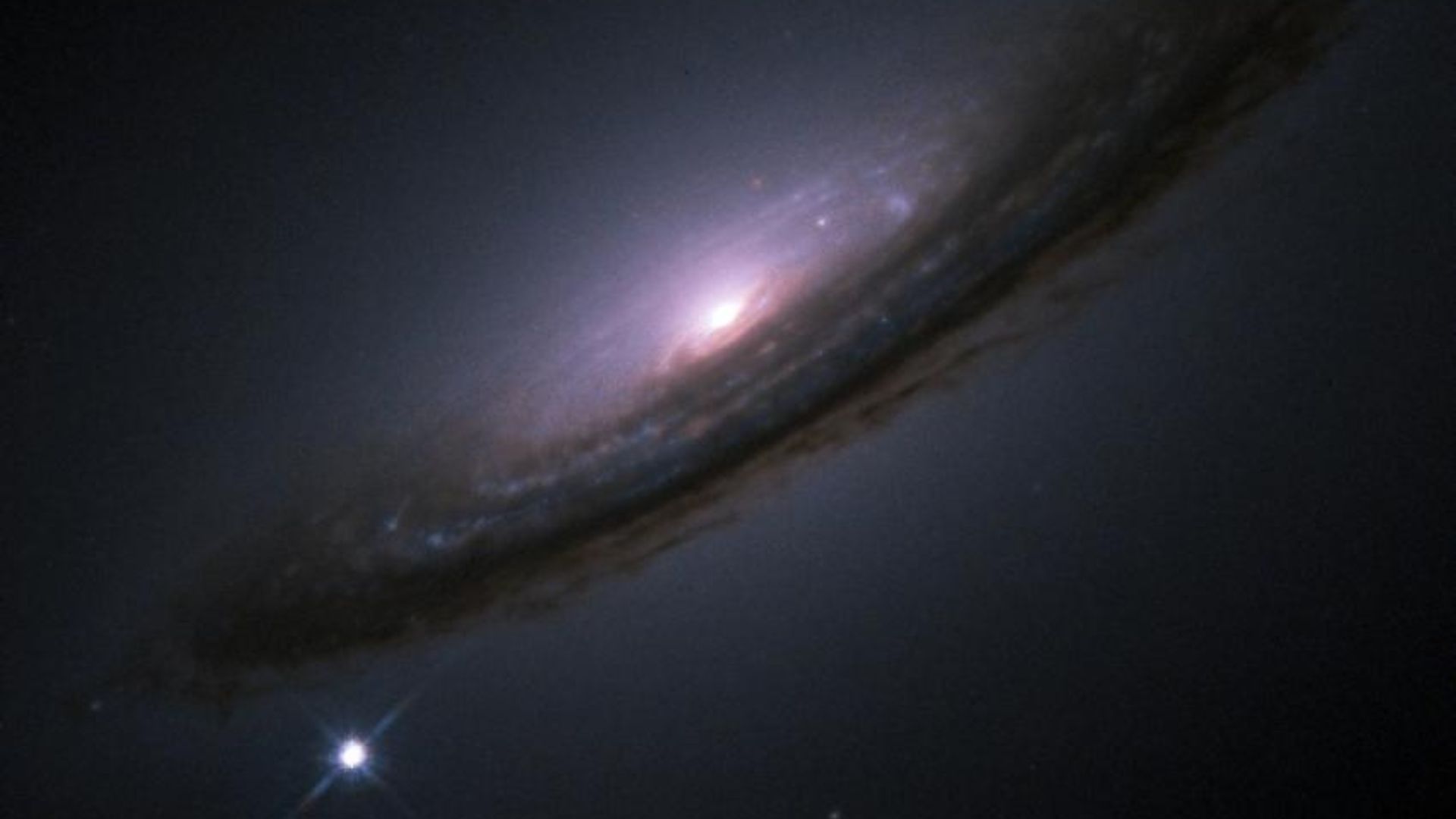
Recent research led by a team of Korean scientists indicates that the universe may have transitioned from a phase of acceleration to one of deceleration, raising concerns about a potential collapse known as the Big Crunch. This study, published in early October 2023, challenges long-held beliefs about the nature of dark energy and its role in cosmic expansion.
The concept of dark energy has been a cornerstone of modern cosmology. For years, it was thought to be a constant force driving the universe apart at an accelerating rate. However, the latest findings suggest a significant shift in this dynamic. Researchers analyzed vast amounts of astronomical data, leading them to conclude that the effects of dark energy are changing, potentially resulting in a deceleration of cosmic expansion.
Key Findings and Implications
The research team, based at a prominent university in South Korea, utilized data from various telescopes and satellites to track changes in the universe’s expansion rate. They observed that the universe’s acceleration has slowed considerably, indicating that dark energy might not be as stable as previously assumed. This could have profound implications for the ultimate fate of the universe.
According to the researchers, if this trend continues, it may lead to a catastrophic event known as the Big Crunch. In this scenario, the universe would eventually stop expanding and begin contracting, culminating in a collapse. This could potentially happen over billions of years, but the possibility is now a subject of serious consideration among cosmologists.
Dr. Lee Min-jun, one of the leading authors of the study, stated, “Our analysis suggests that the behavior of dark energy is not fixed. Understanding how it evolves is crucial for predicting the future of our universe.” This revelation prompts a reevaluation of current models of cosmological evolution and the forces at play.
Future Research Directions
The implications of this study extend beyond theoretical physics; they beckon new questions about the fundamental nature of the universe. Scientists are now encouraged to explore the mechanisms behind dark energy to better understand its variations. Future studies may focus on refining measurements of cosmic distances and the expansion rate, which could provide deeper insights into the universe’s fate.
As the scientific community digests these findings, collaborations among astronomers and physicists worldwide are likely to increase. The quest to unravel the mysteries of dark energy has become a priority, as understanding its behavior may hold the key to comprehending the ultimate destiny of the cosmos.
In conclusion, the study conducted by these Korean researchers opens a new chapter in cosmology, urging both scientists and the public to consider the dynamic nature of dark energy and its potential to reshape our understanding of the universe. The prospect of a Big Crunch may sound like science fiction, but it is now a legitimate concern grounded in the latest scientific inquiry. As research progresses, the universe’s fate hangs in the balance, inviting ongoing investigation and debate.