









































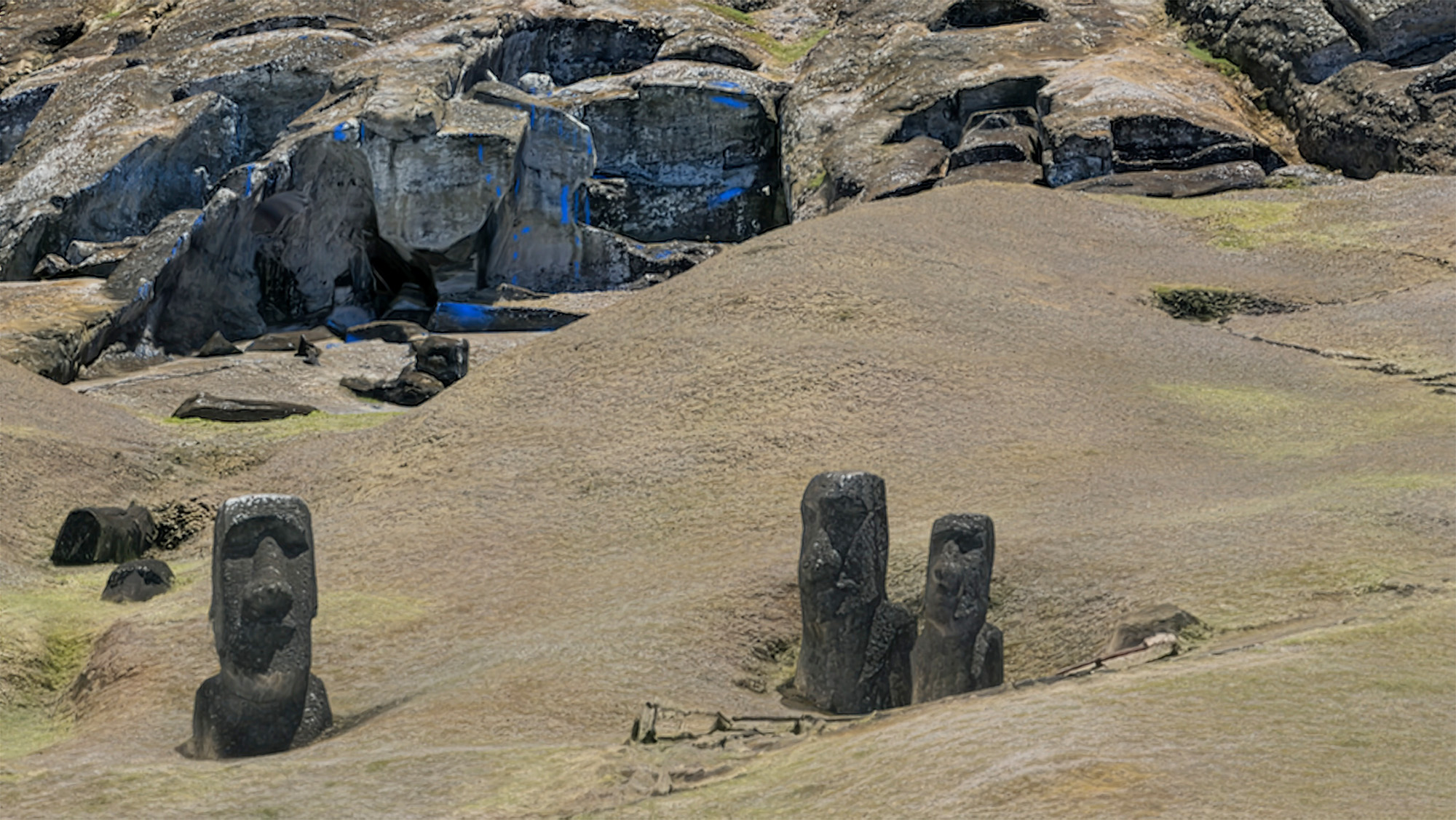
Located in the South Pacific Ocean, Rapa Nui, commonly known as Easter Island, is home to around 6,000 residents. This remote island, which is approximately twice the size of Disney World at 63.2 square miles, attracts nearly 100,000 visitors annually. They come to admire the island’s iconic **moai** statues, which stand at 13 feet tall. Accessing this isolated destination can be challenging, as only a limited number of flights operate to Rapa Nui each week, especially during the peak tourist season from December to March.
In a significant development for both researchers and enthusiasts, a team of geographers and researchers has launched the first high-resolution **3D model** of the Rano Raraku quarry, one of the island’s major sites for moai production. This innovative project, spearheaded by faculty from **Binghamton University** and the **State University of New York**, allows users to explore the quarry digitally, overcoming barriers to physical access.
Exploring Rano Raraku Virtually
The 3D model includes nearly 1,000 meticulously rendered moai statues and offers a unique perspective on the **Rano Raraku quarry**, which is situated in a steep volcanic crater. Due to safety concerns, this area is inaccessible to visitors. According to **Carl Lipo**, an anthropologist at Binghamton University and the lead author of a forthcoming paper on the model in **PLOS One**, the virtual experience reveals aspects of the quarry that visitors cannot see in person.
“You can see things that you couldn’t actually see on the ground. You can see tops and sides and all kinds of areas that you just would never be able to walk to,” Lipo stated. This comprehensive digital documentation was created using **11,686 UAV images**, employing **Structure-from-Motion photogrammetry** to capture the intricate spatial organization of the quarry’s production activities.
Broadening Access to Cultural Heritage
The initiative aims to enhance public engagement with Rapa Nui’s rich cultural heritage. Lipo emphasizes the importance of documenting this archaeological site in a detailed and shareable manner. “We’re documenting something that really has needed to be documented,” he added, highlighting the potential for broader access to this significant location.
As interest in Rapa Nui grows, this 3D model serves as an exciting opportunity for individuals unable to visit the island. Lipo describes the quarry as resembling an “archaeological Disneyland,” now made accessible from the comfort of home.
In summary, the creation of this 3D model not only aids researchers in their studies but also invites a global audience to explore the wonders of Rano Raraku, elevating the appreciation of Rapa Nui’s extraordinary history and cultural significance.










