









































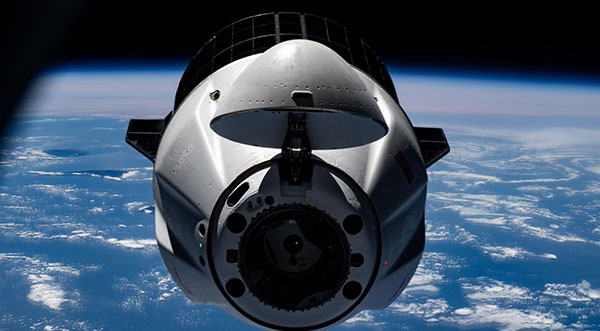
NASA is set to witness the departure of a SpaceX Dragon spacecraft from the International Space Station (ISS) on February 26, 2026. The spacecraft, which has been docked at the station, will autonomously undock from the Harmony module at precisely 12:05 p.m. PST. It will then ignite its thrusters to safely navigate away from the ISS, with splashdown anticipated later that evening at approximately 11:44 p.m. PST off the California coast.
Although NASA will not provide a live stream of the splashdown, it will share updates on its official space station blog. This mission, known as SpaceX CRS-33, is expected to return over 5,000 pounds of scientific research samples and hardware to Earth, contributing to significant advancements in both space exploration and terrestrial applications.
Scientific Contributions and Investigations
The Dragon spacecraft carries a variety of scientific investigations back to Earth, all poised to enhance our understanding of space and improve technologies for future missions. Among these, the Euro Material Ageing study has exposed 141 samples to the harsh environment of space for a year. This research aims to analyze how coatings, insulation, and 3D-printed materials degrade, which could lead to more resilient spacecraft designs and improved materials for electronics.
Additionally, the Liquid Crystals experiment from Thailand has been observing the stability of films used in electronics under microgravity conditions. The findings from this study could influence the development of better displays and optical devices for future missions.
Another notable project, the Stellar Stem Cells Mission 2, is investigating how microgravity affects the growth of brain and heart stem cells. This research has the potential to advance treatments for debilitating diseases such as ALS and Parkinson’s disease.
The SpaceDuino project is also noteworthy, as it successfully utilized a commercially available single-board computer and open-source software to measure vibrations. This innovation aims to pave the way for low-cost instruments in future space missions. Furthermore, the Moon Microscope tested a portable diagnostic kit designed for blood analysis in space, which could be invaluable for upcoming missions to the Moon and Mars.
Mission Details and Future Endeavors
During its time docked to the ISS, the Dragon spacecraft performed a total of six reboost maneuvers, helping to maintain the station’s altitude and counter atmospheric drag. This capability is critical for the long-term sustainability of the ISS. The spacecraft arrived at the station on August 25, 2025, following its launch the previous day aboard a Falcon 9 rocket from the Cape Canaveral Space Force Station in Florida.
For over 25 years, the ISS has served as a vital platform for scientific research, enabling breakthroughs that are unattainable on Earth. It functions as a testbed for NASA to address the challenges of long-duration spaceflight while also supporting commercial opportunities in low Earth orbit.
As commercial entities increasingly focus on providing human space transportation services, NASA is redirecting its resources towards deep space missions, particularly as part of the Artemis campaign. This initiative aims to prepare for future astronaut missions to Mars, marking a new chapter in space exploration.
For ongoing updates and features from the ISS, NASA encourages the public to follow its social media platforms, including Instagram, Facebook, and X. More information on ISS research and operations can be found on NASA’s official website.
















