






































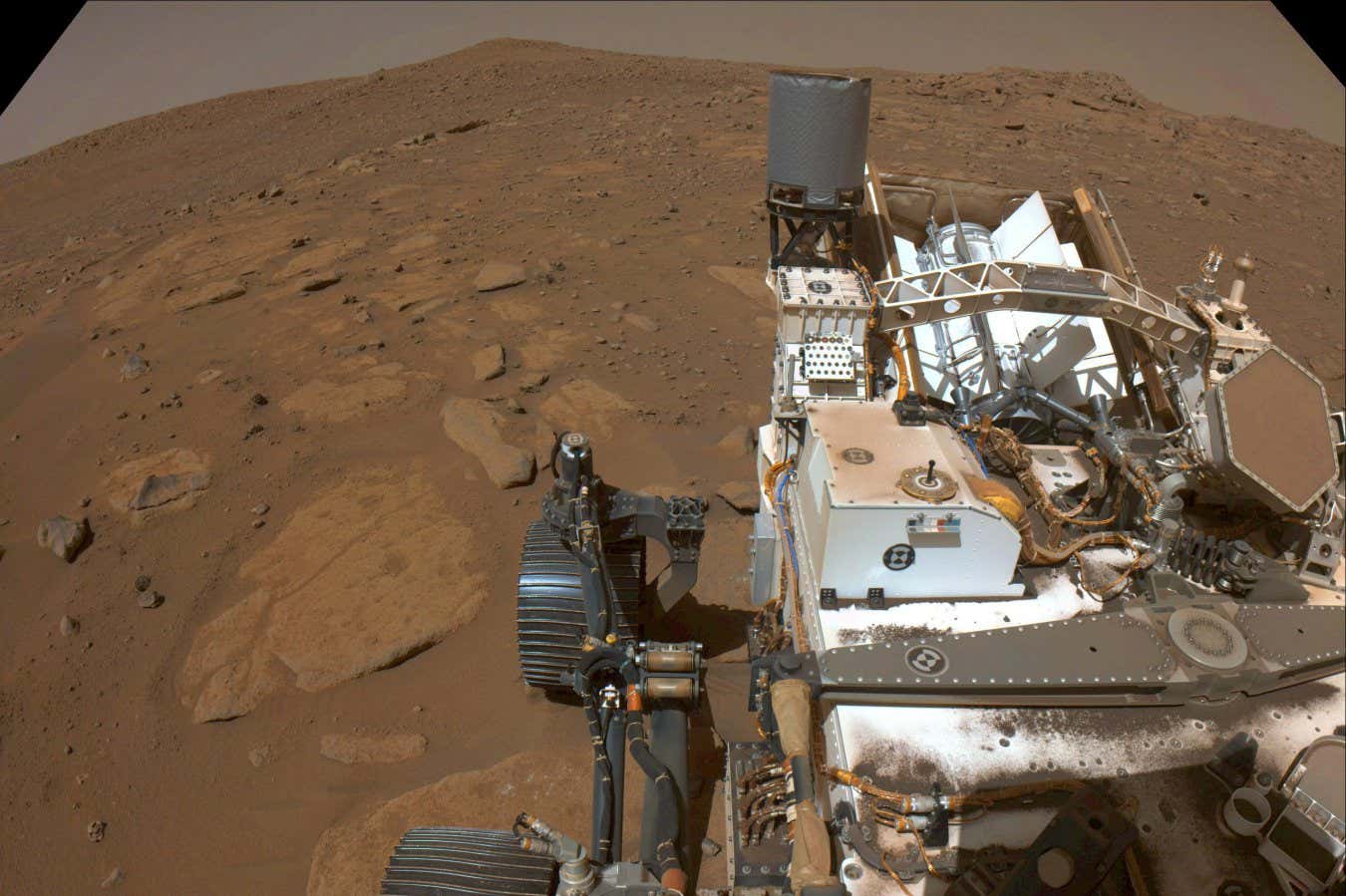
NASA’s Perseverance rover has made significant strides in the search for signs of past life on Mars, presenting promising evidence in 2025. The rover has collected samples that hint at microbial life, particularly through the discovery of unique rock formations referred to as “leopard spots.” These features, which are just a few millimeters wide and surrounded by darker material, resemble fossilized remains of microbes found on Earth.
Recent analyses conducted by a team led by Joel Hurowitz at Stony Brook University have revealed key chemical signatures within these leopard spots. The presence of iron and sulfur compounds suggests they may have originated from microbial activity. Hanna Sizemore from the Planetary Science Institute emphasized the significance of these findings, stating, “I find it much more promising [an indication of life] than anything I’ve seen in the last 20 years.”
Exciting Discoveries and Future Challenges
The implications of these findings extend beyond the surface. Previous indications of life on Mars included unexpected variations in methane levels and fossil-like structures observed in Martian meteorites. Sizemore noted her enthusiasm for the leopard spots, asserting, “I am more enthusiastic about these findings than any of those. That was all at the wrong physical scale.” The size and characteristics of the leopard spots align closely with what scientists expect from microbial life.
The rover has also detected tiny greenish nodules of minerals associated with microbial activity on Earth. Andrew Steele from Carnegie Science articulated the challenge of identifying signs of life on Mars, stating, “Whatever these signs are, they’re going to be subtle, and we need the best instruments available to us to look for them.” Perseverance is equipped with advanced scientific instruments designed to conduct these analyses.
To confirm the presence of past life, experts agree that these samples must ultimately return to Earth for comprehensive laboratory analysis. The plan was for Perseverance to cache its samples, with a future mission designed to retrieve them. Steele remarked, “These samples represent the best chance that we have of a next step in the analysis of whether there is [or has been] life on Mars – we just have to bring them back.”
The Future of Mars Exploration
Despite the excitement surrounding these discoveries, the future of the Mars Sample Return project faces significant uncertainty. The proposed budget for NASA in 2026, as outlined by the Trump administration, includes plans for the cancellation of this vital mission. Should this budget be approved, there would be no project in place to collect the valuable samples that Perseverance has meticulously gathered.
Sizemore expressed concern over the potential loss of this opportunity, stating, “We keep making so much progress, but our big picture of Martian habitability keeps not moving. We’re right on the edge – we cannot dismiss it and we cannot prove it.” The urgency for continued exploration and analysis of Mars remains paramount, as these subtle signs may hold the key to understanding the planet’s past.
As scientists await further developments, the Perseverance rover continues to redefine our understanding of Mars and the possibility of life beyond Earth, leaving the scientific community hopeful yet cautious about the next steps in this groundbreaking journey.