









































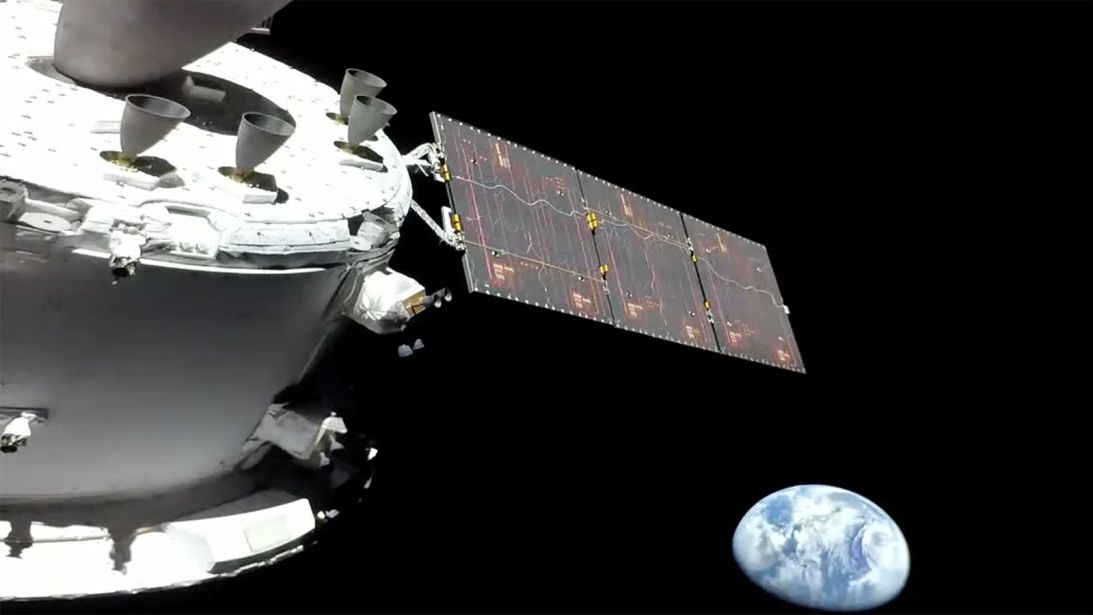
NASA is set to embark on a historic lunar mission as its Artemis II spacecraft, featuring the Space Launch System (SLS) rocket and the Orion capsule, prepares for launch. Scheduled for as early as February 6, 2024, this mission will transport four astronauts to the vicinity of the moon, marking the first crewed journey since Apollo 17 in 1972. The crew includes NASA astronauts Reid Wiseman, Victor Glover, Christina Koch, and Jeremy Hansen from the Canadian Space Agency.
As the spacecraft moves from the Vehicle Assembly Building to a launchpad at the Kennedy Space Center in Florida, this rollout event signifies the beginning of a complex mission. Unlike previous lunar missions, Artemis II will not land on the moon. Instead, it will focus on crew safety and testing various onboard systems as it travels beyond the moon’s far side, potentially setting a new record for the farthest distance humans have traveled from Earth.
NASA’s decision not to land during this mission is rooted in the spacecraft’s capabilities. According to Patty Casas Horn, deputy lead for Mission Analysis and Integrated Assessments at NASA, “The short answer is because it doesn’t have the capability. This is not a lunar lander.” The mission aims to test the Orion capsule’s systems while ensuring the astronauts’ safety and comfort during their flight.
Mission Objectives and Historical Context
Artemis II follows the uncrewed Artemis I mission, which successfully orbited the moon in November 2022. This upcoming flight will mark a significant milestone as it will be the first time humans are on board the Artemis spacecraft. The Orion capsule will carry the astronauts around the moon, while the SLS rocket will launch it into Earth orbit, allowing for deeper space exploration.
Horn emphasized the importance of crew health and safety as primary objectives. The mission will include various new systems to accommodate human needs, such as temperature control, food, water, and sanitation facilities. Additionally, exercise devices will be tested to ensure the astronauts can maintain their health during the journey.
Artemis II shares similarities with Apollo 8, which launched in 1968. Like Artemis II, Apollo 8 did not land on the lunar surface but was significant for being the first crewed launch of the Saturn V rocket and for allowing astronauts to photograph the moon’s far side. During Apollo 8, NASA adapted its mission profile due to the unavailability of the lunar lander, shifting from training for landing to navigation around the moon.
Looking Ahead: Future Lunar Missions
The Artemis program plans to deploy its first lunar lander, known as the Starship HLS or Human Landing System, which is under development by SpaceX. Astronauts are expected to land on the lunar surface during the Artemis III mission, scheduled for 2028. However, there have been concerns regarding the timeline for Starship’s development, prompting NASA to explore alternative options for the lunar lander.
Horn acknowledged the parallels between Artemis II and Apollo 8, noting key differences. While Apollo 8 entered lunar orbit and completed ten revolutions, Artemis II will execute a “free return” trajectory, swinging around the moon without entering its orbit. This design simplifies the mission profile and enhances crew safety by allowing automatic return to Earth without additional maneuvers.
James W. Head, a professor at Brown University and a participant in the Apollo program, reflected on the cultural significance of these missions. He remarked, “Artemis II will be that same kind of awakening moment — we’re going back to the moon.” The mission is poised to capture global attention, potentially unifying people through a shared sense of exploration and discovery.
NASA’s rigorous testing approach mirrors the methodologies used during the Apollo program, ensuring that each component functions correctly before deployment. This cautious strategy underlines the agency’s commitment to both human safety and mission success.
As Artemis II approaches its launch date, the mission promises to be a pivotal moment in space exploration history, rekindling public interest in lunar endeavors and laying the groundwork for future exploration. The crew’s journey will not only advance scientific knowledge but also inspire generations to look toward the stars.
















