

































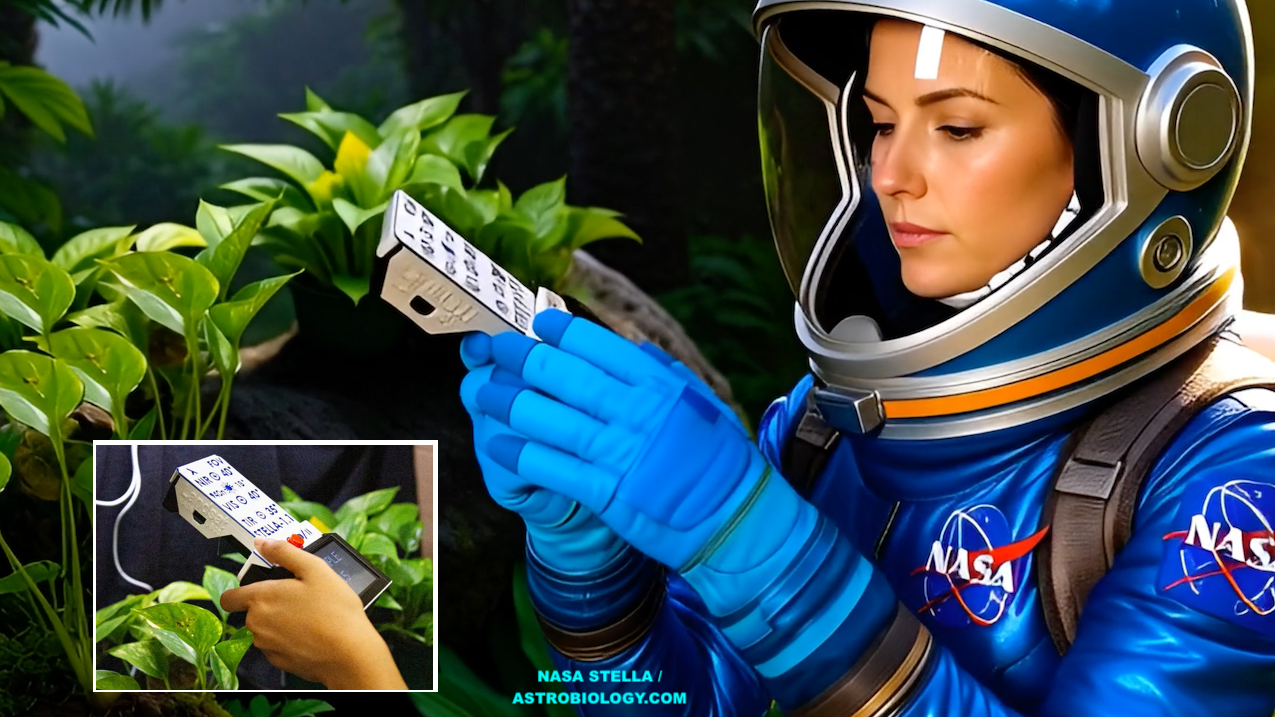
NASA has introduced an innovative open-source project called STELLA, aimed at democratizing remote sensing technology. This initiative allows individuals from diverse backgrounds to build and utilize affordable sensor instruments for environmental analysis. The project, officially detailed in a paper titled “Science and Technology Education for Land/Life Assessment (STELLA): Democratizing Remote Sensing Science With Low-Cost Open-Source Instruments for Research and Education,” highlights the potential for citizen scientists to engage in meaningful research.
The STELLA instruments are designed to be accessible and cost-effective, with the simplest model, the STELLA-Q, priced at approximately $200 by 2025. These devices can scan and analyze environmental features, such as plant health, making them suitable for educational purposes and grassroots research initiatives. Constructed from commercially available components, the instruments measure light spectra across 18 channels in the visible and near-infrared range, allowing for comprehensive observation of both natural and built environments.
Empowering Future Researchers
Located at NASA’s Goddard Space Flight Center in Greenbelt, Maryland, the STELLA project forms part of a broader effort to engage younger generations, often referred to as the Artemis Generation. This group represents the future of space exploration, with aspirations to conduct astrobiology missions on other planets. The STELLA program not only introduces NASA’s Earth observation technologies but also offers hands-on learning experiences that can inspire students to pursue careers in science and technology.
NASA’s collaboration with university researchers has been pivotal in developing these low-cost instruments. The STELLA-1 model, which supports additional sensors for measuring surface temperature and ambient air parameters, can be assembled by individuals with basic soldering skills. Step-by-step instructions are provided, ensuring that anyone interested can participate in this educational initiative.
The Future of Remote Sensing
The STELLA project promises to enhance our understanding of ecosystems on Earth and beyond. As humanity expands its search for extraterrestrial life, the ability to conduct in situ examinations will become increasingly crucial. This approach not only minimizes the logistical challenges of sample return missions but also facilitates real-time data transmission, thus allowing researchers to analyze findings on-site.
The data gathered by STELLA instruments will contribute to a growing catalog of life forms, potentially aiding in the identification and differentiation of new species encountered during space missions. The integration of artificial intelligence within these instruments could enable rapid classification of biological samples, augmenting the capabilities of human explorers and their robotic counterparts.
The project is supported by the NASA Science Mission Directorate and has received backing from various contributors, including the Morven Sustainability Lab at the University of Virginia. Acknowledgments for assistance in science communications, programming, and project coordination reflect the collaborative nature of this endeavor.
By making sophisticated remote sensing technology accessible, NASA’s STELLA project is not only fostering a new generation of scientists but also paving the way for future explorations of our solar system and beyond. The full paper detailing the STELLA initiative is available online, providing insights into its objectives and methodologies.
For those interested in becoming involved, resources and further information can be found on NASA’s dedicated project page. As remote sensing technology continues to evolve, STELLA exemplifies a significant step toward inclusive scientific exploration.