









































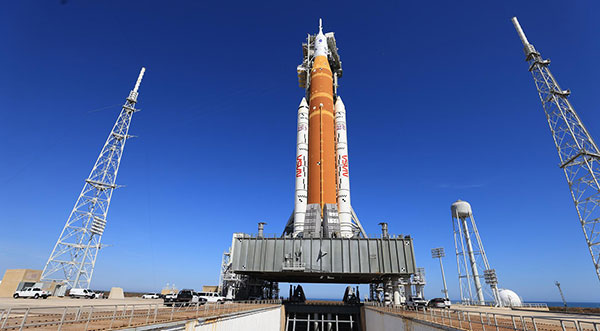
NASA is taking proactive measures to potentially roll back the Artemis II rocket and Orion spacecraft to the Vehicle Assembly Building (VAB) at Kennedy Space Center in Florida. This decision follows the observation of an interrupted flow of helium to the Space Launch System (SLS) rocket’s interim cryogenic propulsion stage on February 21, 2024.
Teams are currently analyzing data to identify the cause of the issue and are preparing for the rollback to address the problem swiftly. The interruption in helium flow is critical, as helium is necessary for maintaining proper environmental conditions for the upper stage’s engines and for pressurizing the liquid hydrogen and liquid oxygen propellant tanks.
Technical Review and Preparations
NASA has begun reviewing potential causes for the helium flow disruption. The investigation includes checking the interface between ground and rocket lines, the valve in the upper stage, and a filter that connects the ground systems to the rocket. This situation arises after successful operations during wet dress rehearsals, which concluded on February 19, 2024. During those tests, the systems worked as intended, but subsequent normal operations revealed the helium flow issues.
As part of the preparation for a possible rollback, teams are removing access platforms installed at Pad B. These platforms have wind-driven constraints, and high winds are forecasted for the following day. By ensuring that these platforms are taken down, NASA aims to keep troubleshooting options open at both the launch pad and the VAB.
Operators are currently employing a backup method to sustain the environment for the upper stage engines while the rocket remains in a safe configuration. The agency is determined to tackle the helium issue effectively, drawing insights from past experiences, especially from the Artemis I mission where helium-related pressurization challenges were also encountered.
Impact on Launch Schedule
If a rollback is executed, it will prevent NASA from launching Artemis II during the March launch window. However, the agency’s swift preparations may allow for the preservation of an April launch window, contingent on the outcomes of ongoing data analysis, necessary repairs, and the evolving schedule in the coming days and weeks.
The Artemis II mission features a crew of NASA astronauts including Reid Wiseman, Victor Glover, and Christina Koch, along with Jeremy Hansen from the Canadian Space Agency. These astronauts recently participated in integrated ground systems testing at Kennedy Space Center, ensuring that all systems are ready for a successful launch day.
NASA continues to keep the public informed as it navigates this challenge, demonstrating its commitment to transparency and thoroughness in addressing technical issues that could impact future missions.
















