









































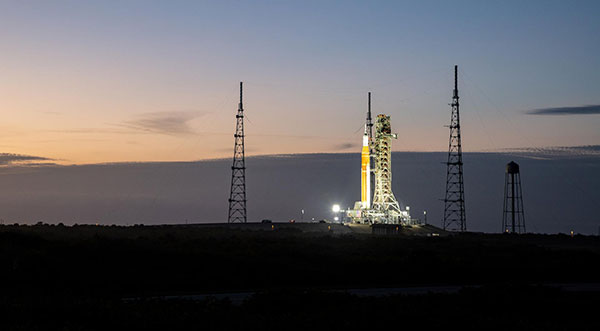
Teams at NASA’s Kennedy Space Center in Florida are making significant progress in preparations for the upcoming Artemis II mission. As part of this effort, engineers are focused on the Space Launch System (SLS) rocket, the Orion spacecraft, and the supporting ground infrastructure, all of which are critical to the success of this test flight.
A key milestone in this process is the scheduled wet dress rehearsal, which is set to occur as early as January 31, 2024. During this rehearsal, teams will conduct a test that involves fueling the rocket with over 700,000 gallons of cryogenic propellants. This comprehensive test will also include a simulated launch countdown and practice for safely removing propellant from the rocket while ensuring no astronauts are inside the spacecraft.
The rehearsal will unfold over several “runs,” testing the launch team’s capabilities during the final ten minutes of the countdown, known as the terminal count. The first run will commence approximately 49 hours before the simulated launch at 21:00 EST, concluding with a countdown that pauses at one minute and thirty seconds. Following this, teams will have a planned three-minute hold before continuing to the critical moments just before launch.
If necessary, NASA may return the SLS and Orion back to the Vehicle Assembly Building for additional adjustments. Recently, teams successfully serviced the rocket boosters, which included loading hydrazine into the booster aft skirts.
As preparations continue, the crew for Artemis II remains in quarantine in Houston, a measure they began on January 23. This quarantine is standard procedure to ensure the health and safety of the astronauts ahead of the mission.
Continued Preparations and Addressing Challenges
In addition to fueling tests, technicians are focused on several operational tasks to ensure that the Orion spacecraft is fully prepared for flight. This includes stowing equipment inside the spacecraft and conducting essential pyrotechnic tests on the launch abort system. Technicians have also completed checkouts of the core stage’s four RS-25 engines and pressurized a tank in the spacecraft’s propulsion system.
With cold weather affecting parts of the country, technicians are taking precautions to maintain optimal conditions for both Orion and SLS components. These environmental control systems are crucial for keeping the equipment functioning correctly under lower temperatures.
Moreover, engineers are addressing issues identified during preparations for crewed flight. An evaluation of the emergency egress system revealed that the baskets used for transporting crew and personnel did not reach the designated area inside the pad perimeter. Adjustments have been made to the braking system to ensure that the baskets function correctly in emergencies.
In the coming days, technicians will also conduct additional tests on Orion’s potable water system to ensure the crew will have access to safe drinking water. Initial tests revealed higher levels of total organic carbon than anticipated, prompting further analysis.
As NASA pushes forward with the Artemis II mission, the successful completion of these preparatory steps is crucial for the future of human space exploration, highlighting the agency’s commitment to returning astronauts to the Moon and beyond.
















