









































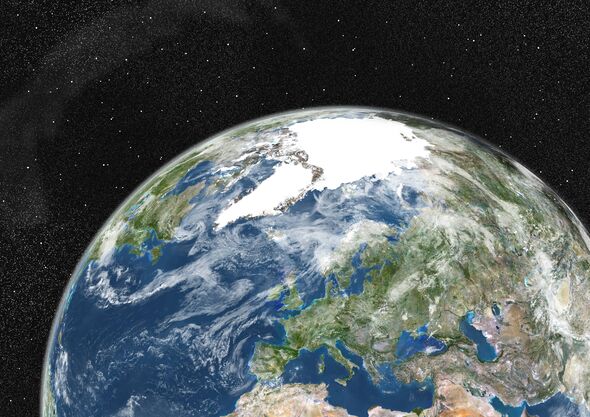
A viral conspiracy theory has emerged, claiming that on August 12, 2026, Earth will experience a seven-second loss of gravity, potentially leading to millions of fatalities. The theory, which has gained traction on social media platforms like Instagram and X, alleges that this phenomenon is documented in a NASA file titled Project Anchor, purportedly from November 2024. Proponents of the theory have warned that if this event occurs, it could result in “60 million deaths” as people would fall uncontrollably.
The alarming prediction has raised concerns among the public, prompting an influx of warnings shared across various social media channels. An account promoting the theory stated, “On August 12, 2026, the world will lose gravity for seven seconds. NASA knows. They’re preparing but won’t tell us why.” This claim has been met with skepticism and pushback, particularly from NASA.
In response to the growing speculation, NASA issued a statement clarifying the scientific impossibility of such an event. The agency, addressing the claims through fact-checking platform Snopes, stated that for Earth to lose gravity, there would have to be a fundamental change in the planet’s mass. A representative emphasized, “The Earth will not lose gravity on August 12, 2026. Earth’s gravity, or total gravitational force, is determined by its mass. The only way for the Earth to lose gravity would be for the Earth system, the combined mass of its core, mantle, crust, ocean, terrestrial water, and atmosphere, to lose mass.”
The Role of Misinformation in Modern Society
This incident highlights a broader issue regarding the spread of misinformation in the digital age. As conspiracy theories gain momentum, the responsibility of credible organizations like NASA to address and debunk such claims becomes increasingly important. The ease with which false information can circulate online raises questions about public understanding of scientific principles.
Interestingly, this is not the first time dire predictions for the year 2026 have surfaced. Some people have turned to historical figures such as Nostradamus for insights into future events. While the renowned philosopher did not specifically predict occurrences for this year, individuals scrutinizing his writings have interpreted various passages as ominous forecasts. For instance, they reference the 26th verse of Century I, which states that a “great man will be struck down in the day by a thunderbolt,” leading to speculation about potential political upheaval or assassinations.
Another passage, quatrain VII, suggests “Foists and galleys around seven ships, a mortal war will be let loose.” Some analysts have connected this to rising tensions in the South China Sea, particularly regarding China’s activities in the region. Despite the ongoing interpretations, none of these claims have been substantiated.
The phenomenon of conspiracy theories gaining traction poses significant challenges for both the public and institutions tasked with disseminating accurate information. As social media continues to evolve, the potential for misunderstanding and misinformation only grows.
While the idea of a loss of gravity is captivating and alarming, it is essential for individuals to approach such claims with skepticism and to seek clarification from reputable sources. NASA’s insistence on scientific facts serves as a reminder of the importance of grounding our understanding of the universe in established science, rather than entertaining unfounded theories that can incite unnecessary panic.
















