






































A DIY innovator has created a cost-effective solution to a significant challenge in drug development by designing a 96-channel pipette. This breakthrough allows researchers to conduct multiple experiments simultaneously, which can be crucial in the lengthy and costly process of drug testing. The project reduces the typical expense of such equipment drastically, costing only $300 compared to the standard price of $18,000 for commercial models.
The high costs associated with pharmaceutical research often stem from the extensive number of experiments required. Each new drug can necessitate synthesizing and evaluating hundreds, if not thousands, of compounds. Traditional methods of conducting experiments sequentially can lead to inefficiencies. By using a multi-channel pipette, researchers can significantly streamline the process of dispensing liquids into numerous vessels at once.
Design and Functionality of the Multi-Channel Pipette
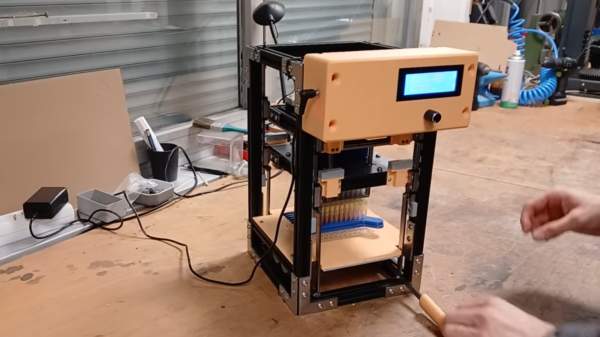
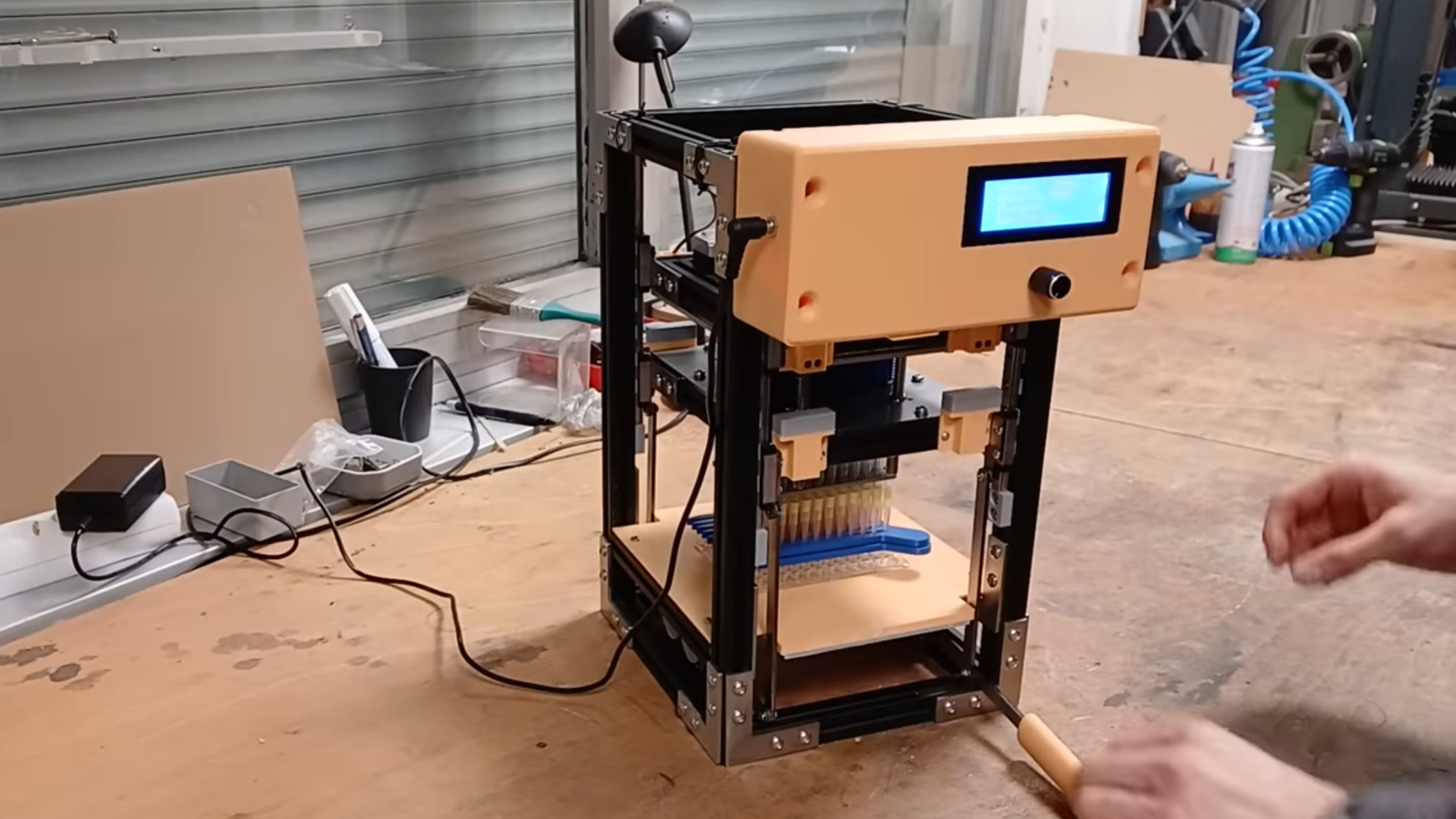
The innovative design features an eight-by-twelve grid of syringes, organized to enhance functionality. These syringes are held in place by a single plate, with their plungers attached to another plate driven by four stepper motors. The design allows the entire syringe mechanism to move vertically, facilitating the insertion and removal of multi-well plates beneath the dispensing tips.
A set of parallel levers and gears raises the lower plate when the user manually lifts a lever. This user-friendly feature simplifies the process of preparing experiments. The entire apparatus is enclosed within an aluminum extrusion frame, while heat-shrink tubing ensures that pipette tips fit securely onto the syringes.
Despite the absence of professional testing methods, initial assessments indicate that the multi-pipette functions effectively. As part of a practical demonstration, the creator, known as Triggy, 3D-printed two plates with parallel channels and filled them with varying concentrations of watercolors. The results showed that when the multi-pipette collected liquids from each channel and combined them in a multi-well plate, it produced a smooth color gradient, showcasing its precision.
Implications and Future Considerations
This DIY multi-channel pipette not only presents an affordable option for researchers but also opens the door to testing up to 96 variations of a single experiment simultaneously. However, it is essential to note that while this device is suitable for home experimentation, it requires thorough testing and validation before being used in critical applications.
The project highlights a growing trend in the life sciences where miniaturization and automation are making large-scale biological research more accessible. There are even similar homemade devices that automate laboratory tasks, further democratizing scientific exploration.
As drug development remains a costly endeavor, innovations like Triggy’s multi-channel pipette could provide valuable tools for researchers, particularly those operating on limited budgets. Yet, the industry must still address the inherent challenges of precision and regulatory certifications that accompany laboratory equipment.
The success of this project illustrates the potential for innovative thinking in science and technology, with thanks to Mark McClure for sharing the story.