









































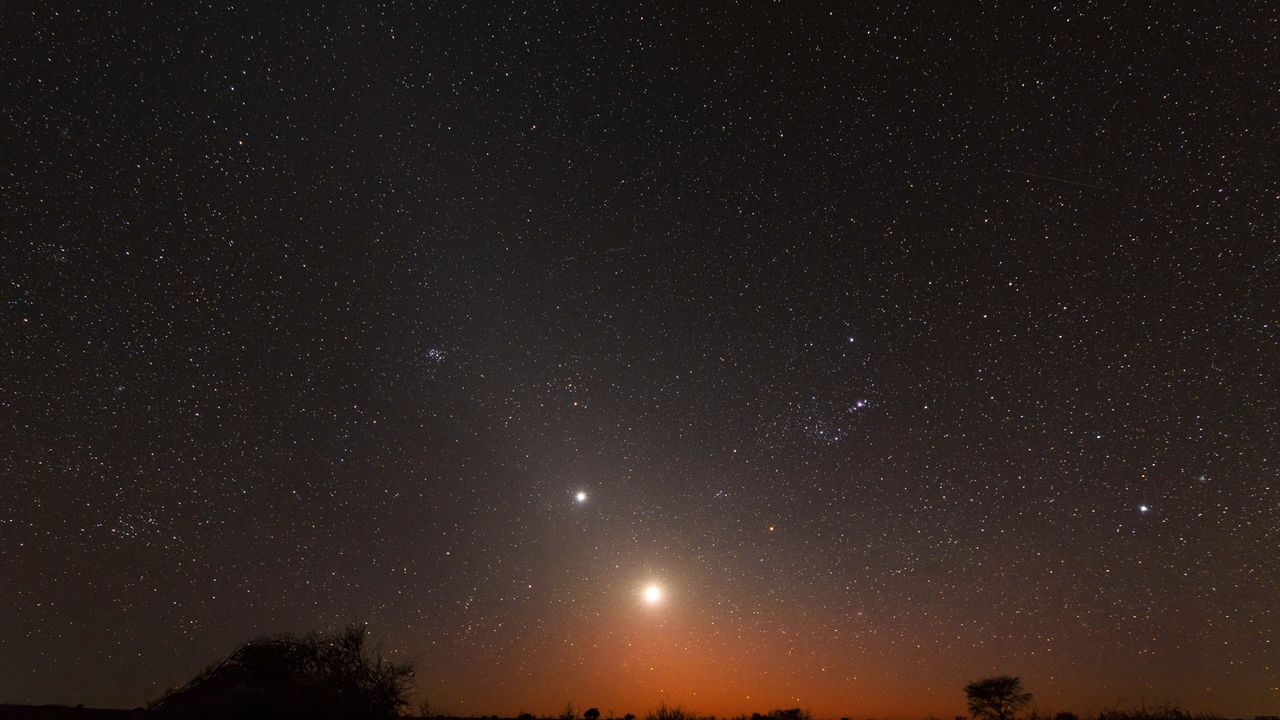
The year 2026 promises a series of captivating astronomical events, allowing enthusiasts to observe planets in various formations and alignments. This guide details significant planetary visibility periods, conjunctions, and close encounters with stars, making it easier for stargazers to plan their observations.
Key Planetary Visibility in 2026
Mercury, the smallest planet visible to the naked eye, will be particularly notable throughout the year. It can be seen as both an evening and morning star. In February, for example, it will be positioned in the western sky after sunset and in the eastern sky before sunrise. The visibility windows for 2026 are as follows:
Evenings: February 5–26; June 1–22; September 28–October 19
Mornings: March 27–April 17; July 26–August 16; November 13–December 4
The most favorable times to observe Mercury will be from February 5 to 26 in the evening and from November 13 to December 4 in the morning. On February 18, shortly after sunset, Mercury will align with a slender waxing crescent moon, creating a striking visual.
Venus, often referred to as the “evening star,” will dominate the sky from March to October. Its visibility periods include:
Evenings: March 8–October 14
Mornings: November 3–December 31
Venus will reach its peak brightness in the evening on September 19 and in the morning on November 29. Noteworthy conjunctions include its close proximity to Saturn on March 8 and a spectacular pairing with Jupiter on June 9, visible shortly after sunset.
Mars will be less prominent in 2026, beginning the year obscured by the sun’s glare. It will achieve solar conjunction on January 9, positioned approximately 223 million miles from Earth. Its visibility will improve from March 18 onward, particularly in the mornings. Significant highlights include:
– September 25: Alignment with the stars Castor and Pollux.
– October 11: Passage through the Beehive Cluster in Cancer.
– November 26: A close approach to Regulus in Leo.
By late December, Mars will brighten to magnitude -0.1, making it easily identifiable.
Other Planets and Notable Events
Jupiter will shine brightly in 2026, with visibility throughout the year. Observers can expect the following:
Mornings: January 1–9; August 19–December 31
Evenings: January 10–July 7
Jupiter reaches opposition on January 10, appearing brightest from January 1 to 22 at magnitude -2.7. A remarkable lunar occultation will occur on October 6, when a waning crescent moon will obscure Jupiter for up to an hour, depending on the observer’s location.
Saturn, known for its distinctive rings, will also be visible in 2026. Its visibility windows are:
Evenings: January 1–March 8; October 4–December 31
Mornings: April 12–October 3
Saturn will reach opposition on October 4, with its brightest visibility from September 24 to October 9. It will align closely with Mars and Mercury on April 20, creating an exciting opportunity for observers.
The distant planets, Uranus and Neptune, will continue their journeys through the skies. Uranus will remain in Taurus, with visibility from January 1 to May 5 and again from November 25 to December 31. It will reach opposition on November 25. Observers can locate Uranus near Mars on July 4.
Neptune, residing in Pisces throughout 2026, will be visible mainly through binoculars or telescopes. Its visibility periods include:
Evenings: January 1–March 6; September 25–December 31
Mornings: April 8–September 24
Neptune will achieve opposition on September 25, with peak brightness occurring from July 28 to November 24.
Joe Rao, an instructor and guest lecturer at New York’s Hayden Planetarium, emphasizes the importance of clear skies and proper equipment for optimal viewing. He contributes to various publications including Natural History magazine and Sky and Telescope, sharing insights into the wonders of astronomy.
For those looking to explore the night sky in 2026, these planetary events offer fantastic opportunities for observation. Whether through telescopes or simply with the naked eye, stargazers can look forward to an exciting year of celestial displays.
















