









































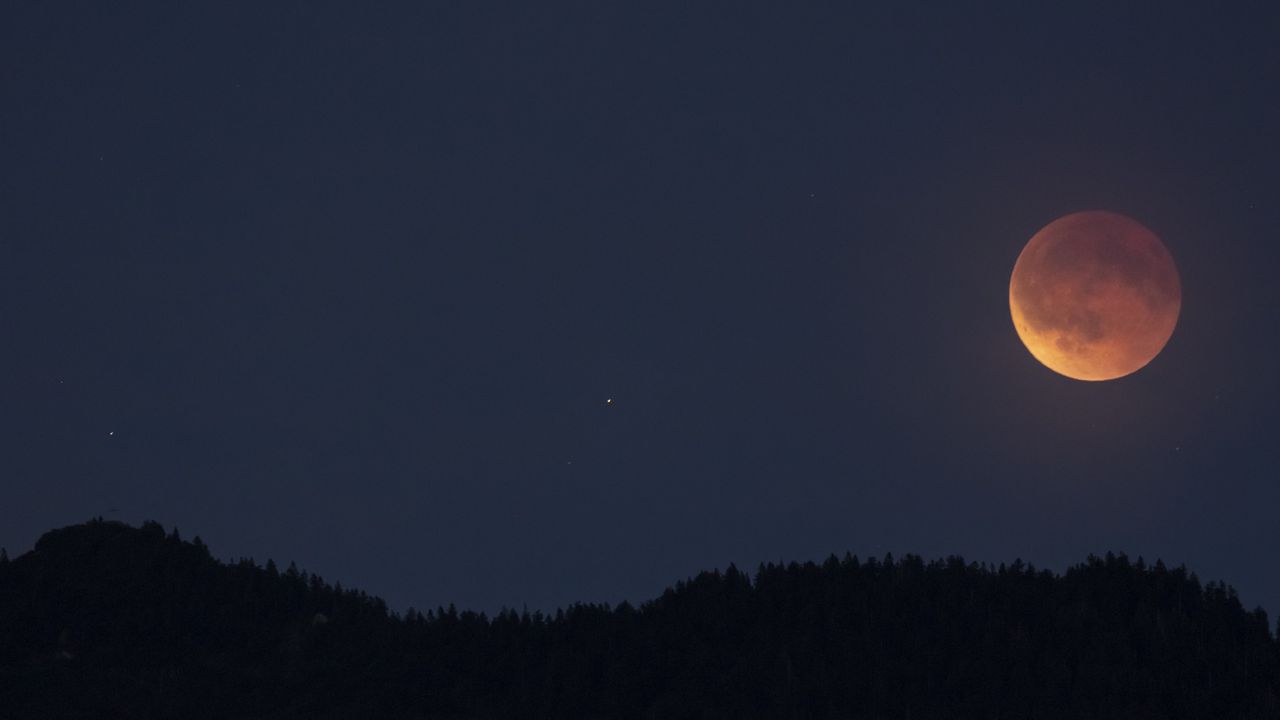
On March 3, 2026, a total lunar eclipse will grace the night skies across various regions, offering stunning views particularly from Australia, the Pacific, and the western half of North America. During this phenomenon, the moon will pass into Earth’s shadow, creating a striking red hue often referred to as a “blood moon.” This event promises to be a breathtaking spectacle as it occurs simultaneously worldwide, peaking around midnight in the Pacific region.
The eclipse will unfold with the moon starting as a full orb, gradually darkening before reaching totality. Observers will be able to see not just bright stars, but potentially the Milky Way, enhancing the experience. While a dark sky is advantageous for viewing, it is not strictly necessary. Tools like light pollution maps can help identify optimal locations for a clearer view, although many of the best sites already boast low light pollution.
Top Ten Locations for Viewing the Total Lunar Eclipse
Determining the best spots to witness this celestial event involves considering both historical weather patterns and the potential for clear skies. Below are ten recommended locations with their expected times of totality and average cloud cover percentages.
1. **Grand Canyon National Park, Arizona, U.S.**
Time of totality: 04:04-05:02 MST on March 3, 2026.
Chance of clouds: 63% (historical average).
Recognized as an International Dark Sky Park since 2015, the Grand Canyon offers multiple stargazing spots, including Mather Point and Hermit’s Rest.
2. **Horsetooth Mountain, Colorado, U.S.**
Time of totality: 04:04-05:02 MST on March 3, 2026.
Chance of clouds: 60% (historical average).
A public stargazing event organized by the Northern Colorado Astronomical Society will take place from 3:30-5:30 MST.
3. **Arkaroola Wilderness Sanctuary, South Australia**
Time of totality: 21:34-22:32 ACDT on March 3, 2026.
Chance of clouds: 24% (historical average).
This protected area in the Flinders Ranges is renowned for its dark skies and offers a unique experience for visitors.
4. **Warrumbungle Dark Sky Park, Australia**
Time of totality: 22:04-23:02 AEDT on March 3, 2026.
Chance of clouds: 45% (historical average).
Located in New South Wales, this park is Australia’s first designated Dark Sky Park and features the famous Siding Spring Observatory.
5. **Saguaro National Park, Arizona, U.S.**
Time of totality: 03:04-04:02 PST on March 3, 2026.
Chance of clouds: Not specified.
This Urban Night Sky Place offers excellent stargazing opportunities in the Sonoran Desert.
6. **Wairarapa Dark Sky Reserve, New Zealand**
Time of totality: 00:04-01:02 NZDT on March 4, 2026.
Chance of clouds: 64% (historical average).
With regulated outdoor lighting, this reserve is easily accessible for nighttime viewing.
7. **Anza-Borrego Desert State Park, California, U.S.**
Time of totality: 03:04-04:02 PST on March 3, 2026.
Chance of clouds: 40% (historical average).
The largest state park in California, it has been recognized for its dark sky since 2018.
8. **Big Island, Hawaii, U.S.**
Time of totality: 01:04-02:02 HST on March 3, 2026.
Chance of clouds: 37% (historical average).
Anywhere on the Big Island offers great views, with Maunakea being a prime spot for stargazing.
9. **Joshua Tree National Park, California, U.S.**
Time of totality: 03:04-04:02 PST on March 3, 2026.
Chance of clouds: 43% (historical average).
Despite recent wildfires, this park remains a prominent stargazing destination.
10. **Death Valley National Park, Nevada, U.S.**
Time of totality: 03:04-04:02 PST on March 3, 2026.
Chance of clouds: 47% (historical average).
Known for its exceptionally dark skies, Death Valley is an ideal location for astrophotographers.
As the world prepares for this rare event, it is essential to plan ahead to secure the best possible viewing conditions. The next total lunar eclipse will not occur again until New Year’s Eve 2028-2029, making this March event a once-in-a-lifetime experience for many.
















