









































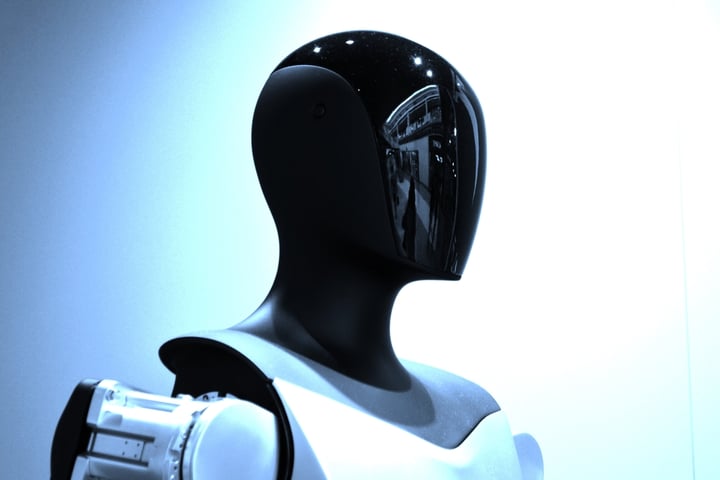
Elon Musk, CEO of Tesla Inc. and SpaceX, has expressed a bold vision for the future of humanity and technology. He claims that the company’s humanoid robot, Optimus, could potentially build civilizations on other planets. Musk referred to this capability as making Optimus the first von Neumann machine, a concept rooted in theoretical physics.
Musk’s comments emerged in response to a post on the social media platform X by user Ryan Dahl. Dahl highlighted SpaceX’s recent announcement regarding an upcoming merger with xAI and the ambitious goal of launching 1 terawatt of AI computing power annually. He posed the question, “Is this how von Neumann probes start?” To which Musk replied affirmatively, underscoring his belief in Optimus’ potential.
Understanding the Von Neumann Concept
The term “von Neumann machine” originates from the ideas of Hungarian-American mathematician and physicist John von Neumann. It describes a theoretical spacecraft capable of self-replication using raw materials from other planetary systems. Such a machine would create copies of itself, which could then explore and colonize other parts of the universe. Musk’s assertion that Optimus could serve as the first of its kind suggests a future where advanced AI could autonomously control robotic systems on distant planets.
In previous statements, Musk has consistently hailed Optimus as a transformative technology. He believes that it could significantly enhance productivity on Earth and play a vital role in space exploration. By discontinuing Tesla’s premium vehicle models, such as the Model S and Model X, the company aims to scale up the production of Optimus in its Fremont facility, with a target of producing 1 million units annually.
Market Impact and Future Prospects
Following Musk’s comments, shares of Tesla, listed on the NASDAQ under the ticker symbol TSLA, experienced a slight decline of 0.67%, trading at $419.15 during after-hours on Tuesday. Analysts have noted that Tesla continues to perform well in terms of momentum, indicating a positive long-term price trend.
Musk’s ambitious statements about Optimus and its potential applications in extraterrestrial environments reflect his broader vision of integrating AI into various sectors, including space exploration. This perspective aligns with ongoing discussions about the future of humanity beyond Earth, emphasizing the importance of technological advancement in addressing complex challenges.
As Tesla and SpaceX continue to innovate, the implications of Musk’s vision for Optimus could reshape not only the automotive and technology industries but also humanity’s role in the universe. The convergence of AI and robotics may pave the way for new possibilities in space colonization and beyond.
















