









































The Chandra X-ray Observatory has achieved a significant milestone, now housing over 1.3 million X-ray detections across the cosmos. This remarkable data collection is compiled in the latest version of the Chandra Source Catalog (CSC), which has become an essential resource for astronomers and researchers worldwide. The CSC includes unique observations made by Chandra up until the end of 2020, solidifying its position as one of the foremost tools for studying the universe.
Expanding the Cosmic Archive
The CSC 2.1, the most recent iteration of the catalog, boasts over 400,000 unique sources, ranging from compact objects to extended sources. Each entry includes precise location data and detailed information about the X-ray energies detected. This vast repository enables researchers utilizing ground-based and space-based telescopes, such as the James Webb and Hubble Space Telescopes, to integrate Chandra’s X-ray data with other forms of astronomical observations.
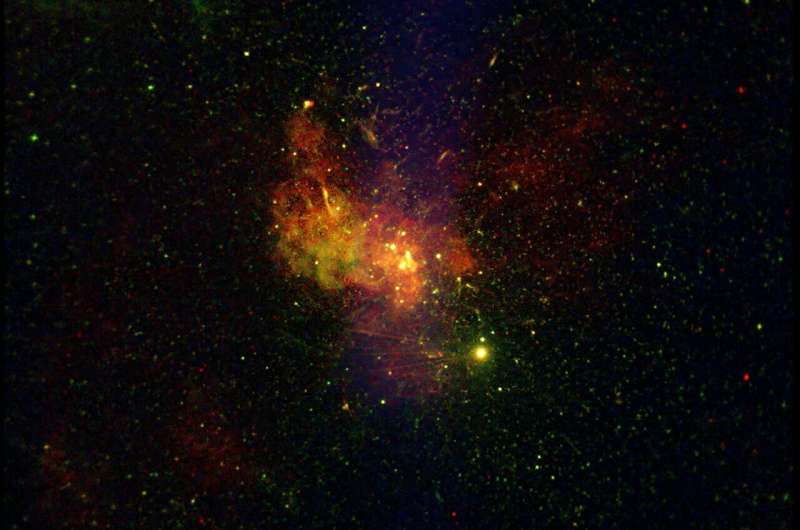
One of the most striking examples of the catalog’s utility is demonstrated in a new image of the Galactic Center, the area surrounding the supermassive black hole known as Sagittarius A*. In this image, which spans approximately 60 light-years, Chandra has recorded over 3,300 individual X-ray sources. The image represents a synthesis of 86 observations and equates to more than three million seconds of observation time.
Innovative Representations of Data
Additionally, the Chandra team has released a new sonification project, translating astronomical data into sound, which captures the essence of the catalog’s findings. This sonification covers 22 years of Chandra observations, from its launch through to 2021, providing an auditory representation of the universe’s X-ray sources.
The sonification visualizes the sky in a manner similar to global maps, with the core of the Milky Way positioned at the center. Each detection is represented by a circle, with its size reflecting the number of sightings in that location over time. A year counter on the display indicates the ongoing nature of Chandra’s mission, evolving to read “… and beyond” to signify the telescope’s continued operational status.
The latest version of the Chandra Source Catalog is publicly accessible, allowing scientists and enthusiasts alike to delve deeper into the wealth of data Chandra has amassed over its operational lifetime. This tool not only enriches our understanding of the universe but also opens new avenues for exploration and discovery in the field of astronomy.
For more information, visit the Chandra X-ray Center’s official website at cxc.cfa.harvard.edu/csc/.
















