









































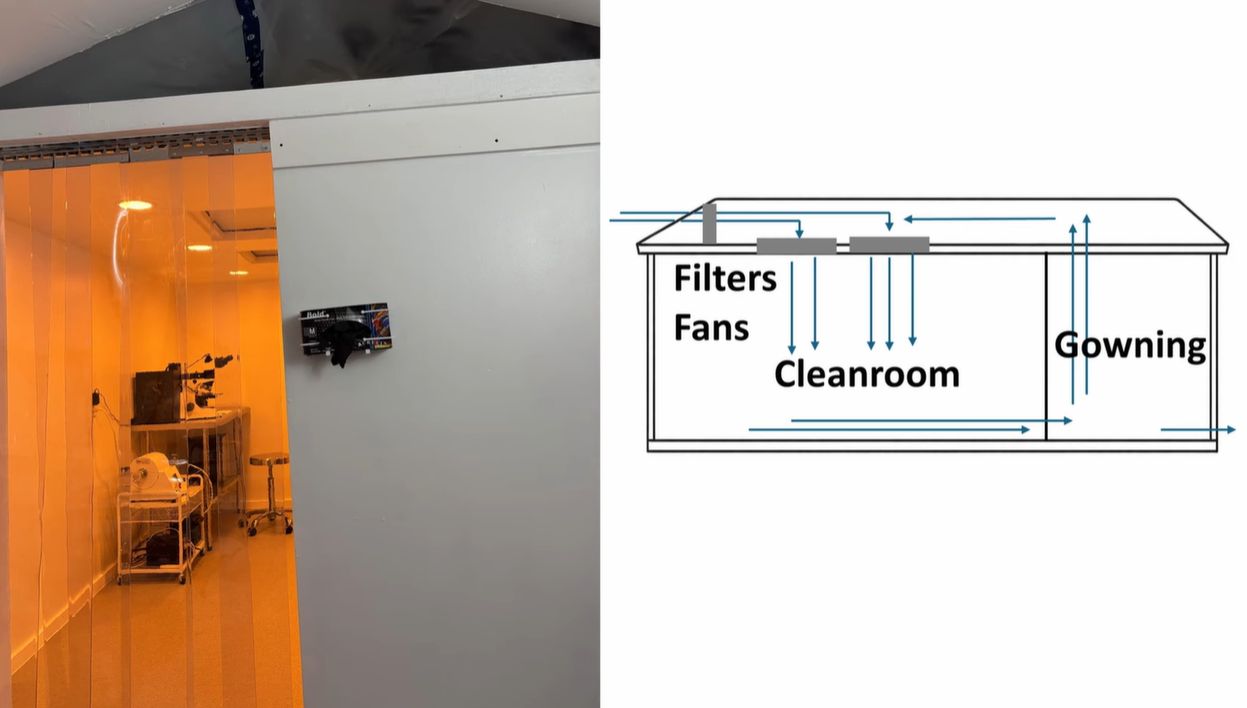
A garden shed in the backyard has been ingeniously converted into a Class 100 semiconductor cleanroom, showcasing the versatility of cleanroom technology. Dr. Semiconductor, a prominent figure in the DIY tech community, undertook this project to demonstrate that the same principles used in multi-million dollar semiconductor fabrication facilities can be applied in a modest setting.
At the heart of this transformation is a sophisticated HEPA filtration system that maintains positive pressure within the cleanroom. This system ensures that clean air continuously flows into the space, effectively preventing contamination from outside sources. Upon entering the shed, users first pass through a gowning room, where they change into specialized cleanroom attire before proceeding into the main cleanroom area.
The interior of the cleanroom features flame-resistant drywall and a smooth, water-based epoxy coating on the walls, minimizing debris accumulation. The air conditioning unit maintains a consistent temperature, essential for semiconductor research and development. This careful design yielded a particle contamination level exceeding 0.5 μm, achieving a FED STD 209E equivalent of Class 100, or ISO 5, with a maximum allowable particle count of 3,520 particles/m³. In stark contrast, typical room air registers as ISO 9, with a staggering maximum of 35,200,000 particles/m³.
The project not only serves as a functional cleanroom but also as a testament to innovative thinking in the field of semiconductor technology. Dr. Semiconductor emphasizes that this setup is suitable for various research and development tasks typically associated with semiconductor laboratories.
This endeavor has drawn attention within the tech community, illustrating that significant advancements can be made from the comfort of one’s backyard. Thanks to a tip from Thayer, this unique project has sparked interest and inspired enthusiasts to explore cleanroom capabilities in their own environments.
















