









































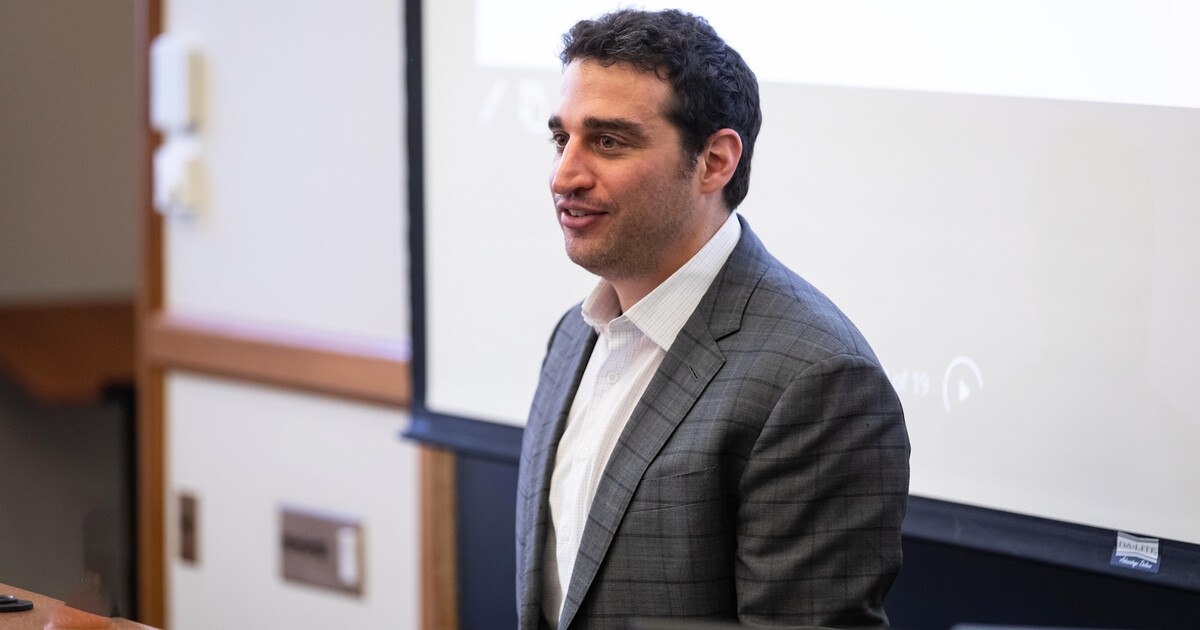
Joshua Macey, a recently tenured professor at Yale Law School, is addressing critical issues surrounding the fragility of the United States’ electric grid. His research emphasizes the need for reform in energy law and governance to enhance grid reliability and facilitate a transition to sustainable energy sources. Macey’s work has gained significant recognition, including being named to the American Bankruptcy Institute list of 40 Under 40 Emerging Leaders in Insolvency Practice in 2023.
In his latest scholarship, Macey highlights the pressing challenges faced by the U.S. power grid, which is increasingly under strain due to extreme weather events and frequent blackouts. His analysis indicates that a primary contributor to this unreliability is a failure in grid governance. Macey explains that existing regulatory frameworks are dominated by incumbent utilities that often resist necessary reforms. This situation hinders the development of a competitive energy market, which is crucial for ensuring a reliable supply of electricity.
Understanding Electric Bills and Energy Policy
In his Energy Law course, Macey takes a unique approach by showing students his own electric bill, explaining how to analyze it line by line. He notes that a careful review reveals how electricity rates are structured in a way that does not incentivize consumers to reduce their consumption. Macey emphasizes that many ratepayers have limited choices regarding their suppliers and that their bills often reflect various state policies disconnected from electricity pricing.
“When you read your utility bill carefully, you see that the way we design rates doesn’t provide strong incentives to reduce consumption,” Macey explains. He aims to educate students on the implications of pricing decisions, including how monopolistic structures and regulatory incentives can distort utility investments and complicate efforts for reform.
Proposed Reforms for Modernizing the Grid
To address the challenges posed by rising demand, particularly from data centers, Macey proposes several strategies for lawmakers and regulators. He advocates for simplifying the processes involved in building and permitting infrastructure, allowing data centers to generate their own power when feasible. Furthermore, he argues for a shift towards a “connect and manage” approach for interconnecting to the grid. This method would enable resources to connect more swiftly, accepting the risk of being temporarily disconnected if they cause stability issues.
Macey also suggests that instead of moving through the interconnection queue sequentially, positions should be auctioned off. This change could enhance competition and expedite the integration of new resources into the market, ultimately leading to a more reliable power supply.
In another aspect of his research, Macey critiques the entrenched monopolies of public utilities, specifically citing a case involving Duke Energy in North Carolina. He argues that these utilities often engage in anticompetitive practices that disadvantage consumers. “Electric utilities are given a legal right to a monopoly,” he states, noting that such privileges can lead to abuses in competitive markets. Macey believes that antitrust regulators should be more assertive in enforcing laws that prevent monopolistic behavior in the energy sector.
Macey encourages students interested in energy law to consider careers at state public utility commissions, where significant energy-related decisions are made. He asserts that while federal opportunities exist, much of the vital work addressing climate change and energy affordability occurs at the state level.
As Macey continues to explore the intersection of law and energy, his insights shed light on the urgent need for reform in the U.S. electric grid system. The challenges are complex, but with concerted efforts from policymakers, regulators, and future energy law professionals, a more reliable and sustainable energy future is achievable.
















