









































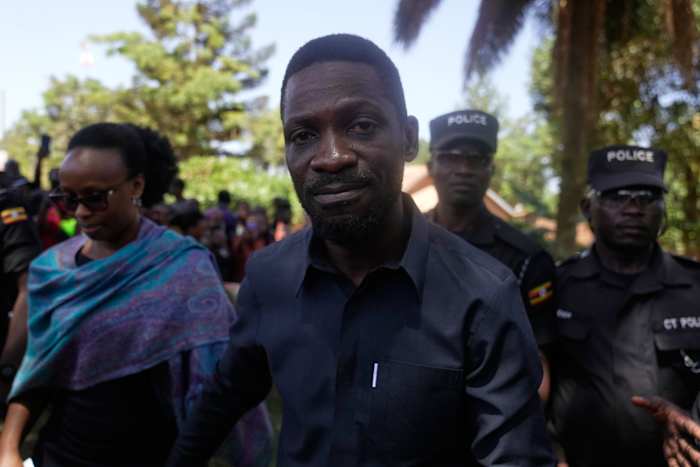
Political tensions in Uganda have escalated as the country’s army chief, Gen. Muhoozi Kainerugaba, publicly accused U.S. Embassy officials of assisting opposition leader Bobi Wine during his time in hiding. This accusation follows a disputed presidential election held on January 15, 2021, and has raised alarm among citizens concerned about the implications for security and political stability in the nation.
Kainerugaba, who is the son of President Yoweri Museveni and viewed as a potential successor, made his claims via posts on social media platform X, previously known as Twitter. He criticized “unimaginative bureaucrats at the Embassy” for allegedly undermining the security relationship between Uganda and the United States. The army chief asserted that Wine had “kidnapped himself” and implicated the U.S. Embassy in this situation, although these statements have since been deleted.
Following the election, Wine, whose legal name is Kyagulanyi Ssentamu, went into hiding, citing fears for his safety. He was a key contender against Museveni, securing approximately 24.7% of the vote, according to official results, which he has rejected as fraudulent. Museveni, on the other hand, received 71.6% and will now embark on a seventh term, extending his nearly five-decade grip on power.
In various video messages, Wine has expressed his discontent with the government and the military’s inability to locate him, claiming, “The whole army is looking for one person. It’s now coming to ten days, but they have failed to find me. That means they are not as strong as they tell you.” His comments have drawn significant attention, particularly from Uganda’s youth, many of whom are frustrated with the government’s corruption and lack of job opportunities.
Kainerugaba’s rhetoric has also raised concerns about potential violence. He stated that Wine is “wanted dead or alive,” prompting fears that any harm to the opposition leader could trigger further unrest. The military’s pursuit of Wine has intensified, with Kainerugaba reportedly suggesting that “foreign powers who attempt to smuggle Kabobi outside the country” could jeopardize diplomatic relations.
In the wake of these developments, Wine’s supporters have faced increased scrutiny. Hundreds have been detained for alleged offenses related to the election, and one of Wine’s deputies, Muwanga Kivumbi, has been charged with terrorism following a violent incident during the election period.
The situation remains tense as Ugandans await further developments, particularly regarding the safety of Wine and the implications of Kainerugaba’s accusations against the U.S. Embassy. The growing rift between the government and opposition highlights the fragile nature of Uganda’s political landscape as the country navigates its future under Museveni’s long-standing rule.
















