









































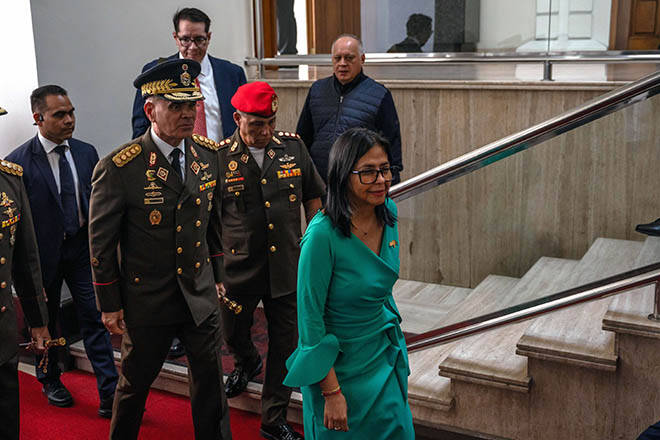
In a significant diplomatic shift, the United States and Venezuela are exploring the possibility of restoring diplomatic ties following the arrest of Venezuelan President Nicolas Maduro. Venezuelan interim President Delcy Rodriguez announced that her government is considering sending a delegation to Washington to assess the status of its embassy, which has been closed since early 2019. The announcement comes just days after the U.S. conducted a covert operation that led to Maduro’s capture.
Exploratory Talks Initiated
Rodriguez indicated that the U.S. and Venezuelan governments have initiated an “exploratory diplomatic process” aimed at reestablishing diplomatic missions in both countries. This development was confirmed by a spokesperson from the U.S. State Department, who stated that diplomats visited Caracas on March 24, 2026, to evaluate the potential for resuming operations at the U.S. embassy for the first time in nearly seven years.
Despite these preliminary steps, experts caution that the relationship between the two nations remains fluid. The rapid evolution of diplomatic discussions has raised eyebrows, especially since President Donald Trump recently remarked on his positive rapport with the Venezuelan government, despite the significant changes in leadership.
Rodriguez’s announcement was coupled with a strong condemnation of what she termed the “kidnapping” of Maduro and described the U.S. action as a violation of international law. She outlined that the exploratory process aims to address the consequences of the recent events while pursuing a “working agenda of mutual interest.”
Challenges Ahead for Reopening Embassies
The U.S. Embassy in Caracas has remained closed since Maduro expelled American diplomats in response to the U.S. recognition of opposition leader Juan Guaido as interim president in January 2019. Meanwhile, the Venezuelan Embassy in Washington also closed its doors around the same time, further severing ties between the nations.
Former U.S. envoy to Venezuela, Elliott Abrams, emphasized that reopening the U.S. embassy would not be a straightforward process. He highlighted practical challenges such as safety concerns for diplomats and potential legal implications surrounding the recognition of Rodriguez as the interim head of state. Abrams pointed out that if Rodriguez is acknowledged as the legitimate president, it raises questions about the legitimacy of Maduro’s previous presidency and its implications for his legal status.
As discussions progress, the diplomatic community is closely monitoring the developments. The U.S. State Department confirmed that a team from the Venezuela Affairs Unit, led by chargé d’affaires John T. McNamara, has begun initial assessments for a phased resumption of embassy operations. This has been met with cautious optimism from both sides.
As the situation evolves, Rodriguez has indicated a focus on internal matters and has engaged in discussions with left-wing leaders in Latin America and Spain regarding recent military actions against Venezuela. She also emphasized the need for a broad agenda for bilateral cooperation, indicating a willingness to engage constructively despite the complex backdrop of recent events.
The evolving diplomatic relationship between the U.S. and Venezuela underscores the fluid nature of international politics, particularly in the wake of significant leadership changes. As both nations navigate this new terrain, the global community watches closely, anticipating further developments in this high-stakes scenario.
















