









































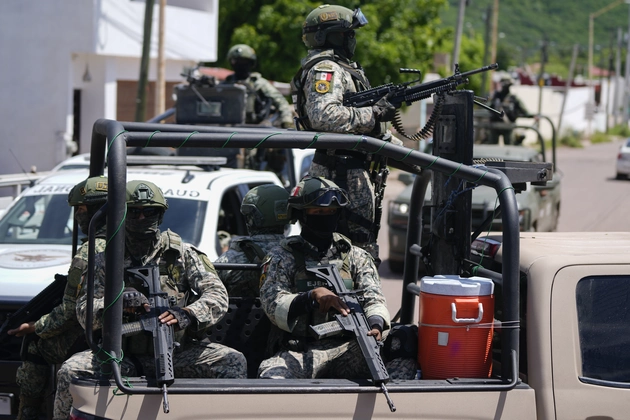
President Donald Trump has announced that the United States will escalate its actions against drug cartels operating in Mexico. In an interview with Fox News, Trump stated that operations would soon be conducted “by land,” signaling a significant shift in U.S. counternarcotics strategy. This announcement follows recent U.S. efforts that included maritime interdictions in the Caribbean and the January 3, 2023, capture of Venezuelan President Nicolás Maduro on drug trafficking charges.
Trump described the current situation, asserting that “the cartels are running Mexico.” He indicated that if the Mexican government does not take sufficient action against these criminal organizations, the U.S. may intervene directly. This assertion raises concerns about the potential implications for U.S.-Mexico relations and the sovereignty of Mexico.
Despite Trump’s strong stance, Mexican President Claudia Sheinbaum emphasized the ongoing collaboration between the United States and Mexico in combating drug trafficking. She noted that the two nations are engaged in coordinated security efforts, which include joint operations aimed at dismantling drug labs and disrupting cartel activities.
Details of the Proposed Operations
While specific details about the intended operations have not been disclosed, Trump’s comments suggest a more aggressive approach. The U.S. has previously focused on maritime strategies to combat drug trafficking, but land operations could potentially involve direct military engagement, a move that would require careful consideration of legal and diplomatic ramifications.
The U.S. has a long history of involvement in Mexico’s drug war, dating back to the early 2000s. However, the suggestion of land-based operations marks a notable escalation. Critics have raised concerns that such actions may lead to further violence and destabilization in the region.
Reactions and Implications
Reactions to Trump’s announcement have varied. Supporters argue that stronger action is necessary to combat the increasing influence of drug cartels, which have been linked to rising violence and crime rates in both Mexico and the United States. Detractors caution against military involvement, warning that it could exacerbate tensions and lead to unintended consequences.
As discussions continue regarding the best approach to address the drug crisis, both the U.S. and Mexican governments will need to navigate complex political landscapes. Ongoing dialogue between the two nations will be crucial as they work together to confront the challenges posed by drug trafficking and organized crime.
The dynamics of this situation will likely evolve, and both leaders will need to consider the balance between national security interests and respect for Mexico’s sovereignty.
















