









































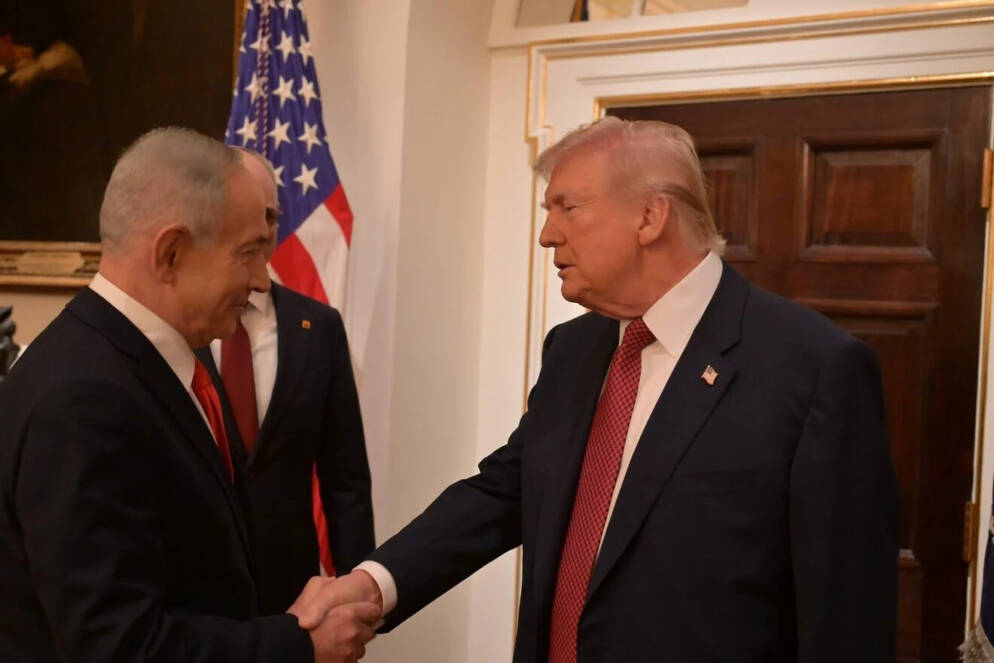
U.S. President Donald Trump concluded a meeting with Israeli Prime Minister Benjamin Netanyahu on February 7, 2026, at the White House, discussing ongoing negotiations with Iran. The discussions, which lasted approximately two and a half hours, yielded no definitive agreements, according to Trump.
During the meeting, Trump emphasized the importance of continuing dialogues with Iran to explore the possibility of reaching a viable deal. He stated, “There was nothing definitive reached other than I insisted that negotiations with Iran continue to see whether or not a deal can be consummated.” Trump indicated that if a deal can be achieved, he would prefer that outcome, but acknowledged uncertainty regarding the potential for success.
The backdrop to this meeting involved complex dynamics surrounding U.S.-Iran relations, particularly following recent talks that began in Oman. Those discussions faced challenges when Iran requested a change in location from Turkey and sought to limit the focus to its nuclear program. U.S. officials confirmed that the negotiations would address a broader range of Iranian actions, including its suppression of domestic protests.
Military Presence and Strategic Considerations
In light of these negotiations, Trump ordered additional U.S. forces to the region, notably deploying the aircraft carrier USS Abraham Lincoln. The president referred to this military presence as an “armada,” which could be utilized for potential military action against Iran if necessary. He reiterated this stance during the meeting with Netanyahu, recalling a past incident where Iran faced consequences for not engaging in negotiations.
“Last time Iran decided that they were better off not making a deal, and they were hit with Midnight Hammer,” Trump remarked, hinting at a previous military response. He expressed hope that Iran would adopt a more reasonable approach this time.
The discussions between the two leaders also touched on Israel’s security needs amid the ongoing negotiations with Iran, as well as developments in Gaza and surrounding regions. According to the Israeli Prime Minister’s Office, Netanyahu underscored the significance of Israel’s security requirements within the context of the talks.
Both leaders agreed on the necessity for continued coordination and direct communication between their administrations. Trump noted “tremendous progress” in Gaza and the broader region, indicating a positive outlook on regional developments despite the challenges posed by Iran.
As the situation evolves, the outcome of ongoing negotiations with Iran remains uncertain. The U.S. administration continues to navigate a complex web of geopolitical considerations, balancing diplomatic efforts with military readiness.
















