









































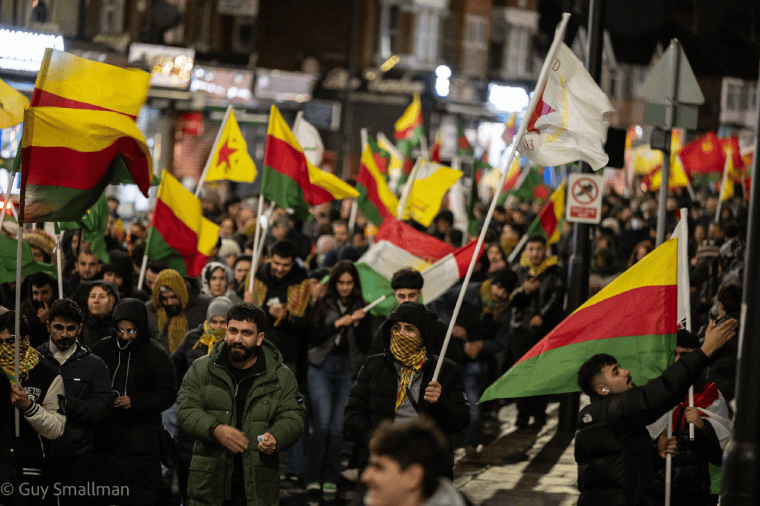
Tensions are escalating in northern Syria as Ahmed al-Sharaa’s regime intensifies its campaign against the Kurdish population. Following a tentative ceasefire, the Syrian government has actively undermined Kurdish autonomy, threatening the stability of the region. The Kurdish-led Syrian Democratic Forces (SDF) previously controlled significant portions of northeastern Syria but have seen their influence diminish in recent months.
Al-Sharaa, who rose to power after toppling the former dictator, Bashar al-Assad, in December 2024, is determined to consolidate control over the territory. This has involved exacerbating sectarian divisions, a tactic reminiscent of Assad’s rule. As a result, Kurdish forces are facing increasing pressure to dissolve their military presence into the Syrian state.
The SDF, which has been a key player in the fight against ISIS, has seen its territory shrink from controlling nearly one-third of Syria to several critical cities. SDF leader Mazloum Abdi has expressed a willingness to negotiate with al-Sharaa’s government, yet internal divisions within Kurdish factions complicate this potential agreement.
Regional Dynamics and International Implications
The geopolitical landscape is further complicated by the involvement of Turkey, under the leadership of Recep Tayyip Erdogan, who supports al-Sharaa. Erdogan’s government perceives the Kurdish autonomy in Syria as a direct threat, given Turkey’s own history of repressing its Kurdish minority. The Kurdistan Workers Party (PKK), which has engaged in struggles against the Turkish state, maintains ties with segments of the SDF.
Historically, the United States has backed the SDF as part of its strategy to combat ISIS. However, in a shift that many Kurds view as a betrayal, the U.S. is now fostering relations with al-Sharaa’s regime. Al-Sharaa’s government has positioned itself as a reliable partner in the fight against ISIS, indicating a willingness to cooperate with both the U.S. and Israel on various regional issues.
Al-Sharaa’s aggressive posture towards the Kurds stems from a broader authoritarian vision for Syria, where any call for a pluralistic society is seen as a threat. His administration has already targeted other minority groups, including Alawites and Druze, and the current focus on the Kurds aligns with his efforts to eliminate any challenge to his authority.
Internal and External Responses
As the situation unfolds, Erdogan’s government appears to be leveraging the ongoing strife to further its own interests. In recent years, Turkey has launched military operations in northeastern Syria, aiming to restrict SDF influence and framing these actions as necessary for national security. Erdogan’s renewed peace process with Abdullah Ocalan, the leader of the PKK, is also part of a broader strategy to weaken Kurdish political structures in the region.
For many Kurds, the recent developments highlight a painful cycle of betrayal. The historical sentiment among Kurdish communities is summed up by the phrase from former U.S. Secretary of State Henry Kissinger: “It may be dangerous to be America’s enemy, but to be its friend is fatal.” The Kurdish population remains committed to resisting both al-Sharaa’s regime and U.S. opportunism, advocating for their rights and the establishment of a genuine peace process in Turkey that respects their aspirations.
The opposition to the attacks on Kurds is primarily rooted in organized leftist groups within Turkey, as mainstream political parties generally refrain from opposing the government on Kurdish issues. Nevertheless, the Republican People’s Party (CHP) has taken a notable stance, with leader Özgür Özel emphasizing the need for solidarity among all people in the region.
Despite this, many mainstream political narratives continue to conflate the SDF with the PKK, justifying al-Sharaa’s regime’s actions as a “struggle against terrorism.” The complex web of alliances and enmities in the region suggests that the fate of the Kurds will depend on both local resistance and the evolving international political landscape.
As the situation develops, the Kurdish community is resolute in its call for support from global powers to ensure their rights are upheld. The ongoing conflict serves as a reminder of the urgent need for a comprehensive approach to peace that genuinely reflects the diverse voices in Syria.
















