









































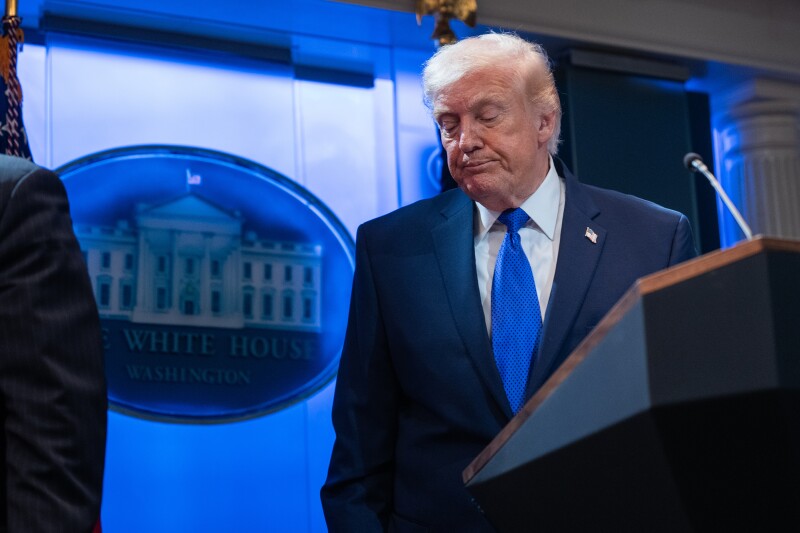
The Supreme Court has delivered a significant blow to former President Donald Trump by ruling against his imposition of tariffs, asserting that such authority lies exclusively with Congress. In a landmark decision on March 15, 2024, the justices voted 6-3 to invalidate the tariffs, emphasizing the importance of separation of powers and the rule of law.
This ruling follows a series of challenges to presidential actions that have reached the Supreme Court during Trump’s presidency. In his first year, 24 cases came before the justices, with 22 being decided in favor of the president. The latest decision, authored by Chief Justice John G. Roberts Jr., marks a pivotal moment where the Court has asserted its independence from executive power.
The tariffs in question have been a cornerstone of Trump’s economic strategy, aimed at fostering American industry. Trump characterized their invalidation as a “total disaster for the country” and warned it could “literally destroy the United States of America.” In his defense, D. John Sauer, the Solicitor General, argued that the tariffs were essential for promoting peace and economic prosperity.
At the heart of the Supreme Court’s ruling is the interpretation of the International Emergency Economic Powers Act (IEEPA). The Court determined that while this statute allows the president to regulate imports in response to extraordinary threats, it does not grant the authority to impose tariffs. Roberts pointed out that the IEEPA makes no mention of tariffs, which are fundamentally taxes. He quoted a decision from 1824, affirming that the power to impose tariffs is clearly a branch of Congress’s taxing authority.
The ruling is noteworthy not just for its implications on tariffs but also for its reference to the “major questions doctrine.” This legal principle asserts that federal agencies cannot act on significant economic or political matters without explicit congressional authorization. The Court has previously used this doctrine to invalidate actions taken by the Biden administration, indicating a potential trend in judicial oversight of executive power.
In this case, the justices found themselves divided, with some ruling that tariffs constitute a major question of economic significance, while others did not agree on applying the doctrine to matters of foreign policy. Justices Sonia Sotomayor, Elena Kagan, and Ketanji Brown Jackson dissented from part of the majority opinion, reflecting a broader disagreement about the application of the major questions doctrine.
Looking ahead, the ruling raises critical questions regarding the future of tariffs imposed by the Trump administration. It remains unclear whether refunds will be issued for tariffs deemed illegal and how this process would be managed. The Supreme Court did not address these issues in their decision.
Ultimately, this ruling signifies a crucial check on presidential power, highlighting the role of the judiciary in maintaining the balance of authority within the U.S. government. As the Court continues to confront significant issues of executive power, its decisions will likely have lasting impacts on the legislative process and governance in the United States.
















