









































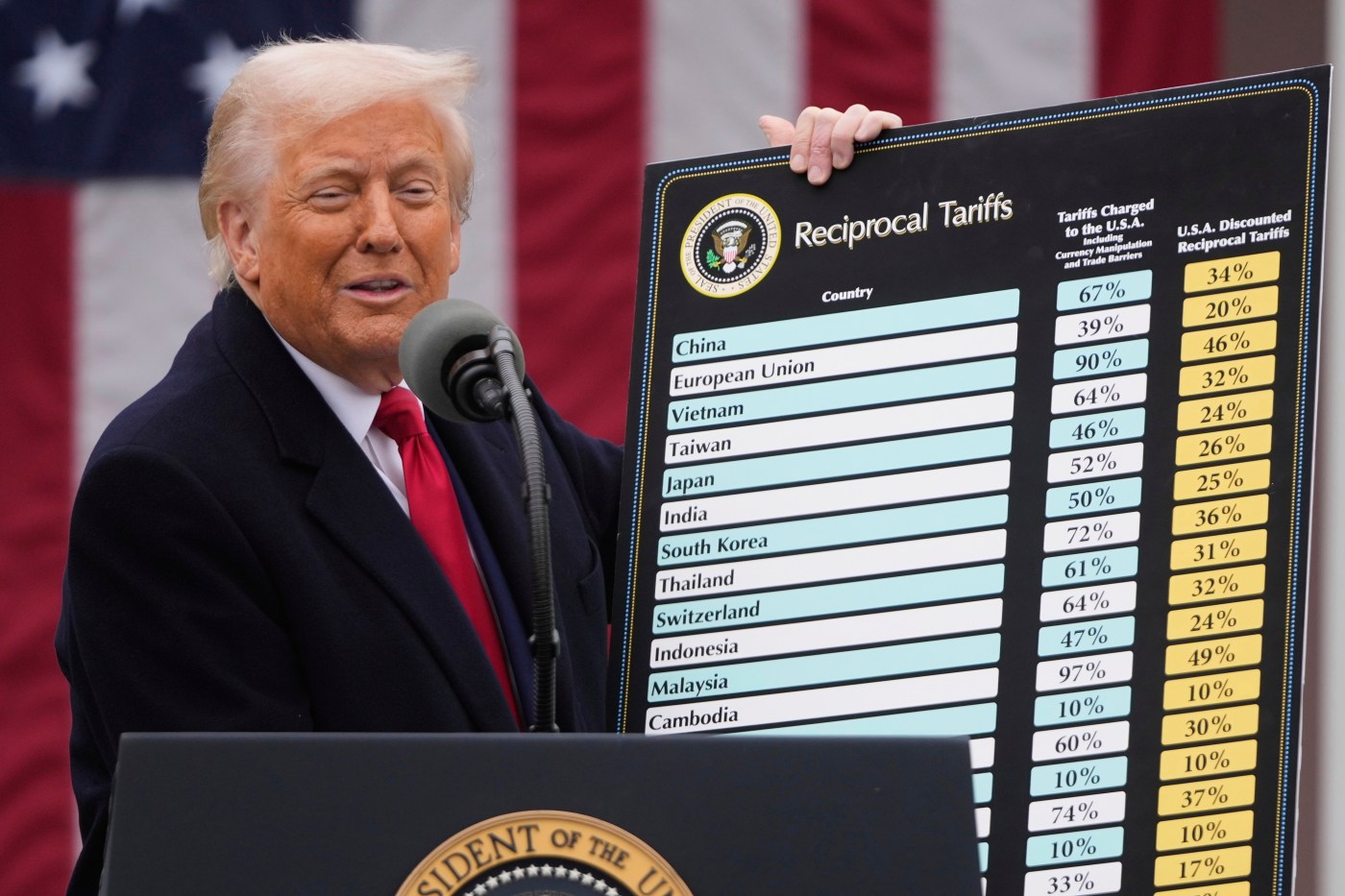
The U.S. Supreme Court has ruled against former President Donald Trump, declaring his unilateral imposition of tariffs unconstitutional. In a decisive decision, six justices upheld the principle that only Congress has the authority to levy tariffs, signaling a significant check on executive power. This ruling comes after a series of tariffs imposed by Trump since his controversial “Liberation Day” on April 2, 2023.
The court’s judgement, which included votes from Chief Justice John Roberts and justices Neil Gorsuch and Amy Coney Barrett—both of whom were nominated by Trump—marks a rare instance where the judiciary has asserted its independence in the face of executive overreach. The ruling specifically addressed Trump’s attempts to implement tariffs without congressional approval, effectively stating that such actions violate the Constitution.
Trump’s response to the decision was predictably combative. He labeled the justices who sided against him as a “disgrace to our nation,” while expressing admiration for dissenting justices Brett Kavanaugh, Clarence Thomas, and Samuel Alito. They indicated a willingness to support his unilateral tariff policies. Despite the court’s firm directive, Trump has signaled intentions to proceed with a new round of tariffs, recently announcing an increase from 10% to 15% on certain imports, set to expire in 150 days unless Congress intervenes.
Impact on Global Trade and Domestic Economy
The implications of this ruling extend beyond the courtroom. Trump’s tariffs, which have been described as overly aggressive and chaotic, have already had damaging effects on the global economy. Businesses both domestically and internationally have been forced to navigate the uncertainty created by these policies, leading to slowed hiring and postponed investments. According to various economic analysts, these tariffs contributed to a significant reorientation of trade relations, affecting the U.S.’s standing in global markets.
While the Supreme Court’s ruling serves as a reaffirmation of constitutional principles, questions remain about the potential remedies for the damage caused. One pressing issue is whether refunds will be issued for tariffs collected under Trump’s previous policies, a prospect that the former president has dismissed. As new tariffs are set to roll out, concerns are mounting about further economic repercussions for American businesses and consumers alike.
Despite the court’s clear message, there is skepticism regarding whether Congress will take a firmer stance in response to Trump’s ongoing tariff strategies. Observers note that during Trump’s second term, the Republican-controlled Congress has often refrained from opposing his initiatives. This ruling may serve as a wake-up call, but many doubt it will lead to significant changes in legislative behavior.
A Constitutional Victory with Lingering Challenges
The Supreme Court’s decision represents a critical moment for the rule of law in the United States. It underscores the importance of checks and balances within the government and reaffirms that tariffs, akin to taxes, require congressional approval. Yet, the ruling also highlights the challenges that lie ahead. The chaos and uncertainty stemming from Trump’s tariff policies have already inflicted harm that may be difficult to repair.
In the wake of this ruling, the justices will need to remain vigilant against any further attempts to undermine constitutional governance. As the nation grapples with the fallout from Trump’s tariff policies, the Supreme Court’s stance could serve as a pivotal reference point for future disputes over executive authority and economic policy. The ruling may be characterized as a victory for the Constitution, but for many, the road to recovery and stability remains fraught with challenges.
















