









































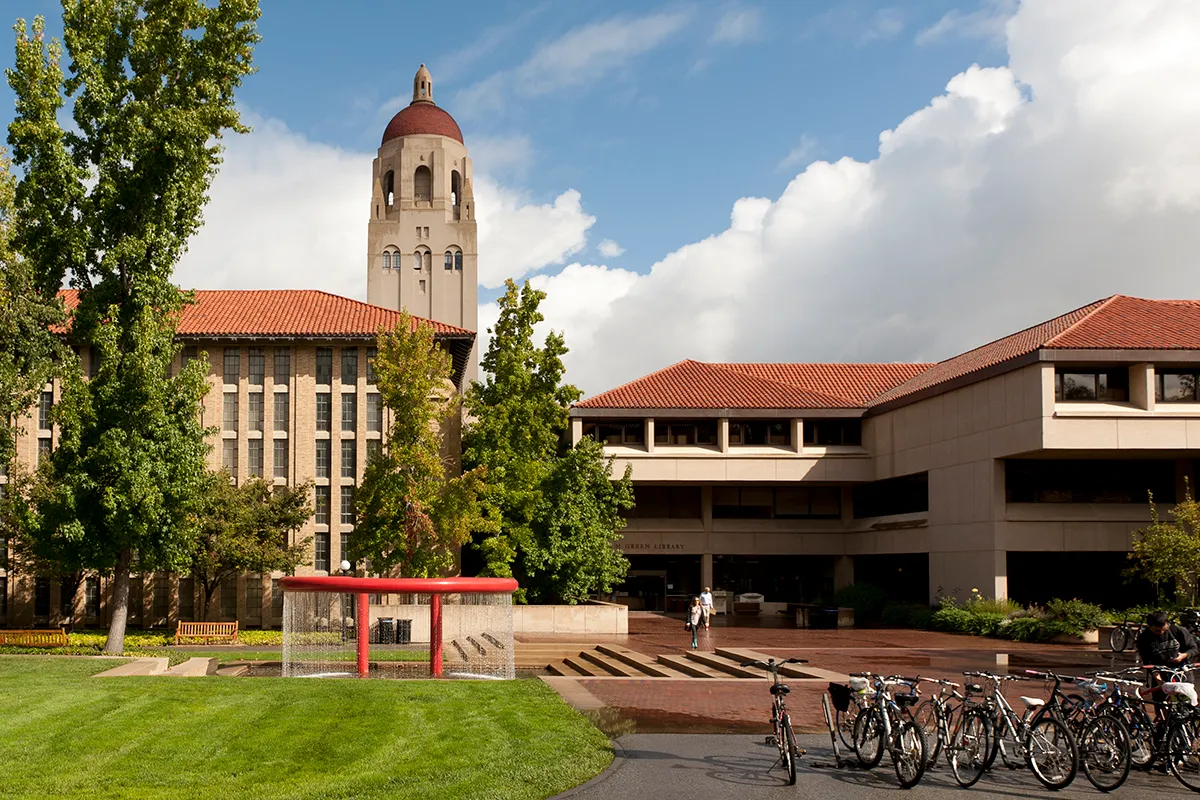
In late January, nearly 600 students and faculty members at Stanford University participated in a national walkout to protest the Trump administration’s deployment of Immigration and Customs Enforcement (ICE) officials. While the turnout may seem significant, it represents only a small fraction of the campus’s approximately 8,000 undergraduates. The lack of participation highlights a broader trend of political apathy among Stanford students, prompting questions about the cultural and institutional factors contributing to this phenomenon.
A survey conducted the day before the protest revealed that many students were not planning to join the demonstration. One student admitted that her main focus at Stanford was securing a high-paying job rather than engaging in activism. Others expressed concerns about the potential risks to their legal status as international students, indicating a reluctance to engage in political action. This sense of disillusionment with civic participation is not unique to Stanford; however, the university appears to lag behind its peers in political engagement.
According to the National Study of Learning, Voting and Engagement, only 48.5% of eligible Stanford students voted in the 2016 presidential election, which is lower than the national average of 50.4% for higher education institutions. In 2024, the ALL IN initiative recognized 458 universities for their commitment to increasing civic engagement, yet Stanford was notably absent from this list.
Understanding the Roots of Apathy
The question arises: why do students at Stanford, an institution celebrated for its intellectual rigor, display such disinterest in political engagement? Some speculate that the administration may be stricter in dealing with student activism compared to other campuses. However, the core issue may lie in Stanford’s prevailing campus culture, which often prioritizes technical and market-driven solutions over democratic participation.
Stanford’s location in Silicon Valley plays a significant role in shaping this culture. Unlike universities situated near political power centers, such as Georgetown, or those with a history of protest culture like UC Berkeley, Stanford fosters an environment where success is often defined by innovation and entrepreneurship. Students are encouraged to pursue paths that lead to venture funding and product development, which can overshadow the importance of civic engagement.
The university’s focus on STEM (science, technology, engineering, and mathematics) subjects further compounds this issue. STEM education emphasizes skills such as efficiency and problem-solving, often at the expense of humanities courses that promote moral reasoning and critical thinking. As a result, many students may feel ill-equipped to understand or influence the political system.
The Influence of Regional Ethos
The ethos of Silicon Valley, with its emphasis on entrepreneurship, shapes perceptions of success and impact. Stanford’s narrative is dominated by stories of founders and innovators, which may lead students to view politics as slow and bureaucratic, disconnected from their career aspirations. This is evident when comparing Stanford to other technology-centric institutions like the Massachusetts Institute of Technology (MIT) and California Institute of Technology (Caltech), where political engagement may be more pronounced.
While not every university needs to foster a culture of activism, Stanford’s graduates wield considerable influence in society. They occupy roles that can significantly shape public discourse, surveillance systems, and information ecosystems. It becomes increasingly vital for these future leaders to understand the political landscape and uphold democratic values, irrespective of the fields they choose.
As Silicon Valley tech executives influence elections and venture capitalists determine the platforms that mediate public discussions, the ethical responsibility of Stanford graduates must align with their positions of power. Preparing students to engage politically is essential, not only for their personal development but also for the broader societal implications of their roles.
Ultimately, the challenge for Stanford lies in bridging the gap between technological innovation and civic responsibility. Encouraging a culture that values political engagement alongside entrepreneurial spirit may empower students to become not only innovators but also informed citizens committed to upholding democratic ideals.
















