









































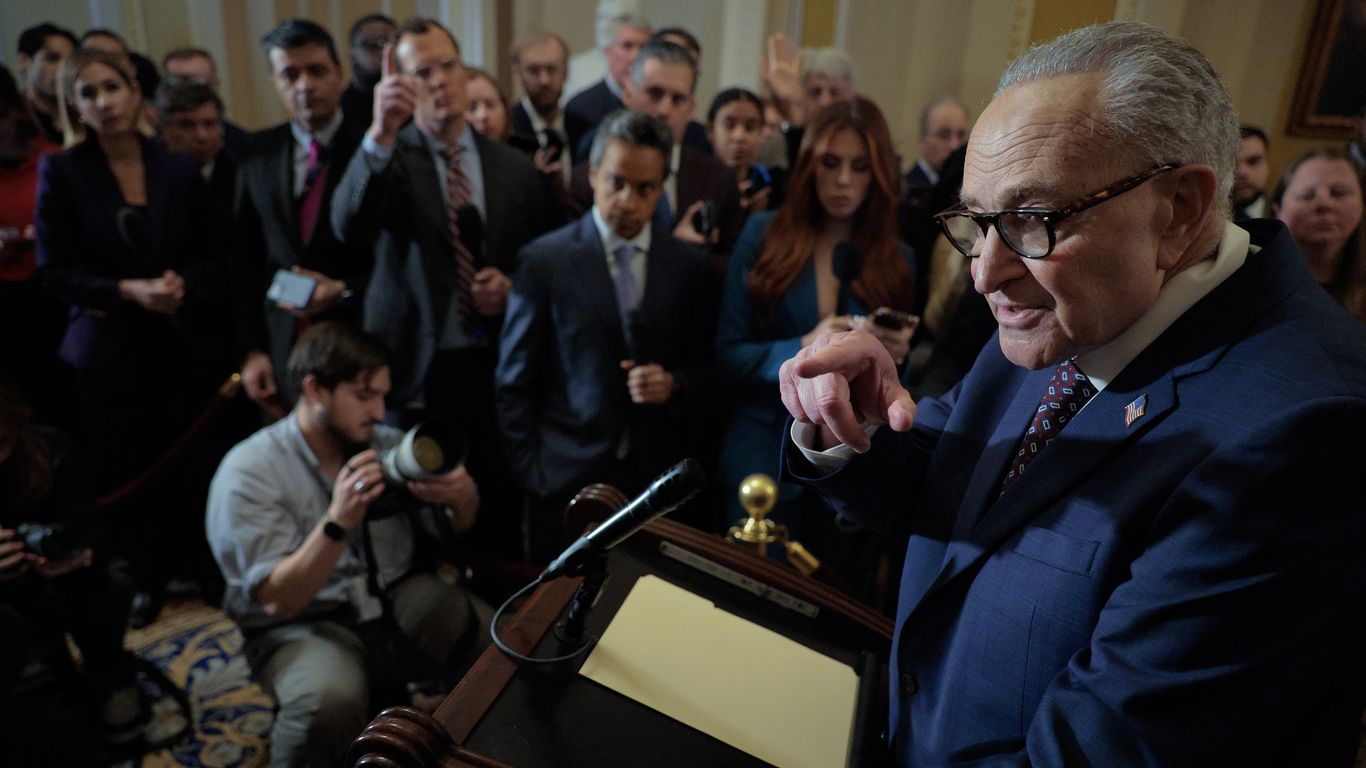
Senate Minority Leader Chuck Schumer is actively working with the White House to develop a plan aimed at preventing or minimizing a partial government shutdown. This initiative is critical as part of the government is set to run out of funding on the evening of October 6, 2023. While discussions are ongoing, a final agreement between Senate Democrats and the White House has yet to be reached, complicating the situation.
The proposed compromise would involve passing five of the six appropriations bills while providing the Department of Homeland Security (DHS) with a short-term funding measure. This strategy is designed to address immediate financial concerns while allowing additional time for negotiations regarding longer-term spending issues. The plan would still require approval from the House of Representatives, adding another layer of urgency to the discussions.
In the latest developments, Schumer emphasized the need to separate the DHS funding bill from a minibus appropriations package that recently passed in the House. This separation, according to reports from CNN and The New York Times, would allow Democrats to exert pressure on the Trump administration and congressional Republicans to accept demands related to reforms in the Immigration and Customs Enforcement (ICE) agency. Key proposals include implementing a requirement for officers to wear body cameras and instituting a ban on masks.
The urgency of these negotiations has been endorsed by Senate Majority Leader John Thune, a Republican from South Dakota. Thune has been facilitating direct discussions between Schumer and the White House, expressing a willingness to support any compromise that emerges from their talks. “If there are things that the Democrats want that the administration can agree with them on, then let’s do that,” Thune stated on Wednesday.
As the deadline approaches, the stakes are high for both parties. A government shutdown could have significant implications for federal services and the broader economy. With negotiations still in progress, both sides are aware that time is a critical factor, and a resolution must be reached swiftly to avoid disrupting government operations.
The outcome of these discussions will heavily influence the political landscape ahead of crucial upcoming elections. Whether a bipartisan agreement can be achieved remains uncertain, but the engagement of key leaders indicates a recognition of the importance of reaching a resolution that satisfies both parties.
















